MCI adds app to guide blind and low-vision travelers

Add Axios as your preferred source to
see more of our stories on Google.
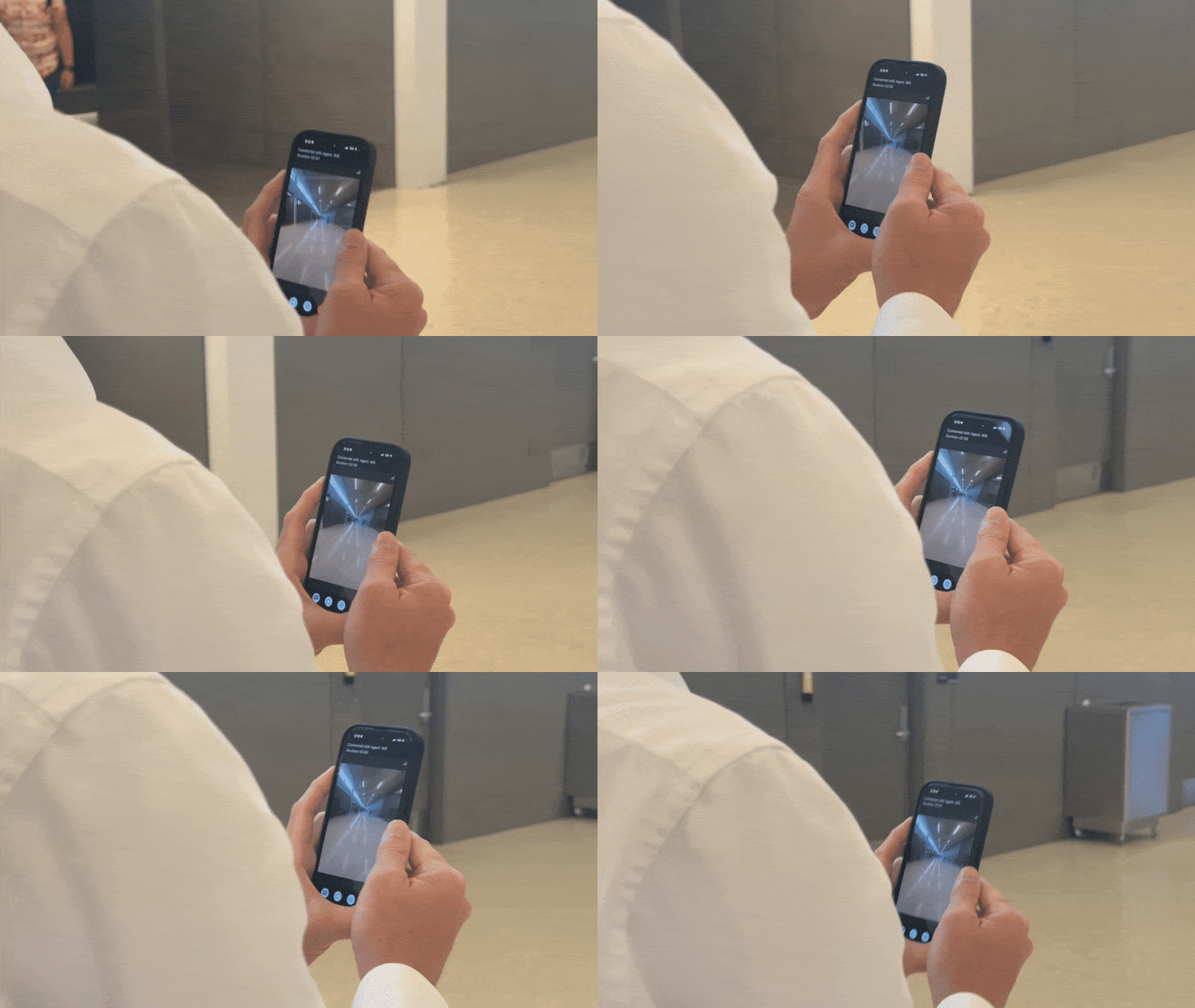
Kansas City International Airport (MCI) is now offering free real-time visual navigation support for travelers who are blind or have low vision through the Aira app.
The big picture: The rollout is part of MCI's effort to make the airport more accessible and intuitive for all passengers.
How it works: The app connects users to a trained visual interpreter via livestream from their phone camera. Travelers can request help navigating the airport, locating a gate or finding a snack.
- At MCI, the service is free to use on airport grounds. The airport geofence triggers access to Aira's paid service at no cost to the traveler.
- The interpreters are available 24/7.
- Aira can be used anywhere with a paid subscription.
Case in point: During a demo, an Aira agent, Will, guided us to a gate, described signage and flagged floor slopes, foot traffic and nearby landmarks, all through a phone camera.
- Will warned when people ahead had stopped and identified a floor change, showing us how the app could support travelers in real time.
Between the lines: The move adds to other accessibility features MCI has introduced, including a sensory room (a calming space for travelers with sensory sensitivities), adult-size changing tables, the Sunflower Lanyard program and the Kansas City Air Travel Experience simulator.
- The Sunflower Lanyard program allows travelers to discreetly indicate that they may need extra time, patience or support.
- The Kansas City Air Travel Experience offers a hands-on simulation of airport security and boarding for travelers who want to practice before their trip.
What they're saying: "This tool helps travelers with low vision to ensure all passengers, including those with low vision, can travel with confidence at MCI," Justin Meyer, deputy director of aviation for the city tells Axios. "It's one more way we're trying to meet people where they are."
- "It's empowering," Paul Mimms, who is blind, told The Kansas City Star when he became an early user of Aira in 2017. He said assistive technologies "greatly enhance one's self-reliance or independence to do a wide variety of tasks."
What's next: Airport officials say they're monitoring feedback and usage and plan to keep expanding accessibility tools as needed.