SNAP changes are coming to Kansas and Missouri


Add Axios as your preferred source to
see more of our stories on Google.
A newly signed federal law changes SNAP rules, and more than 840,000 Kansas and Missouri recipients could be affected.
Why it matters: The legislation is part of the "big, beautiful bill" passed this month. It increases work requirements, which could reduce access to SNAP, and shifts some costs to state governments, part of a broader plan to cut federal nutrition spending.
The big picture: The law raises the age range for SNAP work requirements from 18–54 to 18–64 and includes new conditions for parents of children 14 and older.
- It also ties part of SNAP funding to states' payment error rates, shifting some benefit costs to states with higher error rates.
- The Congressional Budget Office (CBO) estimates the bill would cut nutrition funding by about $186 billion through 2034.
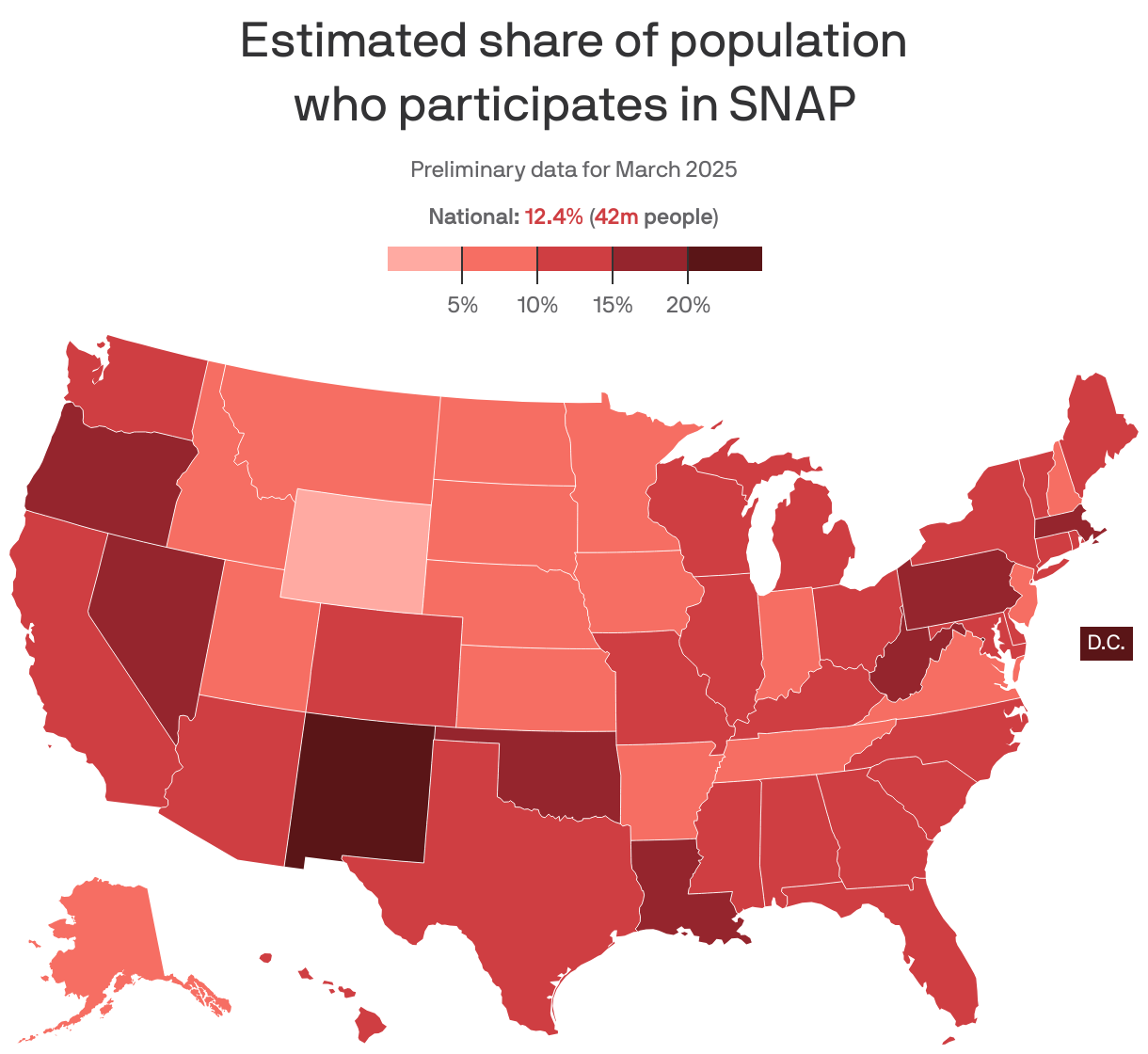
- Nationwide, about 12.4% of the population, or 42 million people, received SNAP benefits as of March.
Zoom in: About 10.5% of Missourians (654,000 people) and 6.3% of Kansans (186,000) receive SNAP, per recent USDA data.
- A Missouri Independent analysis found the new funding formula could shift more than $400 million in costs to the state over the next decade. The Center on Budget and Policy Priorities (CBPP) estimates that more than 150,000 Missourians could face reduced benefits due to expanded work rules.
- Kansas officials estimate the changes could lead to $15 million in new administrative costs and $41 million in benefit cost-sharing under the bill's formulas.
By the numbers: CBPP points to a CBO indication that more than 2 million people would be cut from SNAP under the work requirement provision.
- While the CBPP notes that revised legislation released June 25 slightly modified several SNAP provisions in the reconciliation plan, it still says more than 5 million people live in households at risk of losing at least some food assistance.
What's next: The bill was signed into law July 4. State officials are now assessing how to implement the changes and how they may affect residents and budgets.