Nonprofit Village of Promise makes big pre-K gains

Add Axios as your preferred source to
see more of our stories on Google.
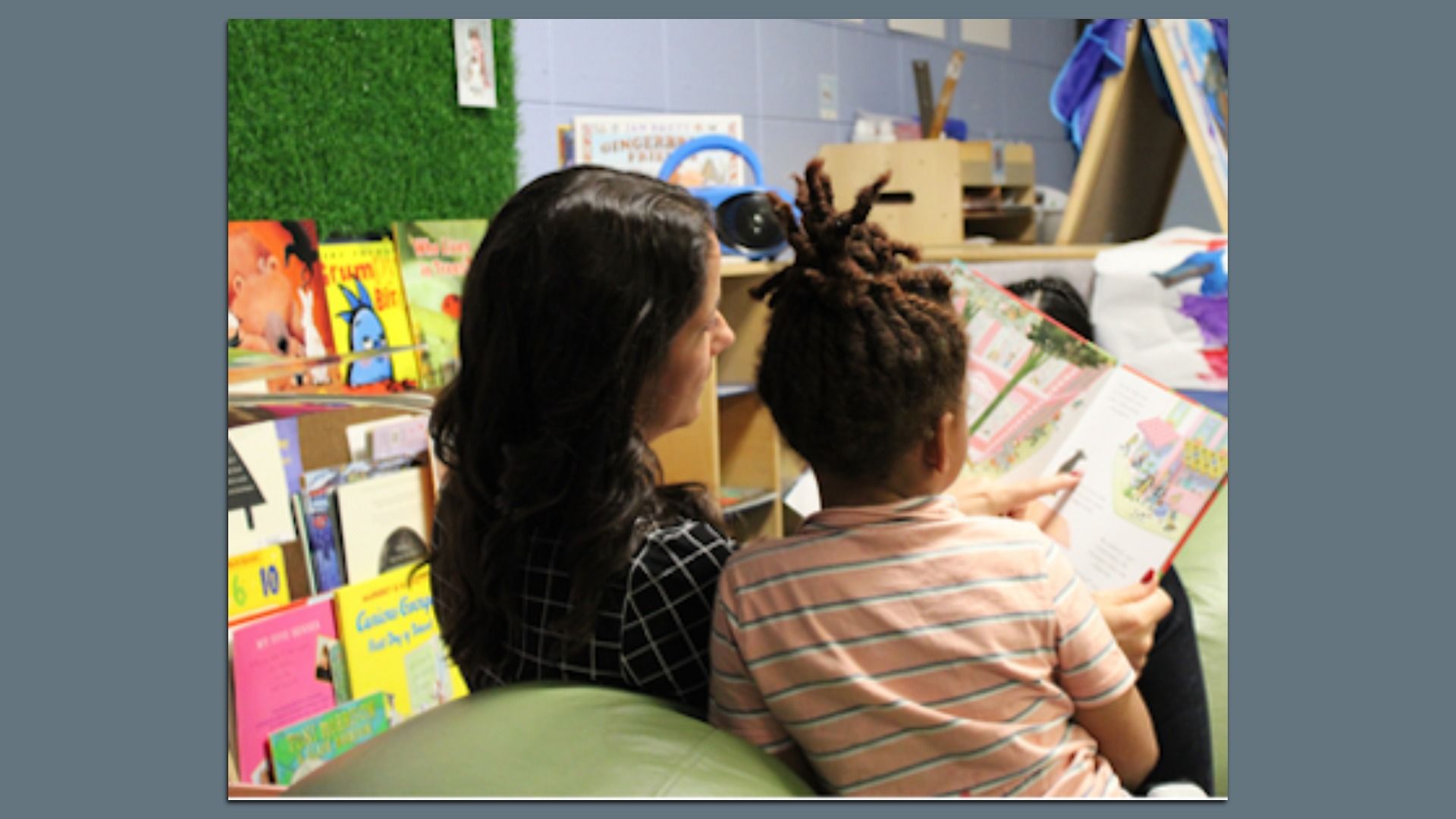
The Village of Promise's Pre-K program aims to move 36 students to kindergarten each year. Photo: Courtesy of Village of Promise
The Village of Promise is making major strides with Huntsville preschoolers.
Why it matters: The nonprofit is addressing education gaps before students even enroll in kindergarten.
The latest: Alabama's First Class Pre-K assessments for the 2025-2026 school year show that students in the Village of Promise's pre-K classrooms are now meeting benchmarks at higher rates than the city school system at large.
- Serving Huntsville's Northwoods neighborhood and North Huntsville more broadly, Village of Promise has been operating its pre-K classrooms for eight years to address kindergarten readiness, CEO Jaymes Mooney tells Axios.
- The nonprofit works to advance families out of generational poverty, and it uses the state's First Class Pre-K program, which is offered in schools statewide.
By the numbers: At the start of the last school year, 33% of the program's students met the math benchmark. At the end of the year, 100% did, according to data Village of Promise shared with Axios.
- The rate of students hitting the language benchmark rose from 39% to 94%; literacy rose from 45% to 97%; and cognitive rose from 42% to 100%.
- Huntsville City Schools' end-of-year average is 91% for math, 88% for language, 94% for literacy and 90% for cognitive.
Zoom in: "Every morning starts with a greeting, breakfast and a dance routine," said Aly Mai, who directs the Pre-K program at Village of Promise, in a release. "That sets the tone for the whole day."
- "If children are not also getting what they need with social and emotional development, you'll never get to the academics," Mooney told Axios, saying it's about the Cs: curious, confident and competent.
- "We just have teachers that are dynamic in the way they teach, doing 'both and,' not 'either or,'" when it comes to learning and fun, he said.
What they're saying: "We recognize students we serve live in certain circumstances that may not be conducive to their flourishing," Mooney told Axios.
- Childcare is expensive, and families pay for VOP's program based on income, starting at $25.
- One of the misconceptions he had starting out was that many of the program's families were unemployed. In reality, only five of 82 were, and VOP works with the families as well, who are required to be engaged with the program.
Zoom out: VOP raises 80% of its funding, and the organization receives state funding for two classrooms and employs 16 staff members, 12 of whom are full-time, and works to get 36 students kindergarten-ready each year.
What's next: Village of Progress stays with its students, too, including via an elementary program with Sonnie Hereford Elementary School, and with summer programs to stave off summer learning loss.
The bottom line: "When we as a community can provide a place for children to grow, they will grow," he said.