Huntsville braces for Space Command boom

Add Axios as your preferred source to
see more of our stories on Google.
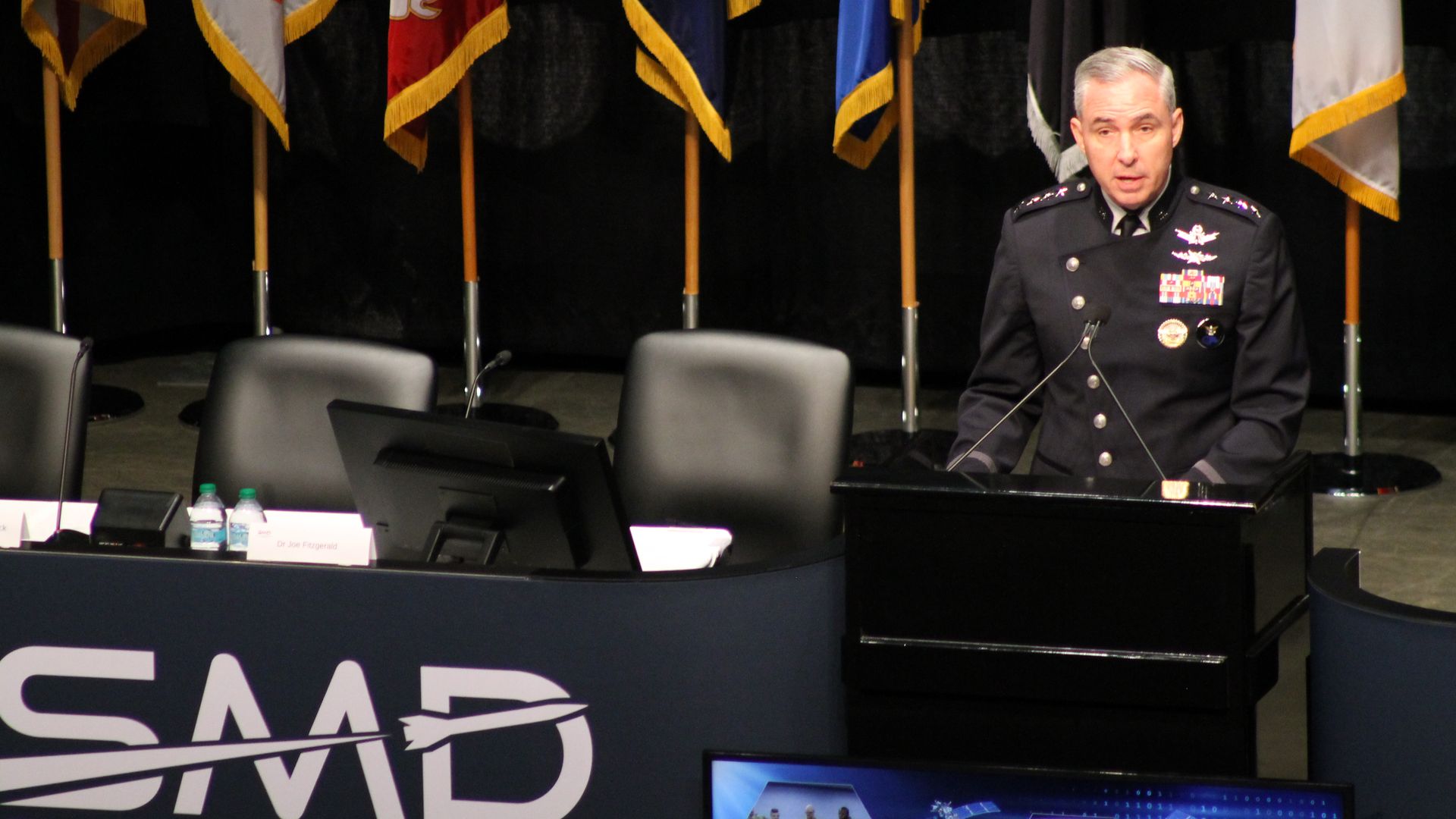
Nothing is slowing down U.S. Space Command's move to Huntsville, nor its mission, Gen. Stephen Whiting said yesterday.
Why it matters: Spacecom's move to Redstone Arsenal is set to power a wave of new business and activity for the region, as Space Command looks to bolster defense and deterrence in orbit.
The latest: Spacecom is already occupying two buildings on the arsenal, and is expecting to complete its move and new headquarters by 2032.
Context: "What I would say to commercial industry is if you are already a contractor supporting U.S. Space Command, we need you to be working with us," Whiting said. "How do you begin to transition support here to Huntsville?"
- Addressing the Space and Missile Defense Symposium yesterday morning, he specifically mentioned companies in the construction of facilities design space, saying "that is something we're doing at speed right now" as it works to deliver its permanent headquarters "faster than we traditionally would have."
Driving the news: "The war in Ukraine and in Iran has put a giant exclamation point on something we've known for some time: space is a warfighting domain, and we're going to have to fight for connectivity," Whiting said.
- Space assets need to be able to shoot, maneuver and communicate like the rest of the joint force, he said, as well as sustainment capabilities like other branches of the military have to refuel and replenish those assets.
Zoom out: "I think the traditional elements of deterrence apply in space," Whiting told reporters later in the day. "We need to be able to clearly communicate what it is we're trying to protect ... deny the adversary the benefit of attack."
What they're saying: Addressing the symposium Monday, Lt. Gen. Richard Zellmann, deputy commander of U.S. Space Command, stressed the need to join missile defense and space, integrate data and make decisions faster.
- In the past, it was an advantage. Today it's an "operational imperative that we bring these two mission areas together," he said.
The bottom line: "Space isn't a sanctuary," Zellmann said. "The commercialization of space has created what many call essentially a transparent battlefield."