SMD's big kickoff

Add Axios as your preferred source to
see more of our stories on Google.
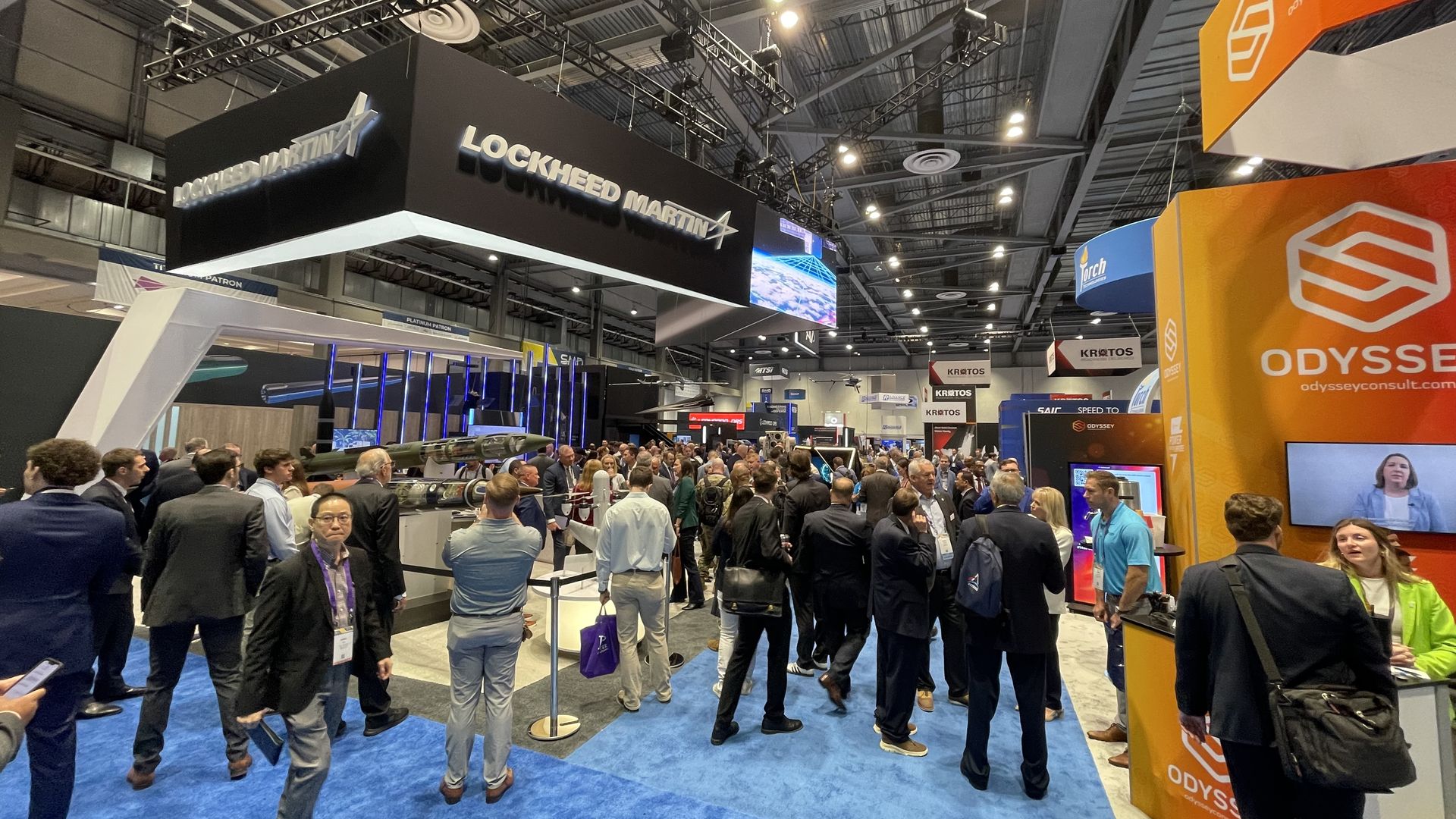
The 29th Space and Missile Defense Symposium wasn't even officially underway when news started to break.
Why it matters: It's one of the biggest industry events on the calendar for aerospace and defense companies, and deals and discussions on the floor have big implications for the Rocket City.
Zoom in: The focus on the floor is how to quickly innovate, design, and cheaply deliver critical missile defense infrastructure and components as the U.S. looks to strengthen its industrial base.
The latest: Prime defense contractors with big Huntsville connections kicked the event off with major announcements, including Lockheed Martin, Northrop Grumman and Boeing.
Lockheed Martin made multiple announcements Monday, including an agreement with Albany Engineered Composites to scale production of its Next Generation Glide Body.
- The company also unveiled Strigo, a new set of modular defense components like sensors, datalinks and seeker technologies leveraging common architectures, and announced a successful Low-Earth Orbit Vacuum Test for its Stage 2 solid rocket motor being developed with L3Harris.
Northrop Grumman announced Raid Hunter, a 50-mm Gun-Based Air Defense System, which utilizes maneuverable ammunition to defend against cruise missiles, drone swarms and other threats.
- It has a focus on cost efficiency, with Northrop saying its cost-per-effect is 99.5% less than an interceptor missile, and with more than 300 rounds stored, its effective ready magazine is up to 15 times that of missile systems.
- The company also continues its push to ramp up production of the Integrated Battle Command System, manufactured at its EPIC facility in Madison.
Boeing announced yesterday that its Ultra Low-Cost Seeker is working through testing milestones as the company evaluates its use across its integrated air and missile defense, direct attack and cruise missile portfolios.
- The ULCS utilizes off-the-shelf components adapted for military use, Boeing says, using a modular design for rapid, high-volume production.