How TIFs work

Add Axios as your preferred source to
see more of our stories on Google.
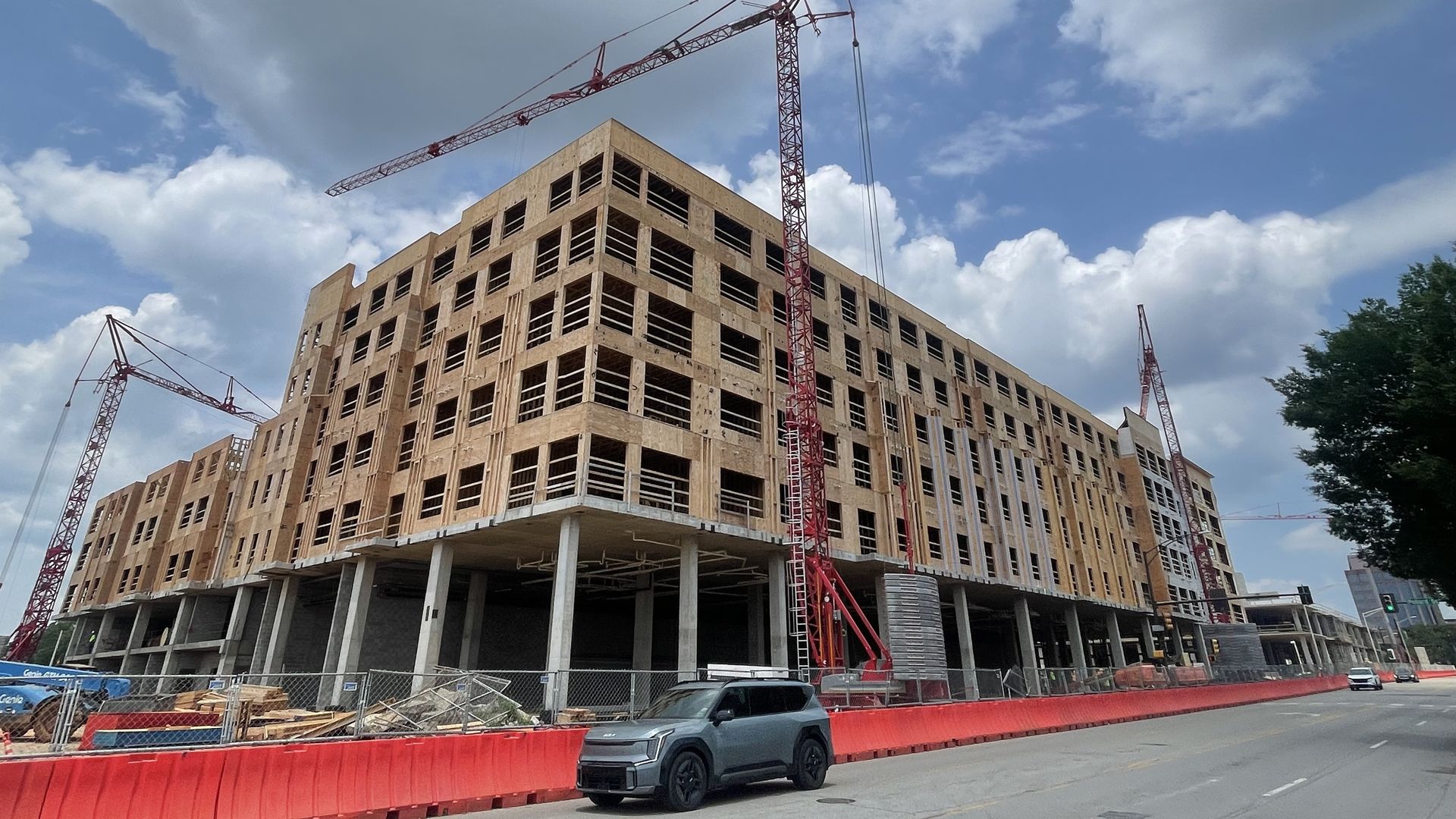
Huntsville is embarking on its latest TIF, or Tax Increment Financing district, to fund the next wave of downtown infrastructure investment.
Why it matters: The city has successfully used TIFs to capitalize on new development without pulling tax money from schools or other typical recipients.
Catch up quick: Huntsville City Council introduced TIF 9, an almost 3,700-acre district covering the central downtown core, at Thursday's council meeting.
How it works: TIFs don't change the tax rate — they only capture the increases in tax revenue from rising property values in the defined area.
- As development happens, property value increases, generating new tax revenue.
- The city then borrows money for infrastructure projects inside the TIF's boundaries, repaying the debt over time via that new revenue.
Case in point: Earlier this year, the city council presented a $5.5 million check to the city school system after closing out three TIF districts years early.
- For example, TIF 2, just south of downtown, was established in 2000. The city then financed $15.5 million, $10 million of which went to the Huntsville Board of Education and $5.5 million to a public parking garage.
- It closed last year, five years ahead of schedule, meaning the debt had been repaid and the increase in property taxes that was going to pay off that debt rerouted back to city coffers.
What they're saying: "It's a little moment in time you've got to give up some revenue," said Shane Davis, director of urban and economic development. "But every one that I've seen ... is typically a 2x, 3x or 4x return pretty quickly to all of our tax recipients."
What we're watching: The council will hold a public hearing on TIF 9 May 14, when more details will be shared.