Fuel leak pushes NASA's Artemis II launch

Add Axios as your preferred source to
see more of our stories on Google.
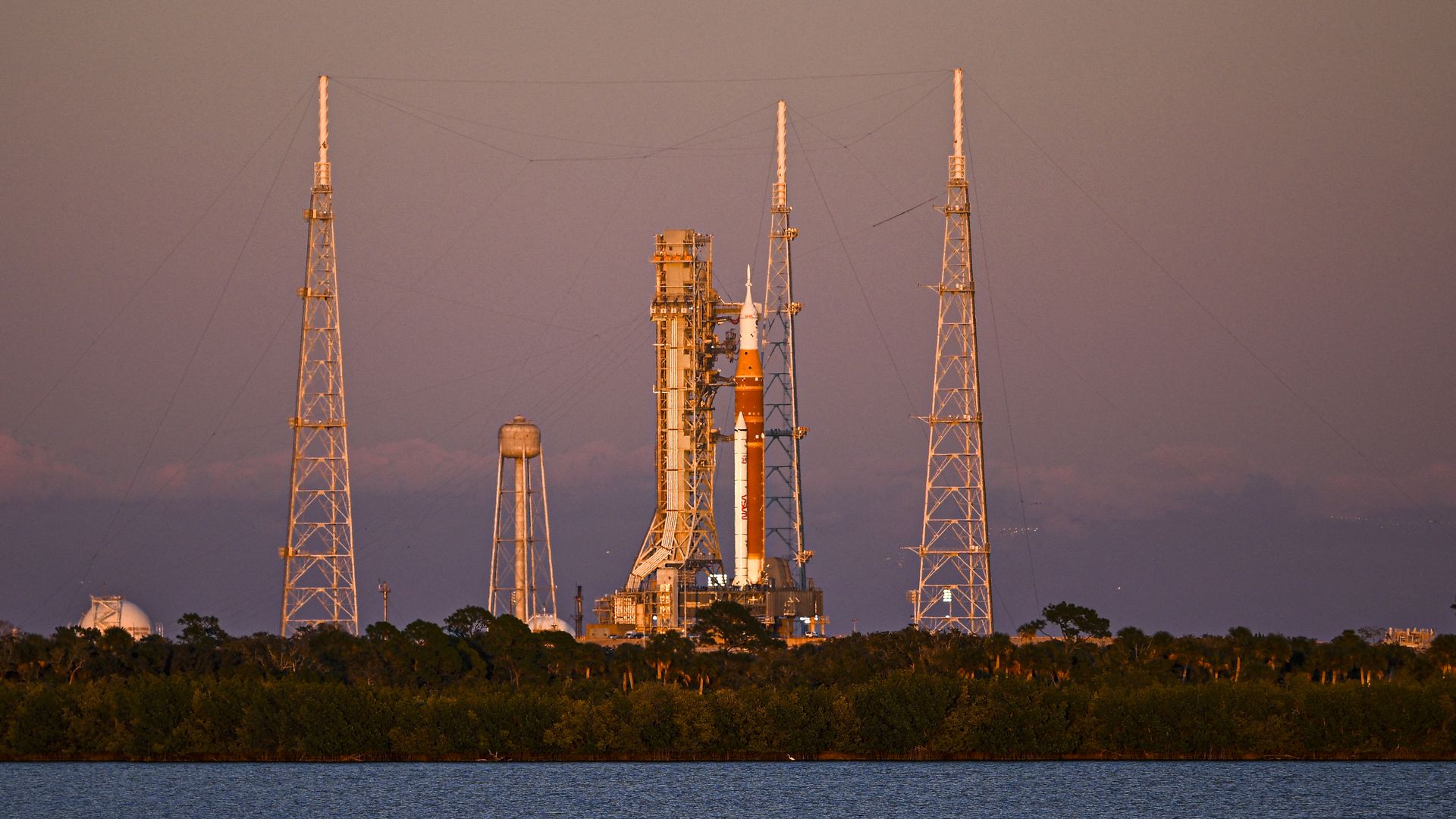
There's another wet dress rehearsal in the works. Photo: Miguel J. Rodriguez Carrillo/AFP/Getty Images
The Artemis II launch window now opens March 6, following familiar fueling issues during a test Monday.
Why it matters: A hydrogen fuel leak during the Artemis II wet dress rehearsal process has pushed back the launch of NASA's first moon mission in more than 50 years.
- It's reminiscent of the liquid hydrogen fuel leak that postponed the Artemis I launch in 2022, and NASA leaders said during a briefing Tuesday that Artemis II is now set for launch no earlier than March.
What they're saying: "We'll review the data, address the items we saw during the wet dress that need future work, and we'll set another series of integrated tests as we go forward," Amit Kshatriya, NASA associate administrator, said.
Catch up quick: The Artemis II wet dress rehearsal process had already been delayed two days due to cold and windy conditions in Florida.
- The team first discovered the leak around 12:30pm Monday, said Charlie Blackwell-Thompson, Artemis launch director.
- After Artemis I, NASA set a 16% leak limit for liquid hydrogen, she said, so once it hit that point, they stopped and reversed the flow, bringing down the leak.
- NASA then tried a contingency procedure from Artemis I: letting the equipment warm up and trying again, which allowed them to complete fueling.
Zoom in: "This one caught us off guard," said John Honeycutt, Artemis mission team chair. Initially, he said, it "felt like we either had some sort of misalignment or some sort of deformation or debris on the seal."
- The interface is very complex, and hydrogen is a very small, energetic molecule, "and we like it for that reason," said Honeycutt, a UAH alum and former Space Launch System manager at Marshall Space Flight Center.
Changes to fueling hardware were made after Artemis I, Blackwell-Thompson said, including modifying the design of the replenish valve that was the culprit in 2022, and changing hose design and replacing mounting hardware with welds.
- There "were lessons learned from Artemis I that were incorporated, and they tested out really well," she said. "It was the first chance we got to do that test in this environment."
Zoom out: Another change is the use of NASA's new minus-423 degree, 1.4 million gallon liquid hydrogen loading sphere, limiting time between fueling attempts from 48 hours to 24.
- Blackwell-Thompson said 30 tankers were brought on and off the pad complex to fuel Artemis I.
- Another sphere is used for hydrogen storage.
The bottom line: "We got a chance for the rocket to talk to us, and it did just that," Honeycutt said. "The test gave us exactly what we needed."