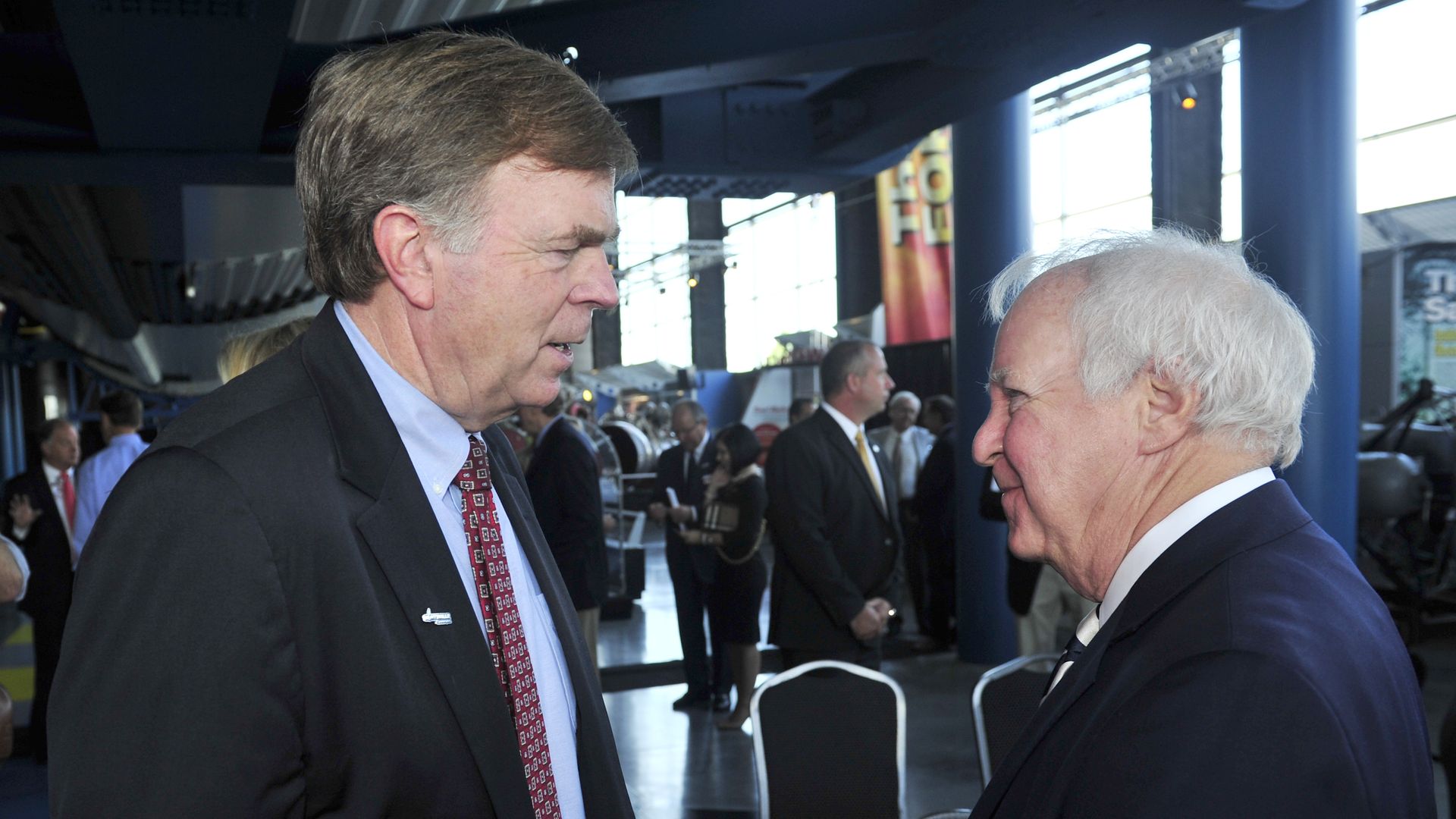
Mayor Tommy Battle, shown at left in 2016, views work the city did that year as foundational for the growth Huntsville's seen since. Photo: Courtesy City of Huntsville
Huntsville in 2016 looked very different from Huntsville 2026.
Why it matters: Looking back at 2016 shows how Huntsville positioned itself for explosive growth it couldn't see coming, and sheds some light on how current moves might pay off come 2036.
Catch up quick: Axios Huntsville is jumping on the viral "2026 is the new 2016" trend by taking a look back.
AL.com's recap of the year's top stories in Huntsville included a visit to Madison by Donald Trump, Mac McCutcheon being voted Speaker of the Alabama House, and the demise of Madison Square Mall as the deal to develop MidCity took shape.
By the numbers: A big difference in the past 10 years has been Huntsville's exponential population growth, from roughly 194,000 to more than 250,000.
The 56,000 additional residents is an almost 29% increase.
What they're saying: "I don't think we ever had the goal of growing to X number of people," Mayor Tommy Battle told Axios Huntsville. "Our goal is to have a good city people want to be part of, and provide opportunity."
Instead, Battle sees 2016 as a sort of set-up year, with one example being the TVA Mega Site that eventually became home to Mazda-Toyota Manufacturing.
"A lot of things happened during that time that were precursors to all the successes we've had now," said Battle, mayor since 2008.
Zoom in: The city was cognizant of that even in 2016, with Battle saying in an end-of-year wrap up that it was "a great year to start on projects that are going to take us into the 2020s and beyond.
Case in point: 2016 was also the year Huntsville became a "GIG City," with companies like AT&T and Comcast investing in building out fiber networks in anticipation of Google Fiber entering the market.
"Nobody really had any idea right then what effect that would have on us when COVID hit ... to keep the economy moving," Battle told Axios last week.