Huntsville researchers challenge hottest temperature record

Add Axios as your preferred source to
see more of our stories on Google.
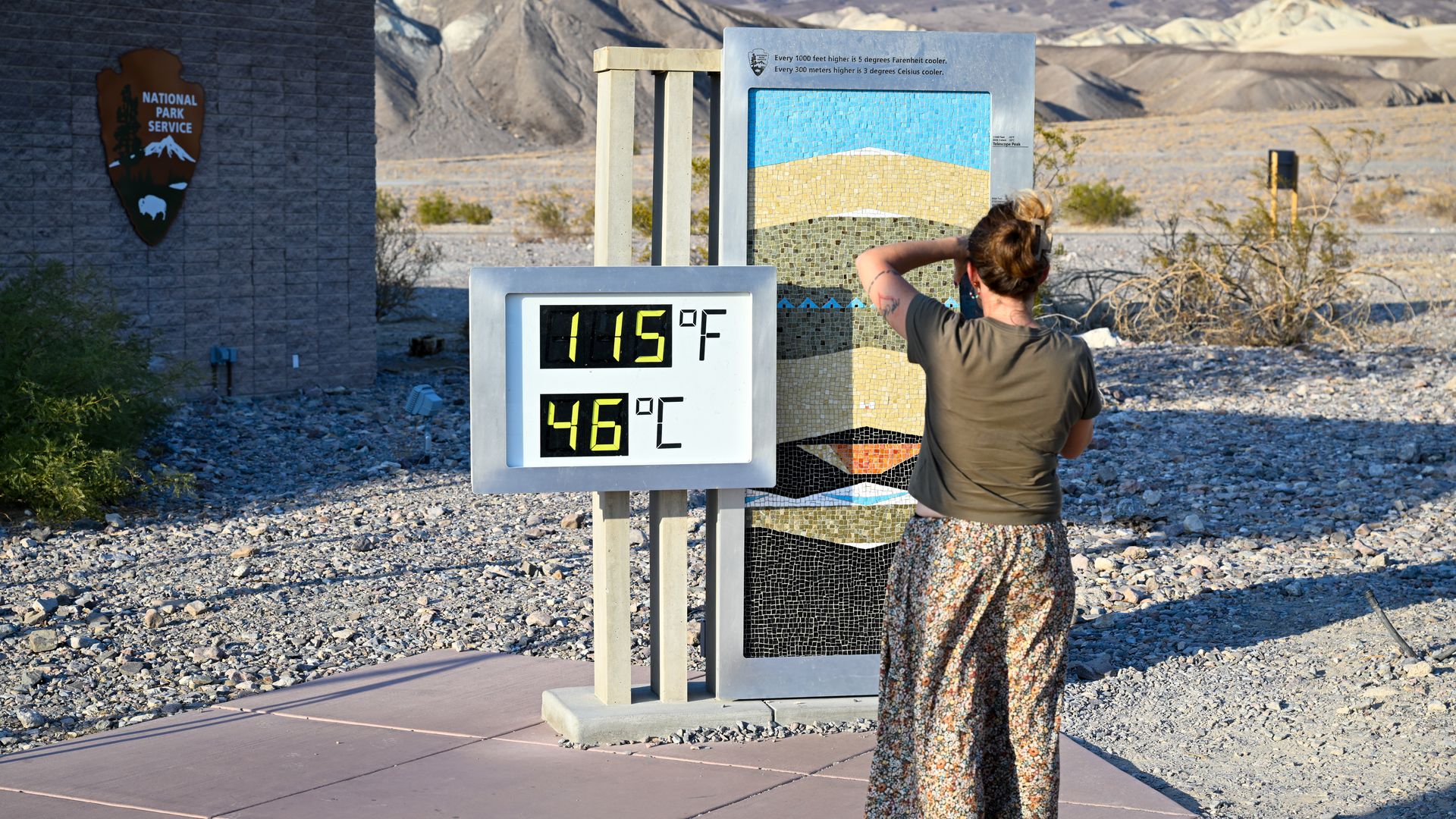
On July 17 this year, the temperature at Death Valley reached 115. Photo: Tayfun Cokun/Anadolu via Getty Images
Researchers at the University of Alabama in Huntsville are calling for the invalidation of the hottest near-surface temperature ever recorded: 134 degrees in Death Valley, Calif., in 1913.
Why it matters: Climate monitoring depends on accurate long-term historical data, according to a new UAH research paper.
Zoom in: UAH scientists Roy W. Spencer and John R. Christy, with California-based co-author William T. Reid, write that the actual temperature that day was probably around 120.
- They point to non-approved equipment taking the measurement, and a "colorful character" named Oscar Denton, foreman at the Greenland Ranch station when the measurement was taken.
What they're saying: "There is an assumption in the climate research community that all of these cooperative weather observers ... even over 100 years ago, were reliable, unbiased and scientific in their approach," Spencer told Axios Huntsville.
- "But in reality, many of them are poorly trained and since they are volunteers many do not have the motivation to make careful observations."
- Researchers believe Denton was more interested in maintaining Death Valley's reputation as the hottest place on Earth rather than being accurate, Spencer said.
Catch up quick: The paper reviewed data and other historical accounts, and says "a common theme ... is that the hottest temperatures ... were obtained with non-standard exposures of the thermometers."
- The original Weather Bureau-provided weather equipment was placed next to an irrigated field, which produced cooler temperatures than are representative of Death Valley," Spencer said.
- "So we believe the observer simply replaced those measurements [with] hotter ones located on the veranda of the ranch house."
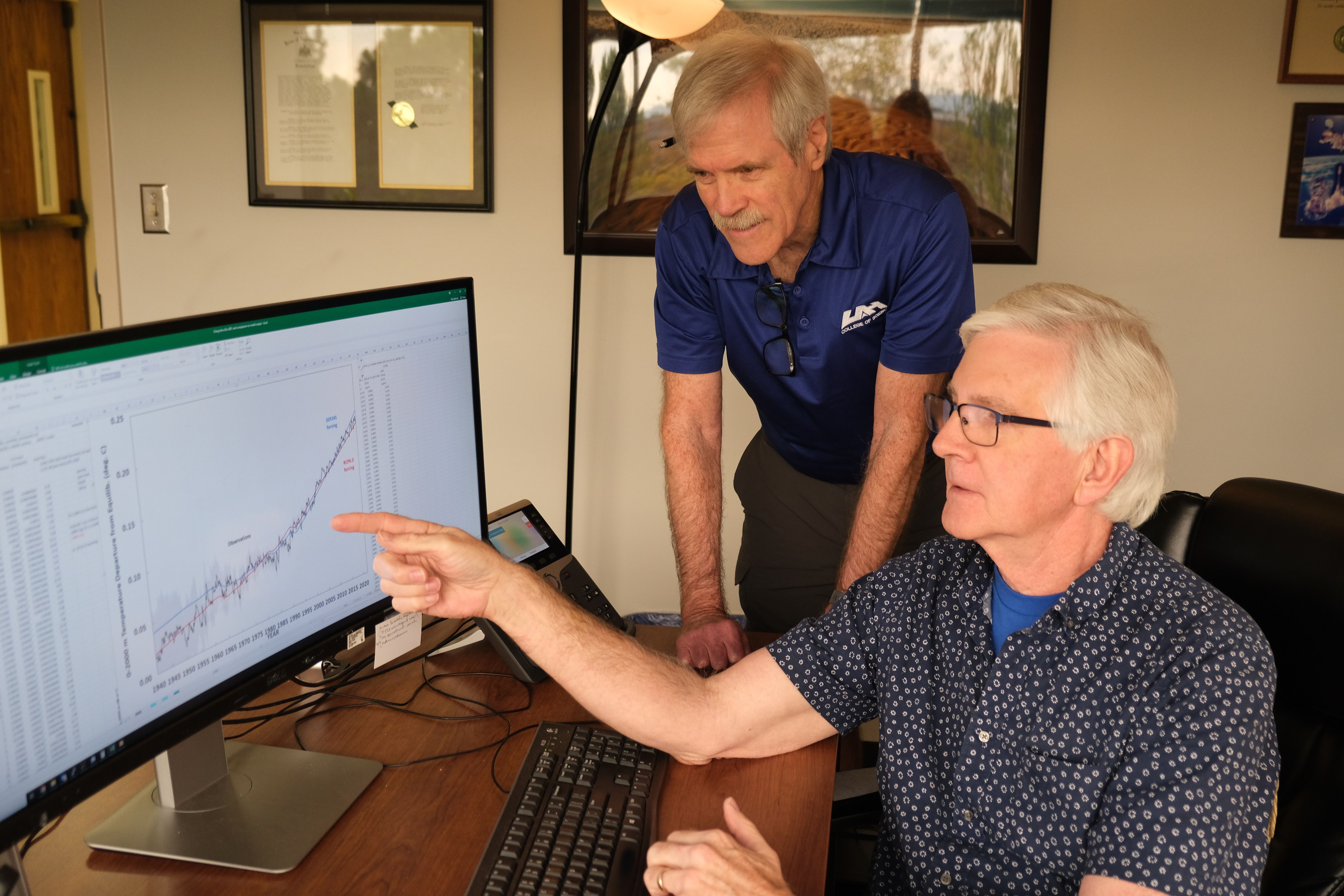
How it works: The researchers compared July data from nearby, higher-elevation stations of over more than a century of measurements (1923-2024), and a follow-up comparison of data recorded from 1911 to 2024.
- They compared those to same-day readings from Death Valley to get lapse rates showing the rate at which temperatures increase as elevation drops.
- Then those lapse rates were applied to the readings for July 1913 to get an estimated range of 118-122 degrees for the temperature on July 10, when the 134-degree temperature was recorded.
Yes, but: "There's a good chance Death Valley will still retain the record," even without the 134-degree mark, with a couple 130-degree days recorded in recent years, Spencer said.
What we're watching: It's up to a special committee of the World Meteorological Organization in Geneva to decide whether to revisit the record, he said.