It's all about flexibility for Alabama automakers

Add Axios as your preferred source to
see more of our stories on Google.
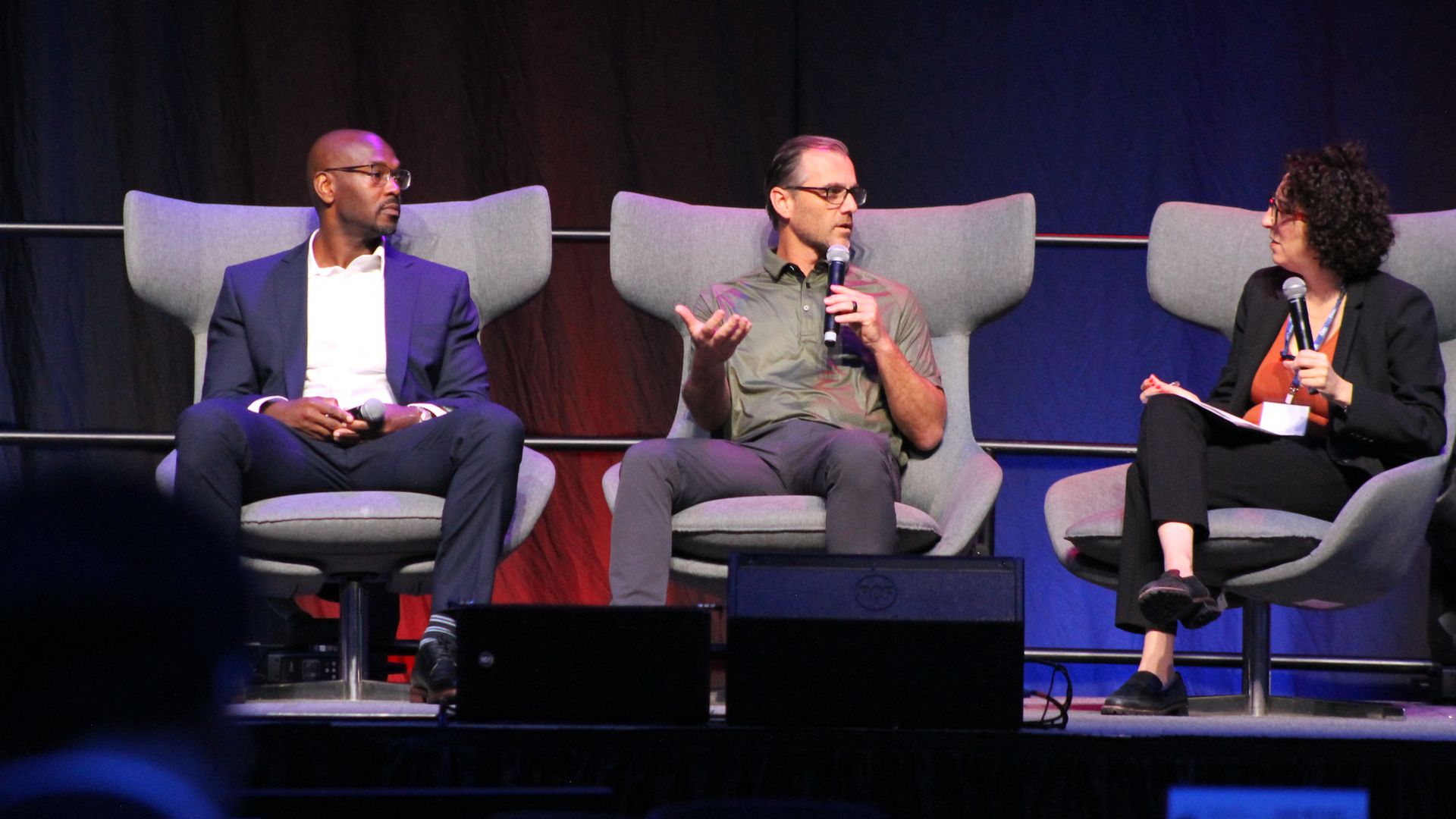
Lamar Whitaker (left), Jason Pickering and Gabrielle Coppola talk during the OEM panel at SAC 2025. Photo: Derek Lacey/Axios
Automotive manufacturing is a huge part of Alabama's economy — it's the state's top export, supports more than 50,000 jobs and drives billions in investment.
Why it matters: Big Alabama automakers talked workforce concerns, tariffs, AI and EVs at the Southern Automotive Conference in Huntsville this week.
- The gist: Flexibility is key as automakers seek to retain workers and adapt to an evolving industry.
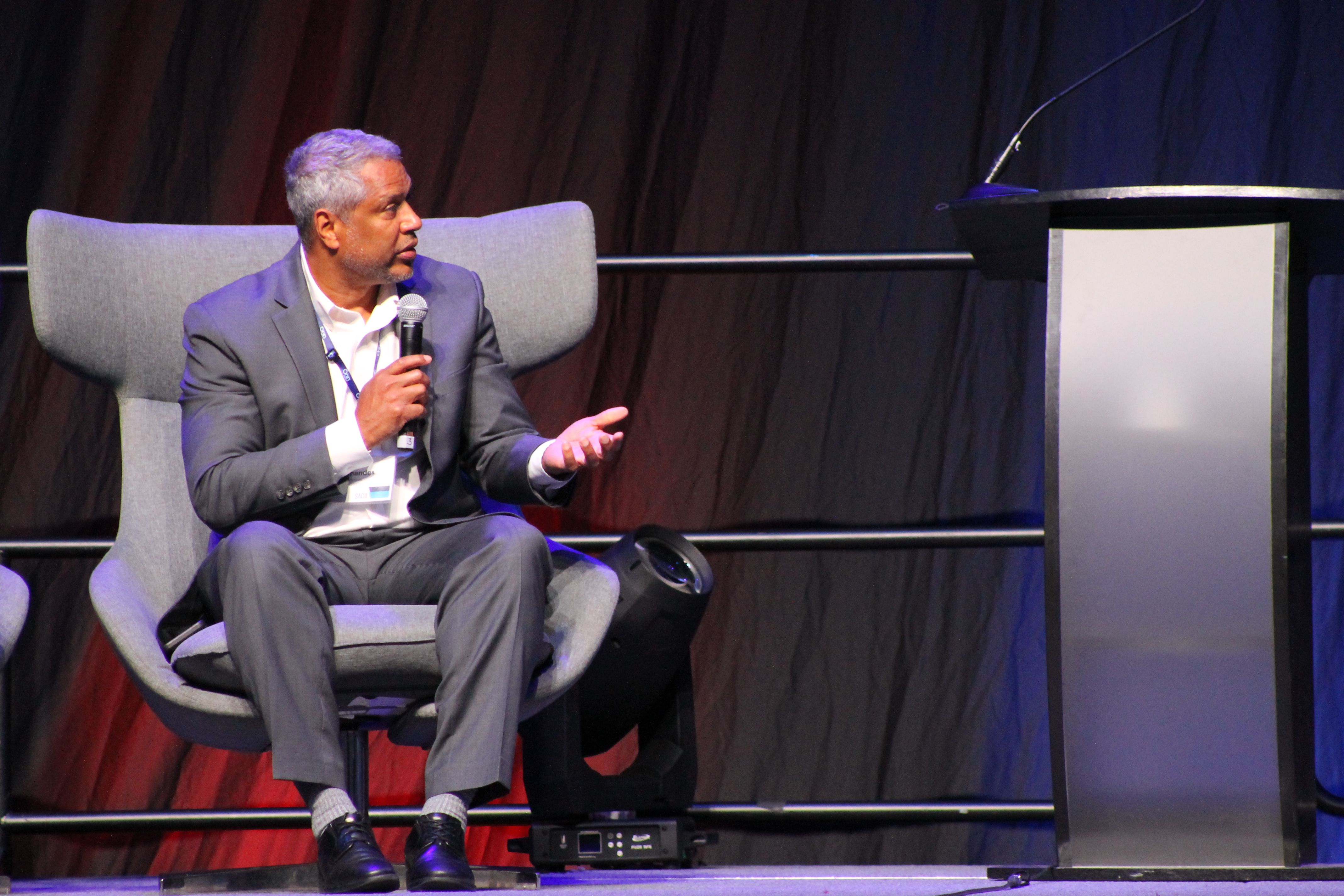
Catch up quick: Mazda Toyota Manufacturing, which employs around 4,000 in its Huntsville plant, hasn't had a problem recruiting and hiring people, says David Fernandes, senior vice president.
- "It's a bigger challenge to retain those folks," he said. "It's figuring a way to create … more flexibility for employees."
- At the Huntsville facility, the two-shift, day-night pattern switches every 30 days, so "it's hard to get really creative with that kind of shift pattern," Fernandes said.
Honda used the same two-shift pattern for 20 years until feedback from employees led them to change it to a fixed schedule, said Lamar Whitaker, vice president and plant lead at the Honda Alabama Auto Plant in Lincoln.
- Flexibility for a better work-life balance "is going to be huge for getting people back into the workforce" as Baby Boomers and Gen X-ers continue to retire, said Jason Pickering, vice president of operations for Polaris in Madison.
Zoom in: While worries abound about the impact AI will have on white- and blue-collar jobs, Alabama's automotive OEMs see it as a tool, not a threat.
- "I don't see AI replacing a manufacturing job," Pickering said. "I think it could act like a force multiplier. … it's really not about eliminating the job, it's about eliminating the hard part of the task."
- Mercedes-Benz has started using AI for supply chain planning, said Frederico Kochlowski, president and CEO of Mercedes-Benz U.S. International.
Context: With the United States-Mexico-Canada agreement replacing the North American Free Trade Agreement in 2020, local manufacturers have focused on domestic supply chains and manufacturing for domestic sales.
- That's also paid off as tariff uncertainty has muddied market waters.
Case in point: "We have constructed a robust supply chain in North America ... that has allowed us to shift production between our sites [to] still meet customer demand without passing on the cost of tariffs to our customers," said Whitaker.
Driving the news: The recent end of federal subsidies for electric vehicles is raising questions about the future of EV demand.
- Hyundai isn't backing off EVs, said Shane Nice, chief quality officer and director of quality for Hyundai Motor Manufacturing Alabama.
- He said that part of Hyundai's $26 billion U.S. investment will help keep its plants flexible for EV production, and "make Hyundai more flexible based on consumer demand."
What they're saying: "We still feel the future of personal mobility is electrification, and we are taking steps to increase our EV production capacity in the United States," Whitaker said.