Huntsville grandparents call for more support raising grandkids

Add Axios as your preferred source to
see more of our stories on Google.
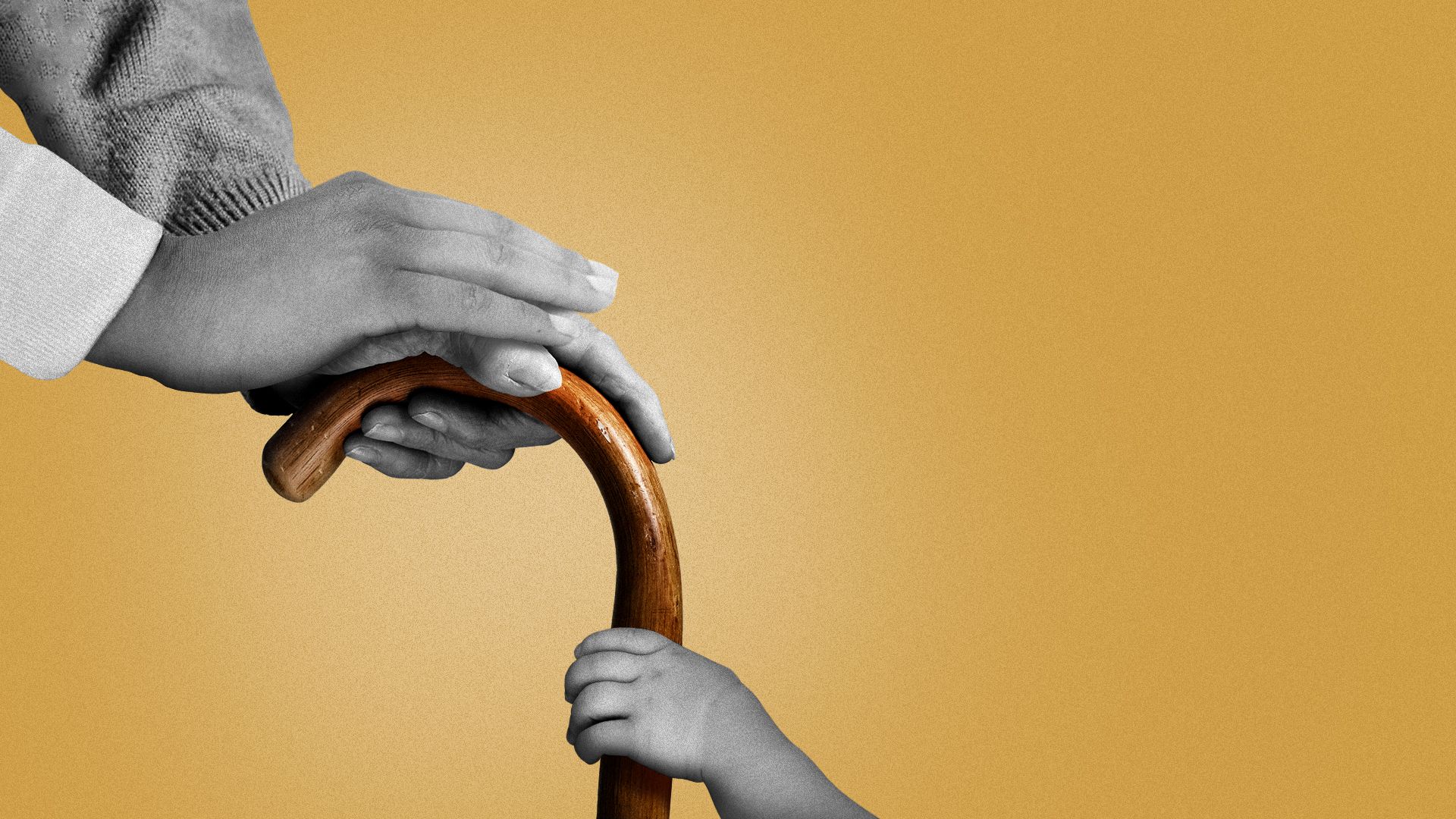
Illustration: Lindsey Bailey/Axios
Keith Lowhorne and his wife Edie are raising their grandchildren.
Why it matters: In Huntsville, and across Alabama, stories like the Lowhornes' are common, and driving efforts for more support.
Their grandchildren, 11-year-old Kyren and 8-year-old Harper, were both born with drugs in their system, Lowhorne said, leading the Lowhornes to step in and fight for custody.
- Lowhorne says the early years of their lives were marked by trauma, hospital stays and court battles, where he and his wife navigated a system he says felt stacked against them.
Catch up quick: It's a similar story for the families who receive help through Grandparents as Parents - Alabama, founded by the Lowhornes from their New Market driveway in 2020 during the COVID-19 pandemic.
- Since then, they say they've helped 56,000 families with grandparents as young as 38 and as old as 86 with food, clothing and other essentials.
- "Every day we get more phone calls from our grandparents who have had to take custody, or had kids dropped off at their doorstep," he told Axios Huntsville.
The big picture: Grandparents don't receive the same subsidies foster parents do unless they go through the same state training, Lowhorne noted, and don't get more from Social Security unless they can afford to adopt.
- "We love our foster families and wholeheartedly support them, but we believe grandfamilies need to be on the same level of stipends," he said.
Driving the news: Lowhorne says hundreds of millions that flow into Alabama from national opioid settlements can be better put to the task.
- "Opioids are by far the No. 1 factor," in why grandparents end up raising their grandkids, he said, along with death, military deployment, overdoses and imprisonment.
Zoom in: Opioid settlement money is allocated by the Alabama Opioid Overdose and Addiction Council, most of which can only be spent on "opioid remediation efforts."
- In 2025, it appropriated $8.93 million in prevention, treatment and recovery funds, following $8.06 million awarded in 2024 and $8.5 million in 2023.
- Those funds are awarded through an RFP process, and GAP went before the Council in 2024 and won a $90,000 grant that helped families pay for everything from utility bills to dance lessons.
By the numbers: According to national advocacy group Grandfamilies & Kinship Support Network (GKS), there are more than 159,000 Alabama households where a non-parent relative is head of household.
- In those households are nearly 250,000 children being raised by grandparents or other relative caregivers, Lowhorne says.
- Nationally, 8 million children live with a relative as head of household, according to GKS, including 2.7 million without a parent in the home.
What's next: GAP established its One-Stop Shop earlier this year, and Lowhorne hopes to grow it into a larger operation and model for the state where specialists can help families access everything they need in one location, based on one out of Nevada.
- It could be established with opioid settlement dollars, he said, and sustained by the interest on unspent TANF funds.
The bottom line: "Why don't we try something different?" he said. "Let's try to help those families who have picked up the pieces."