Huntsville eyes AI, truck cameras to fight blight

Add Axios as your preferred source to
see more of our stories on Google.
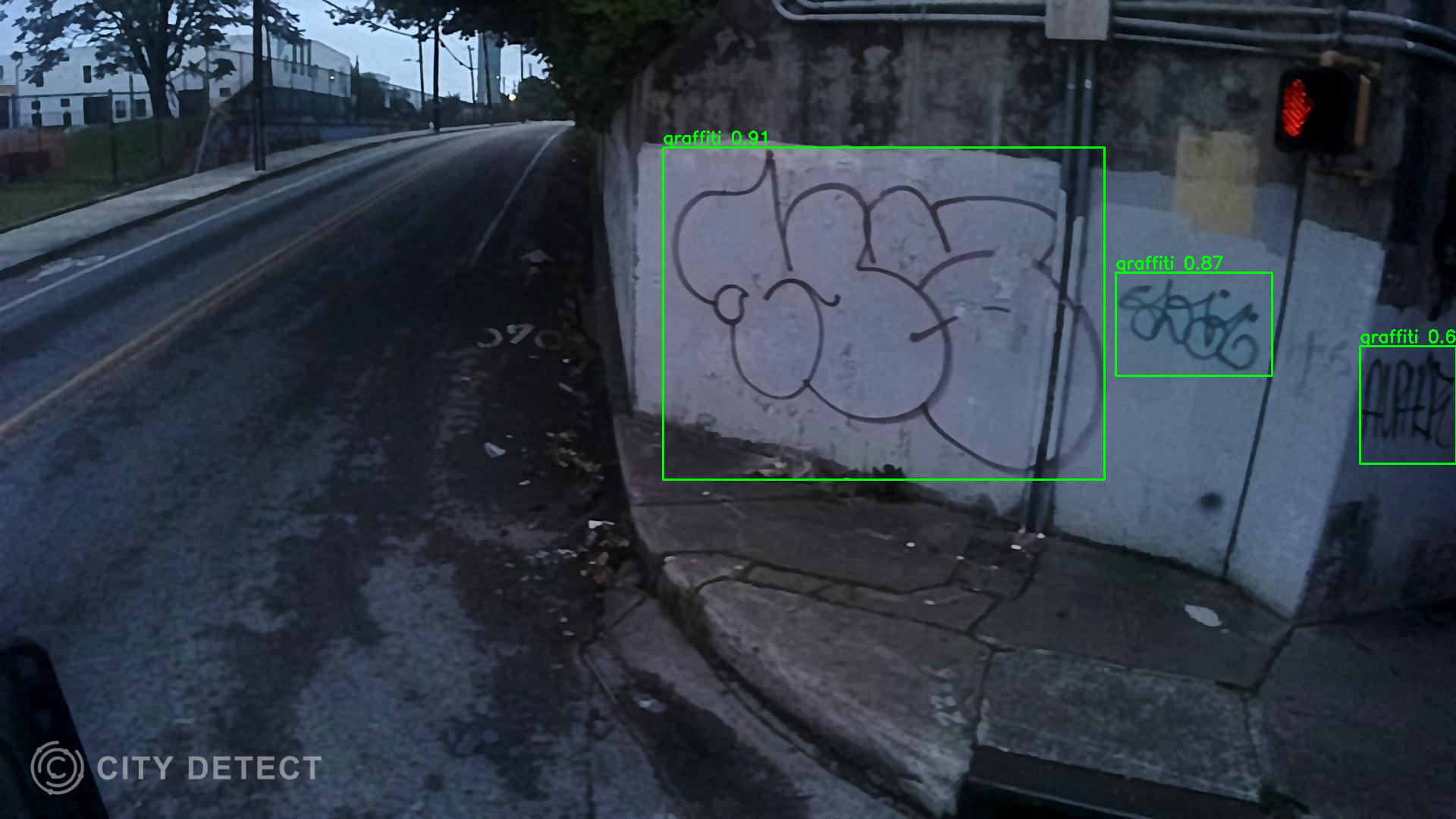
Graffiti and roadside debris are among blight the software can tag. Photo: Courtesy of City Detect
Huntsville City Council will decide tonight whether to use garbage truck-mounted cameras equipped with AI software to identify issues for code enforcement and public works.
Why it matters: The city hopes the initiative will benefit several departments, helping to keep tabs on overgrown vegetation, structural issues, illegal dumping and, potentially, pothole monitoring.
What they're saying: "There are no automatic citations or fines associated with this system and no enforcement bots," says John Hamilton, city administrator, in a city blog post.
- "If something appears problematic based on the City Detect data, a human inspector takes a more informed, closer look, just like they would today, only more efficiently and with better insight."
Yes, but: Recent public meetings have already seen residents raising questions about potential privacy issues.
- City Detect lays out its strategy on image collection, data security and privacy here.
Zoom in: Huntsville's post says about 3,600 of 8,500 citations issued in 2024 were related to overgrown vegetation, leaving inspectors nearly fully occupied with vegetation complaints at peak season.
- City Detect will free up staff to address structural blight and severe property issues, and enables a proactive approach compared to solely relying on resident complaints, the city says.
How it works: City Detect uses cameras and an "AI platform that analyzes images of city properties, identifying and mapping issues such as blight, damage, and decay," per its website.
- Cameras mounted to garbage trucks will collect visual data as the trucks travel their routes, the city says. The software then flags concerns so city staff can follow up.
Zoom out: The Tuscaloosa-based firm was founded by veteran and entrepreneur Gavin Baum-Blake and Erik Johnson, a former economics professor at the University of Alabama's Culverhouse School of Business.
- It's already in use in cities like Tuscaloosa, where Habitat for Humanity also uses the data, Stockton, California, and Columbia, South Carolina, per City Detect.
What's next: If the three-year, $972,200 contract (two years at $337,500 and one at $297,200) is approved, the pilot program will launch next month in Huntsville.
- It will start with an initial five cameras, data collection and collaboration next month before an additional 20 cameras will be installed in November.