Inside Colorado's mental health clubhouse

Add Axios as your preferred source to
see more of our stories on Google.
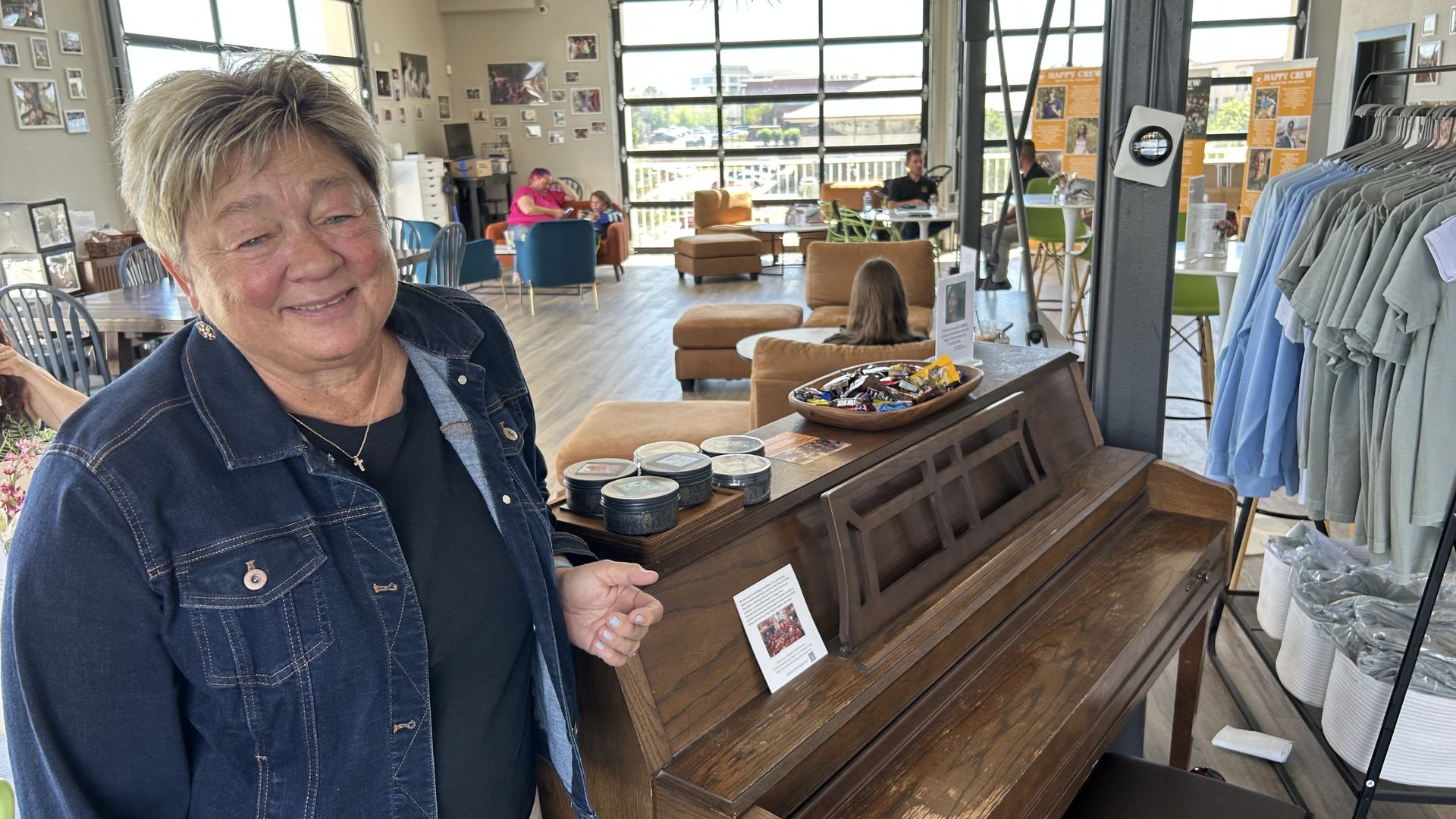
Amy Mays, who runs Happy Crew. Photo: Robert Sanchez/Axios
The metro area's coolest mental health program looks a lot like a coffee shop.
Yes, but: Head upstairs at Lone Tree's Happy Crew Coffee House after hours on a school-year Monday and you might find 100 teenagers munching pizza, laughing and tackling topics that can be tough to broach at home.
- Like anxiety, friendship, stress and loneliness.
Behind the scenes: Aspyn Motarjeme, a 17-year-old Rock Canyon High School senior, hugged friends she hadn't seen in months and welcomed newcomers to the school year's first Happy Crew meeting a few weeks ago.
- Outside, dozens of parents cycled through drop-off as another 30 or so teens waved hello and caught up.
Zoom in: Happy Crew's pitch isn't that these kids need fixing.
- It's that they can learn to handle difficult things — together.
What they're saying: "I don't have to be anyone other than myself, and being who I am is just fine," Motarjeme tells me.
Former church youth director Amy Mays started the nonprofit more than a decade ago after a string of teen suicides in Douglas County.
- Meetings bounced from coffee shops and pizza places to her home, then into Happy Crew's own space, partly funded by a $240,000 American Rescue Plan Act grant.
- Mays has kept the program going even after her own children graduated high school.
Threat level: More than 1 in 4 Colorado high school students in 2023 said they felt persistently sad or hopeless, and 11% seriously considered suicide, a Colorado Department of Public Health and Environment survey shows.
"We exist to let kids know they matter and that they have somewhere they'll always belong," Mays tells me.
- Any high schooler can join a meeting, though most are DougCo students.
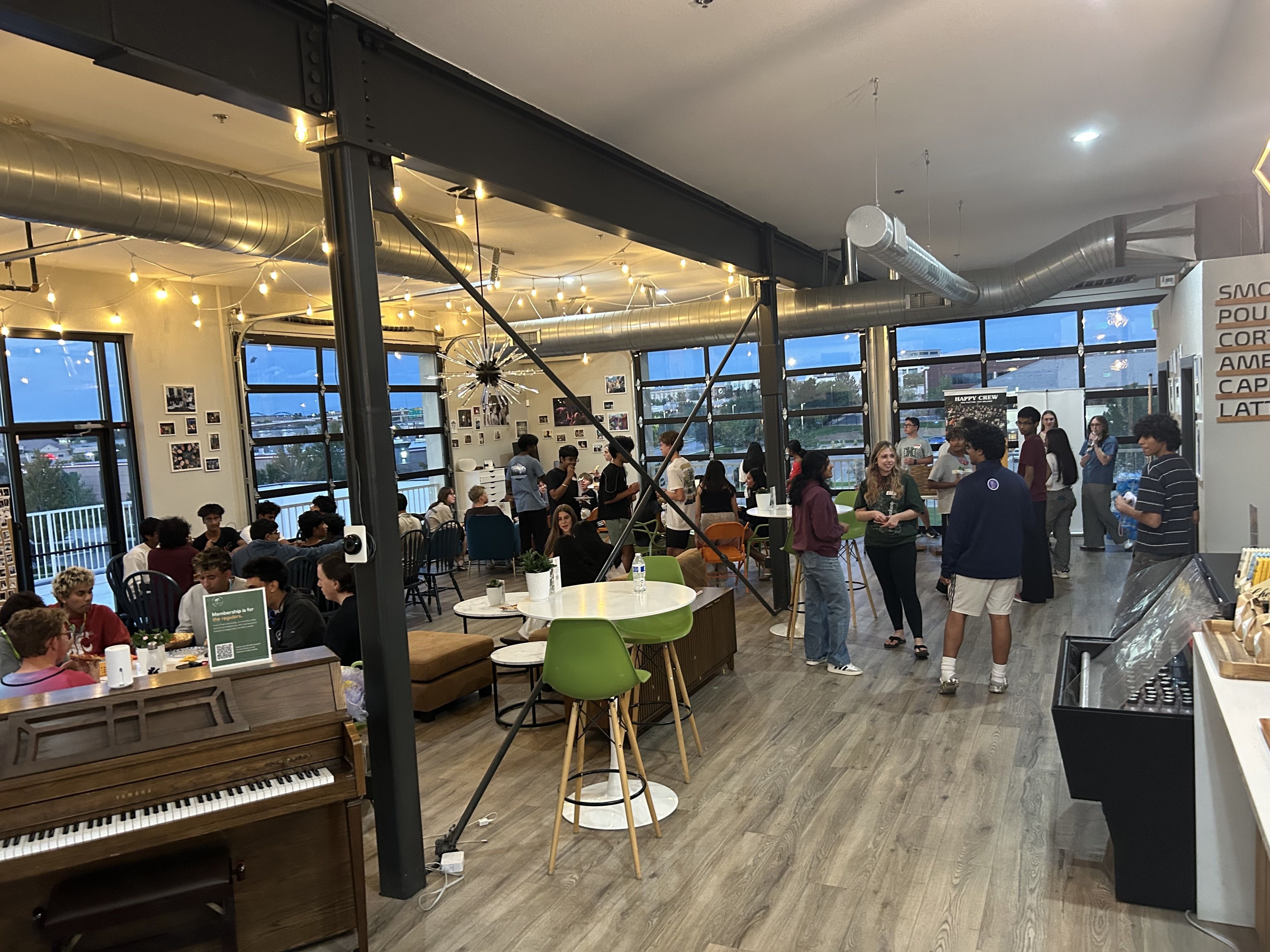
How it works: Happy Crew operates as a coffee shop by day.
- Customers buy coffee or monthly memberships they can spend as cafe credit. Anything left at month's end becomes a Happy Crew donation.
- At night, the space flips into the teen clubhouse.
This isn't group therapy — or simply suicide prevention.
Teens teach teens how to listen, connect and recognize what they can control when life gets messy.
- They practice active listening, navigating difficult conversations and managing stress.
- That might mean Play-Doh art, a whiteboard sketch or role-playing a real-life issue.
Context: Student leaders get training on suicide and self-harm and bring serious concerns to Mays.
The bottom line: Happy Crew isn't trying to solve teen mental health or replace therapists, parents or schools.
- It's another place for kids to talk.
If you or someone you know may be considering suicide, call or text the National Suicide Prevention Lifeline at 988. The hotline is open 24/7 365 days a year. Ayuda disponible en español.