Walk on Colorado's wild side

Add Axios as your preferred source to
see more of our stories on Google.
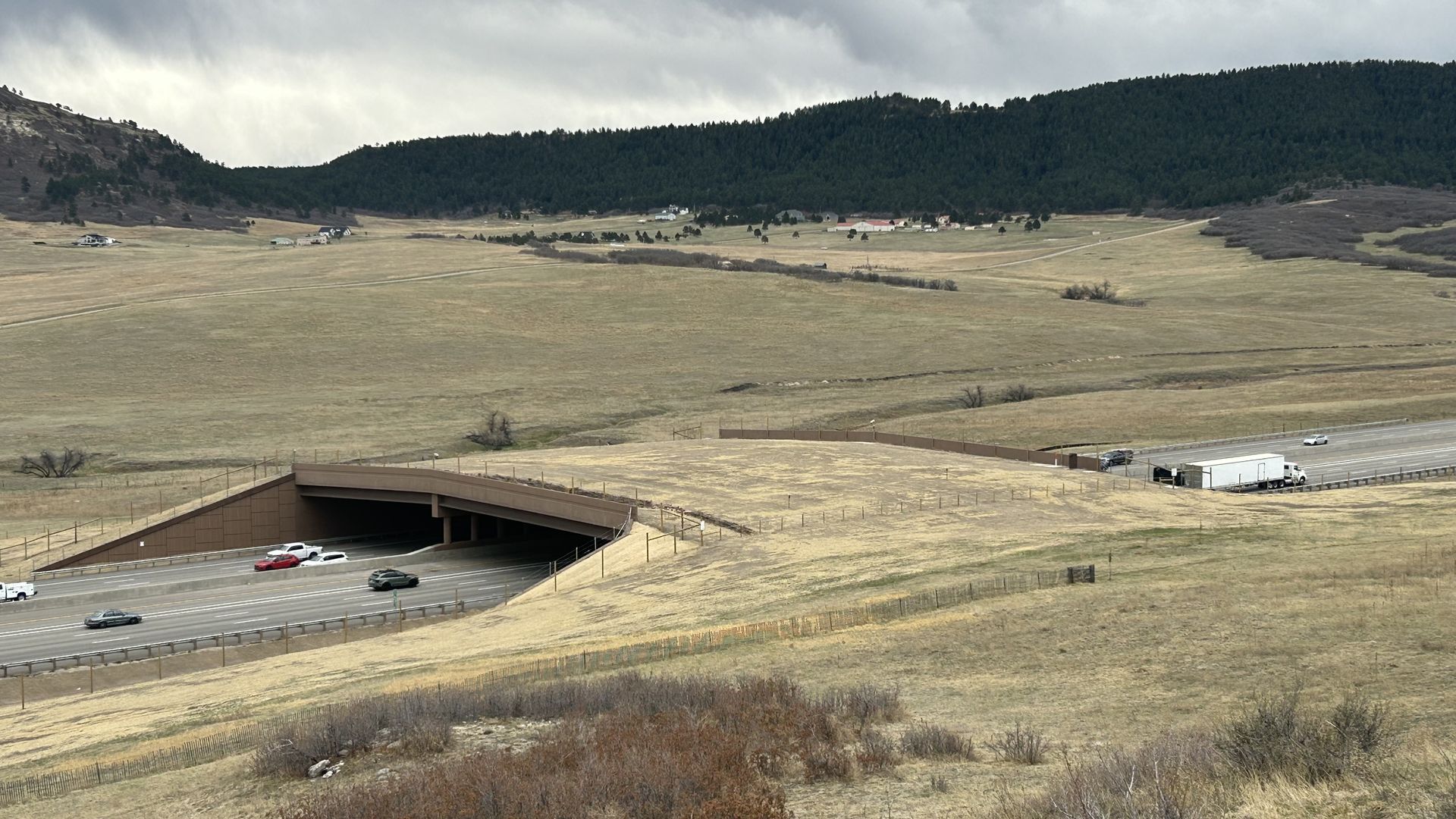
The Greenland Wildlife Overpass looks like a big success. Photo: Robert Sanchez/Axios
Pronghorn and elk are taking the high road in Douglas County.
Why it matters: The animals are crossing I-25 on the Greenland Wildlife Overpass — a promising sign that the continent's largest wildlife superhighway is working.
Zoom in: The overpass opened in December, and the first elk appeared on camera in June, Colorado Department of Transportation officials say.
- Pronghorn are making the trip, too, along with mule deer, black bears, mountain lions and other wildlife.
What they're saying: "Based on the video feed that we're collecting, huge success," CDOT's environmental manager Chuck Attardo says.
The big picture: For decades, I-25 was a lousy matchmaker.
- Without a crossing, elk herds were largely cut off from each other, limiting breeding opportunities.
- And pronghorn might've had it even tougher. Collar studies tracked the animals north along I-25 as they searched for somewhere to cross.
- Eventually, they turned back.
By the numbers: The $15 million overpass stretches 209 feet across six lanes of traffic and is 200 feet wide.
- More than 100,000 vehicles cross underhoof daily.
How it works: The Greenland overpass closed the last 3.7-mile gap in an 18-mile system of wildlife crossings and fencing along the I-25 South Gap corridor.
- Together, the project's cut wildlife-vehicle crashes 91%.
Between the lines: Animals don't always take the hint. That's why Greenland's early success is such a big deal.
- In Canada's Banff National Park, grizzly bears, cougars and wolves spent years ramping up their overpass use.
Yes, but: Getting animals over I-25 is only part of the test.
- Before the overpass' construction, researchers collected elk fecal samples on both sides of I-25 to establish a genetic baseline.
- They'll eventually collect more elk-y tailpipe emissions to see whether the two populations are mixing genetically.
What's next: Researchers expect their first genetic results in spring 2027.
- They plan to compare elk genetics again in five to 10 years to see whether the once-separated populations are reconnecting.
The bottom line: The animals are making it over I-25.
- Next, researchers will find out whether the overpass is the world's wildest singles bar.