Parker is giving its history a second look

Add Axios as your preferred source to
see more of our stories on Google.
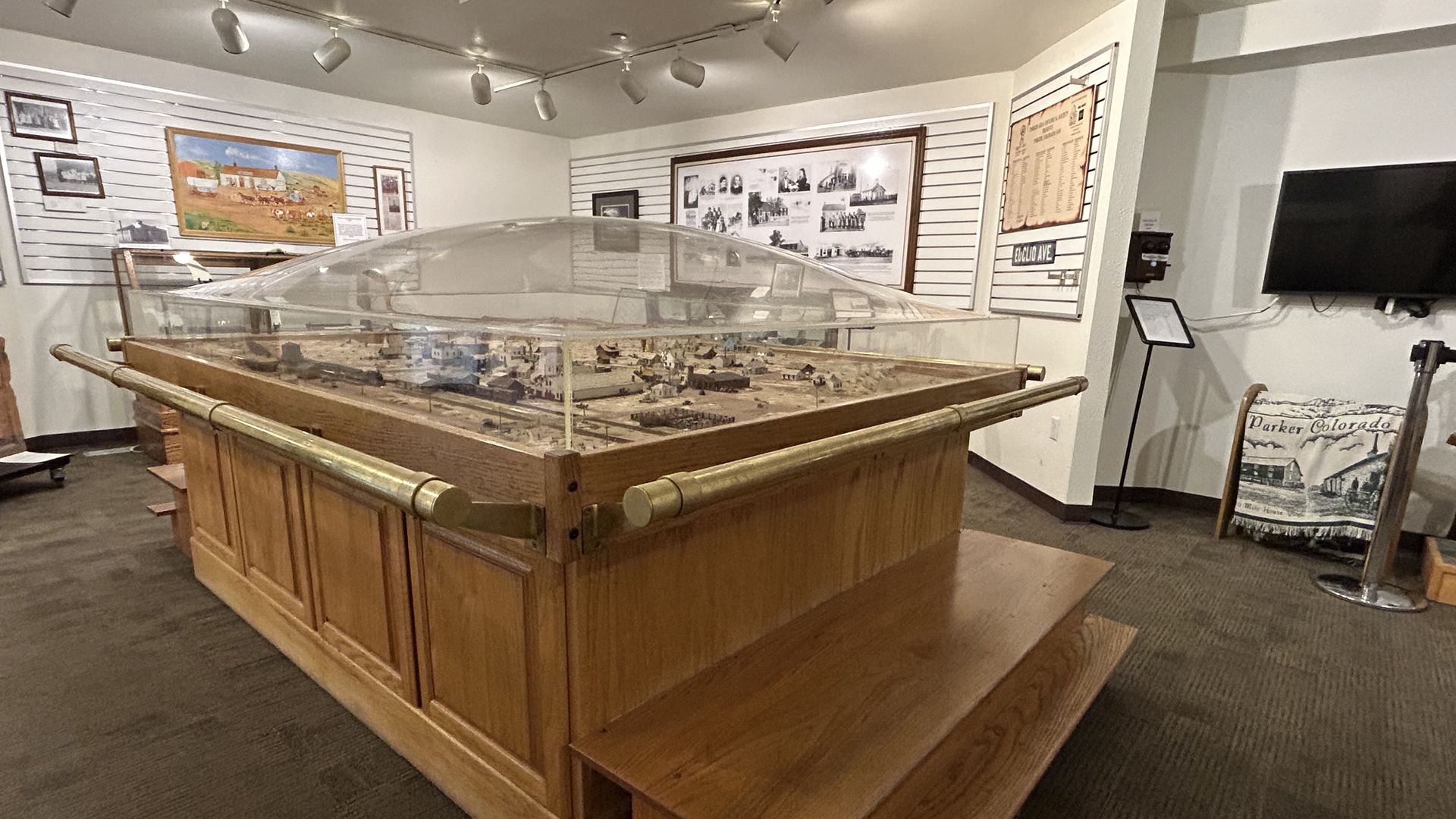
Parker's Heritage Center will soon get a revamp. Photo: Robert Sanchez/Axios
Parker's starting over on how it tells its story.
Zoom in: The town spent the past 45 years growing into a destination — a 72,000-resident suburb with schools, sprawling trails, ever-developing neighborhoods and a new, $400+ million Mainstreet transformation.
Yes, but: Parker's struggled to explain how this place became this place.
- The town's roots stretch to the Civil War era — but there's lots more history.
Context: The 23-year-old Heritage Center is just 630 square feet inside The Schoolhouse on Mainstreet. Town officials acknowledge it doesn't do a great job explaining Parker's existence.
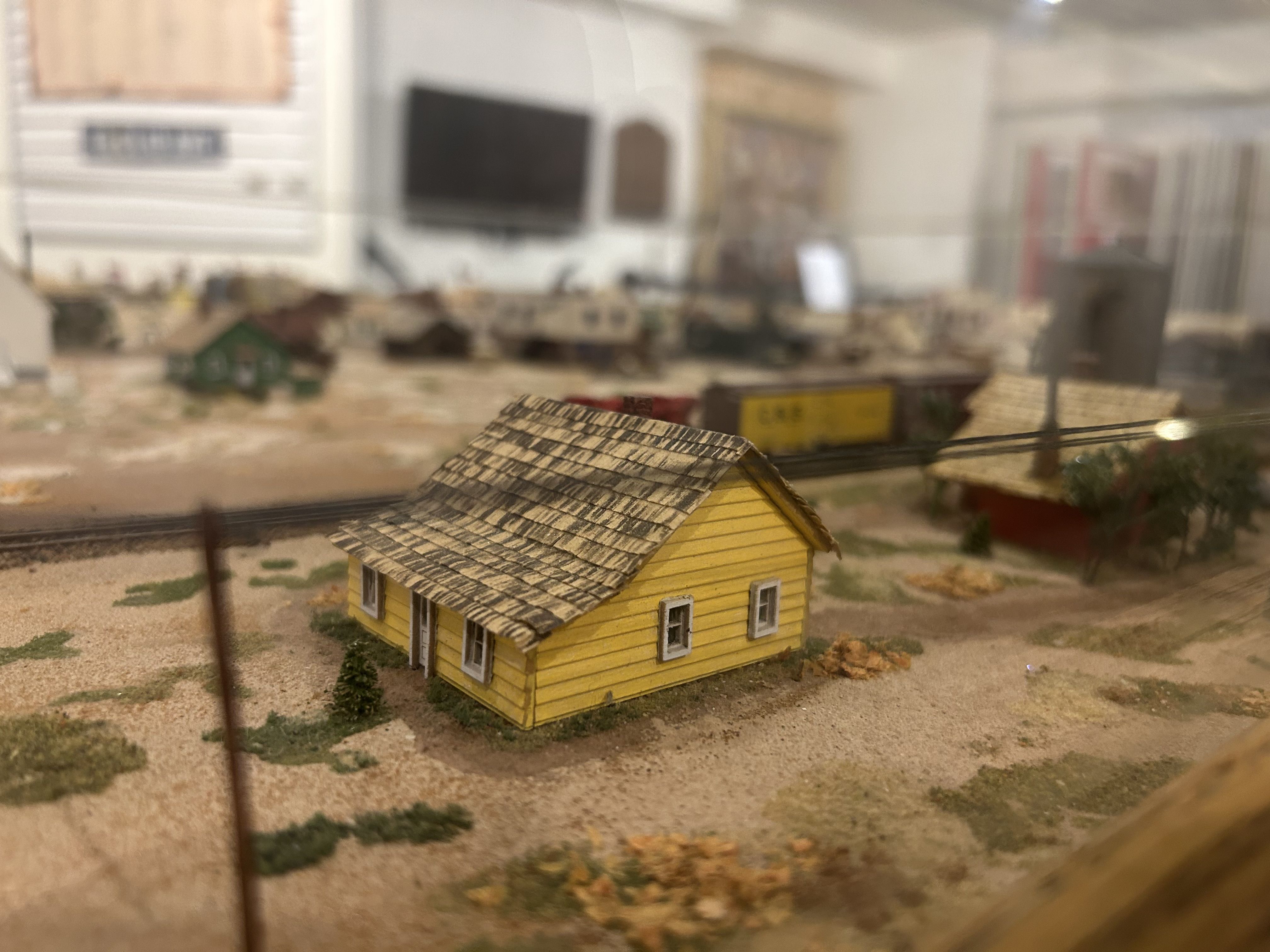
- There's a spinning wheel, some milk cans and black-and-white photos. A diorama of old-time Parker dominates the space.
"There's a lot that's not working," Carrie Glassburn, the town's cultural director, tells me.
Driving the news: This year, Parker launched a $107,500 "reimagining" of the center that'll explain what was here long ago, what followed and how that's still shaping the town.
- Council members will hear proposals for the center's expanded vision next Monday.
Flashback: Parker's history often centers on pioneers and the railroad, giving little attention to what came before.
Case in point: The center mostly excludes Native Americans who lived, hunted and traveled the area.
- Tribes get only a couple of sentences on a wall display that says settlers' arrivals "brought an end to the way of life of these people of the plains."
- And one of the few images depicting Native Americans is a drawing of them on horseback attacking a stagecoach.
The Heritage Center's reinvention is important not just for what it might do to improve historical literacy in town, but for what it represents.
What we're watching: Tribal representatives are working with an interpretation consultant who helped create a Parker Water & Sanitation District exhibit last year that connects mammoth hunters, Indigenous communities, settlers and modern development.
- That project drew on years of archaeological research and consultation with Ute, Arapaho and Cheyenne representatives, among others.
- Glassburn says tribal members will write their own histories for the Heritage Center.
What's next: The revamped center could open in fall 2027.