Inside Castle Rock's cop drone network

Add Axios as your preferred source to
see more of our stories on Google.
Illustration: Lindsey Bailey/Axios
Castle Rock Police are already looking to expand drone coverage across town less than a year after launching their drones-as-first-responders (DFR) program.
The latest: The department is planning its next phase, pursuing upgrades that could significantly expand the reach of its drone network.
- Police recently applied for FAA approval that would allow one pilot to fly multiple drones at once.
- It also eventually wants to add a fourth drone station to spread coverage into eastern Castle Rock.
Together, the changes could extend drones across town and help police manage major incidents more efficiently.
Why it matters: Castle Rock is moving faster than many larger cities to build one of Colorado's most advanced police drone networks.
Flashback: The department launched its DFR program last October.
- Previously, trained officers launched drones from their vehicles — and operated them only if they maintained visual sight.
By the numbers: The department has nine pilots and 10 drones.
- Three stations across Castle Rock support the DFR network. They cover about 75% of the town.
- There's a drone station on the department's roof — and police say their drones can reach most scenes in about 85 seconds. Police won't say where two are located, other than that they're on public property.
What they're saying: Drones are used on missing child calls, stolen vehicle investigations and other incidents, local police say.
- Last month, a drone helped assess an apartment fire.
- Another tracked a lost dog through a park, helping its owners locate their pet.
Zoom in: The town signed a three-year, $600,000 contract with Flock Safety for its DFR program.
Friction point: Flock has drawn criticism from civil liberties groups that worry drone expansion normalizes police surveillance.
Yes, but: Seth Morrissey, a Castle Rock Police drone pilot, tells Axios the town's DFRs can't hear conversations, don't have facial-recognition capabilities and can't read license plates.
- "That's not the purpose," Morrissey says.
How it works: A call comes into dispatch and information is relayed to the response center.
- A drone operator launches an aircraft in less than a minute.
- It can hit speeds up to about 52mph.
- Video is recorded throughout the flight.
On busy days, police department pilots might launch a dozen flights.
- And residents can track the routes on a transparency portal.
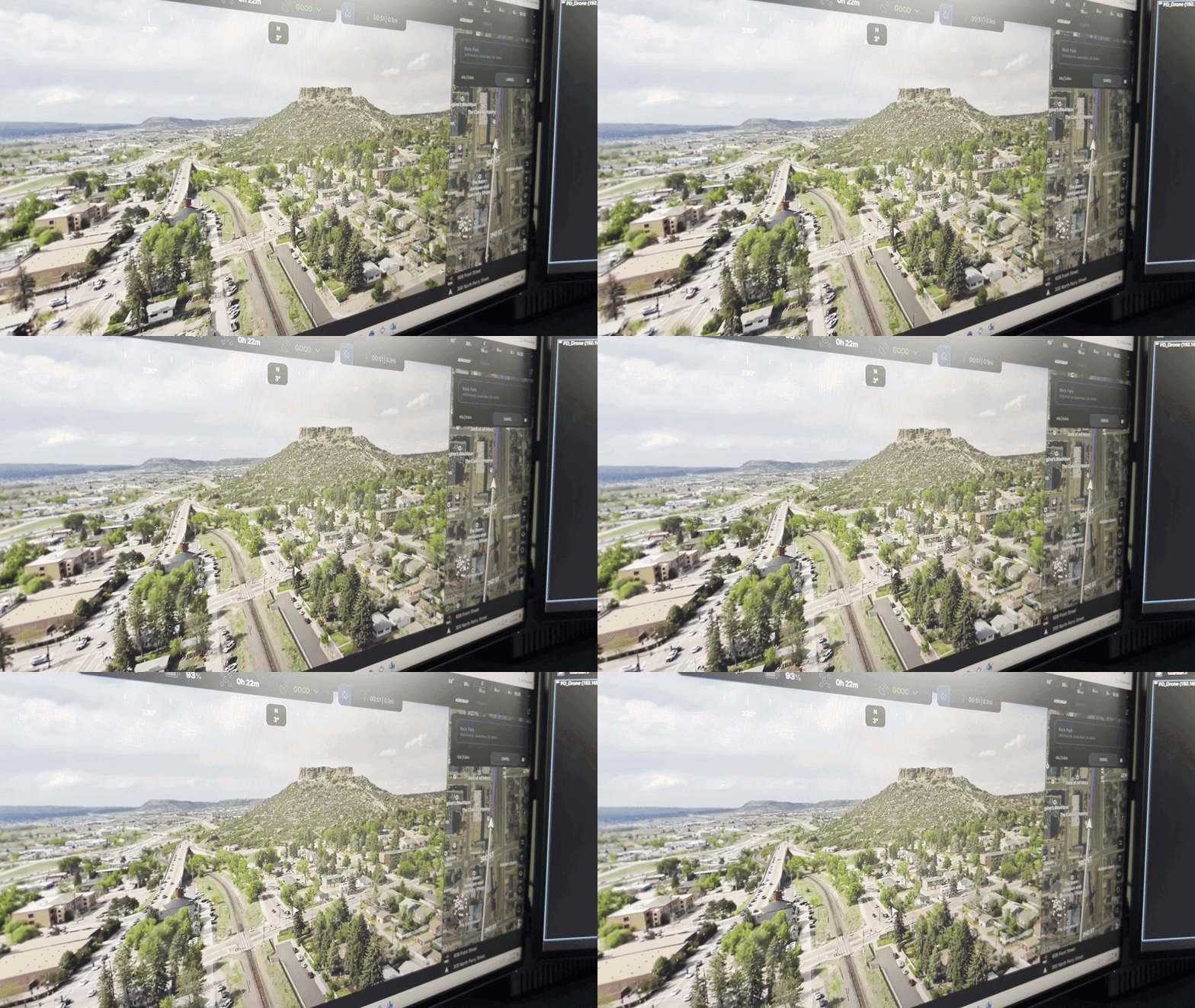
The response center looks like something out of a Cold War movie — with multiple monitors on two desks.
- Morrissey showed Axios how a drone works, launching it from the department's roof.
- The drone reached Castle Rock's namesake rock — about a half-mile away — in roughly 20 seconds.
The intrigue: Castle Rock Police was Colorado's first agency to get an FAA waiver allowing DFR operations up to 400 feet without a visual observer.
What's next: There isn't a timeline for drone expansion closer to U.S. 83, but a decision on multiple drones controlled by one pilot could come soon.