Douglas County's crop lab

Add Axios as your preferred source to
see more of our stories on Google.
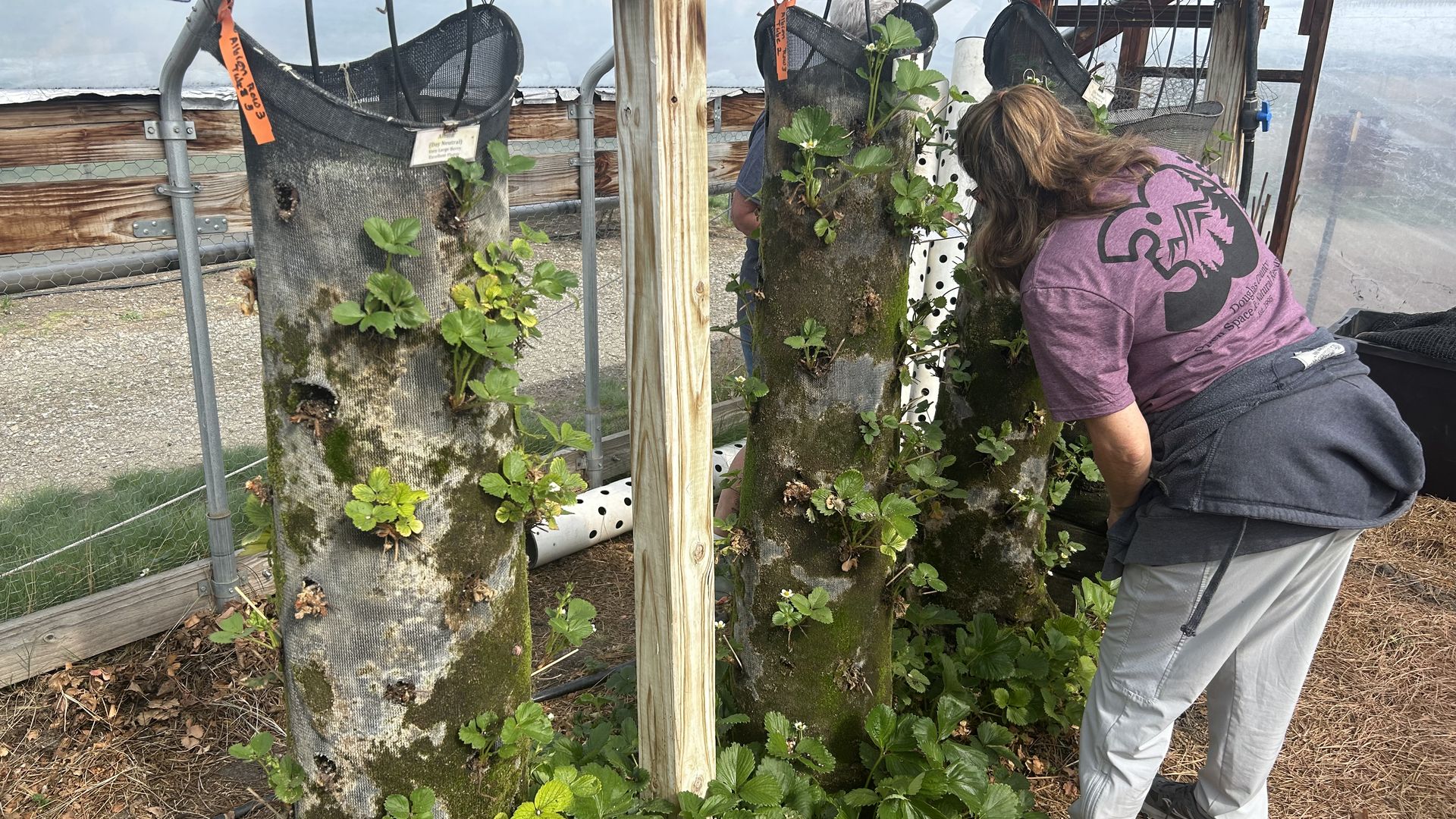
A volunteer checks moisture levels on some of Hidden Mesa Research & Demonstration Orchard's vertically grown strawberries. Photo: Robert Sanchez/Axios
A mostly volunteer-run Douglas County orchard is helping residents figure out what can actually survive drought, wind and wild weather.
Why it matters: The county's Hidden Mesa Research & Demonstration Orchard near Franktown has tested hundreds of fruits, vegetables and other crops in real-world conditions — creating rare local data on what grows, what doesn't and how to save precious resources.
- The lessons help gardeners avoid costly mistakes while also producing thousands of pounds of food annually for the Parker Task Force.
- After testing more than 500 varieties, volunteers have identified crops that consistently handle the county's climate — and soil.
State of play: Douglas County's environmental resources coordinator, Andy Hough, set out 15 years ago to find agricultural opportunities beyond the county's hay-and-cattle economy.
- The orchard is one of Colorado's few programs dedicated to evaluating fruits, nuts and specialty crops that can survive Front Range conditions.
- It operates with help from Colorado State University's Extension Office in the county.
How it works: With Hough's oversight, up to 40 volunteers spend Tuesdays planting, harvesting and testing growing techniques.
- Most are retirees and many are CSU master gardeners.
- The four-acre site includes orchards, berry tunnels, greenhouses, vegetable plots and pollinator gardens.
- Volunteers experiment with water saving systems, including vertical strawberry towers and Dutch buckets.
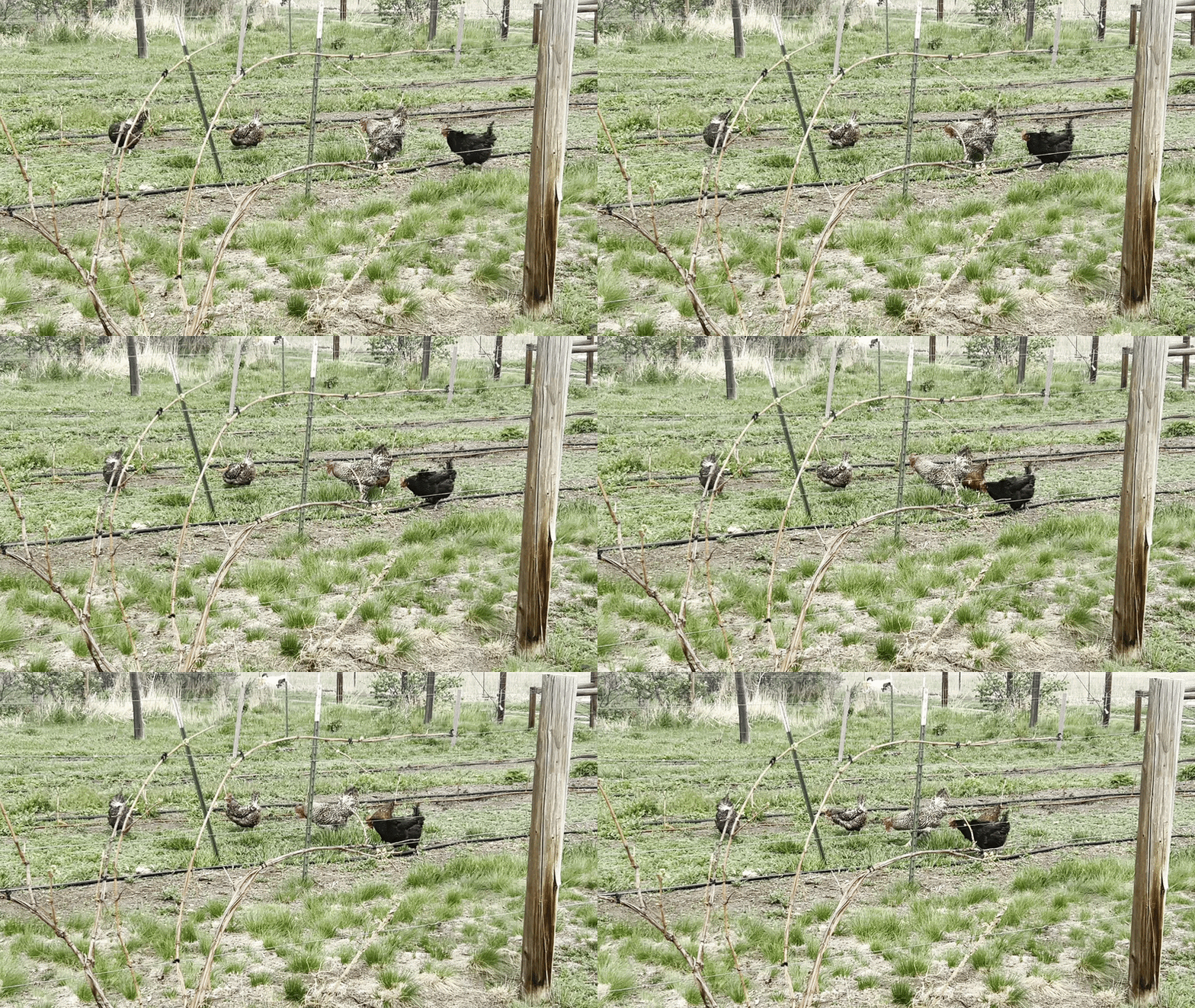
- Roughly 60 chickens help control grasshoppers — and minders call themselves "chicken tenders."
By the numbers: The orchard has donated more than 37,000 pounds of produce — from raspberries to peppers and carrots — to the Parker Task Force, which operates a regional food bank.
- This year, volunteers expect to produce roughly 3,000 pounds of produce.
After more than a decade, volunteers say some of the most reliable crops include:
- Bush cherries, elderberries, serviceberries (also called Saskatoon berries), apples and pears.
- Plus, currants, gooseberries and several raspberry varieties.
Caveat: The garden's mistakes allow growers to learn what fails before investing time, water and money.
Case in point: Kiwi varieties that thrive in parts of Canada and Siberia couldn't survive Douglas County's temperature swings.
- The garden's also confirmed regional durability for tart cherries, which continue producing despite hard freezes.
What they're saying: "If you're a grower, you can't afford to fail," Hough says. "With a research program like this, we can fail and pass that information on."
The bottom line: Hidden Mesa and its volunteers are proving that some of the county's most valuable growth is happening behind a garden fence.