Who pays for Project Taurus' power is latest dispute

Add Axios as your preferred source to
see more of our stories on Google.
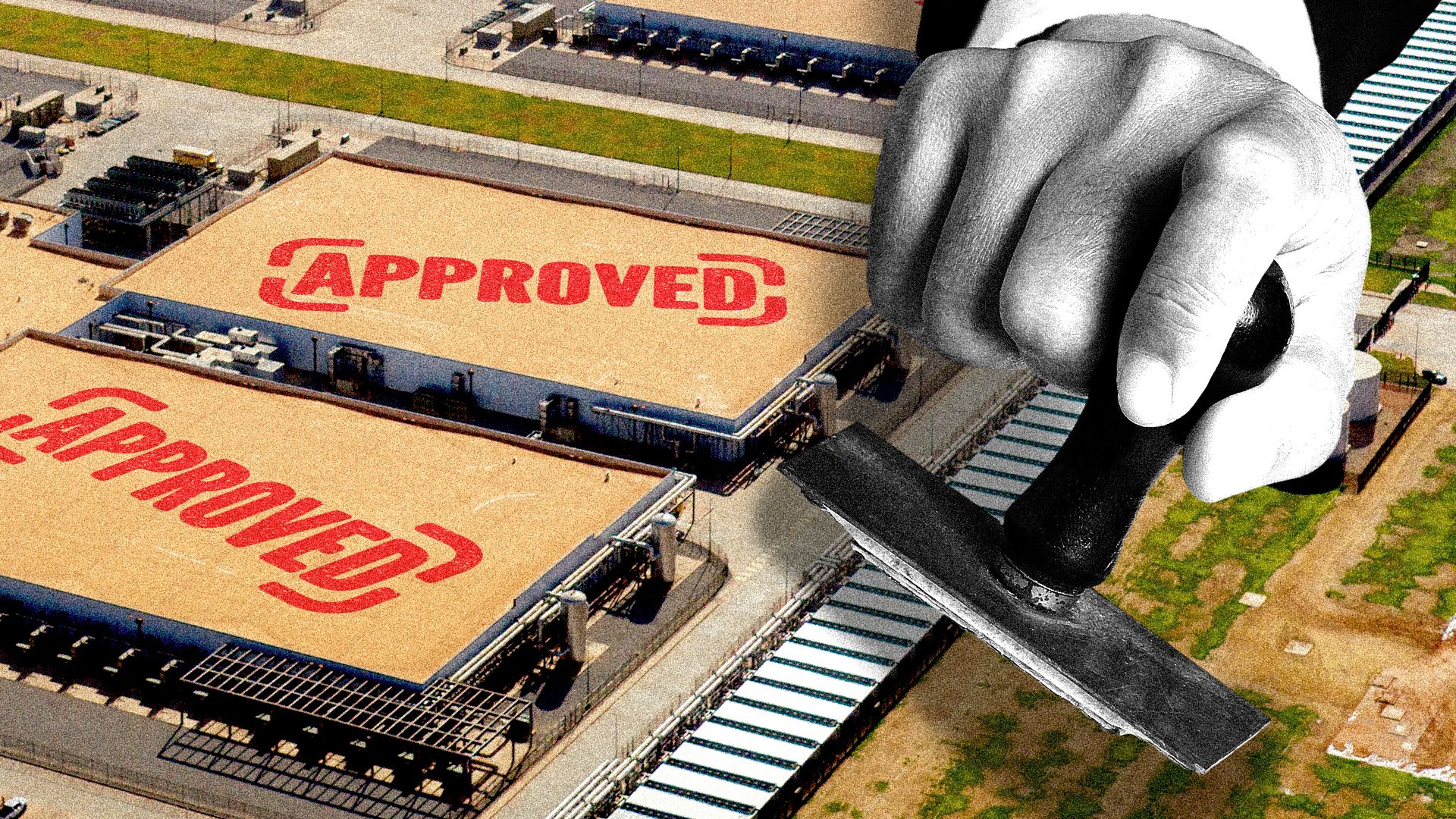
Photo illustration: Brendan Lynch/Axios. Photo: Brandon Bell/Getty Images
Project Taurus wouldn't raise your electric bill, Colorado Springs Utilities spokesperson Alex Trefry tells Axios.
Why it matters: Powering the massive data center, if approved, could require more electricity and upgrades to the grid. But Trefry says CSU's billing rules would put those costs on Taurus — not households.
Catch up quick: Colorado Springs City Council delayed its decision on the controversial project until April to allow time for a study of its power needs.
- But more than two months later, the study hasn't been ordered, KRCC reports.
How it works: The required large-load study would determine how much electricity Southwest Power Pool can supply and at what cost.
- A separate CSU facilities study, completed in March, examined infrastructure serving the site, including power lines and substations, Trefry says.
Follow the money: Trefry says Taurus would have to pay for needed upgrades and contribute to long-term power resources for 10 years.
- CSU's tariff requires at least a decade-long agreement, minimum bills based on contracted capacity and electricity use, and 36 months of collateral.
- Reserve 20 megawatts but only use 15? Taurus would still pay a capacity charge for all 20.
The big picture: Large customers can help lower rates by spreading power-plant costs across more electricity sales, says North Dakota State University economist Robert Mayo, speaking generally about data centers.
- But if a utility lacks the capacity, "somebody's going to have to build a new generating plant or buy electricity from a neighboring utility," he says.
- Who foots the bill depends on local agreements.
What's next: Developer Raeden hasn't signed a service agreement or paid for the required SPP study, Trefry says. The study requires a $10,000 nonrefundable application fee and a 100,000–300,000 advance deposit.
- The developer previously told KRCC it was reluctant to spend that money when council could still reject the project.
What we're watching: Some council members say they want a vote before April's election, questioning why the power study is needed to decide the project's fate.