History walking tours uncover downtown's hidden past

Add Axios as your preferred source to
see more of our stories on Google.
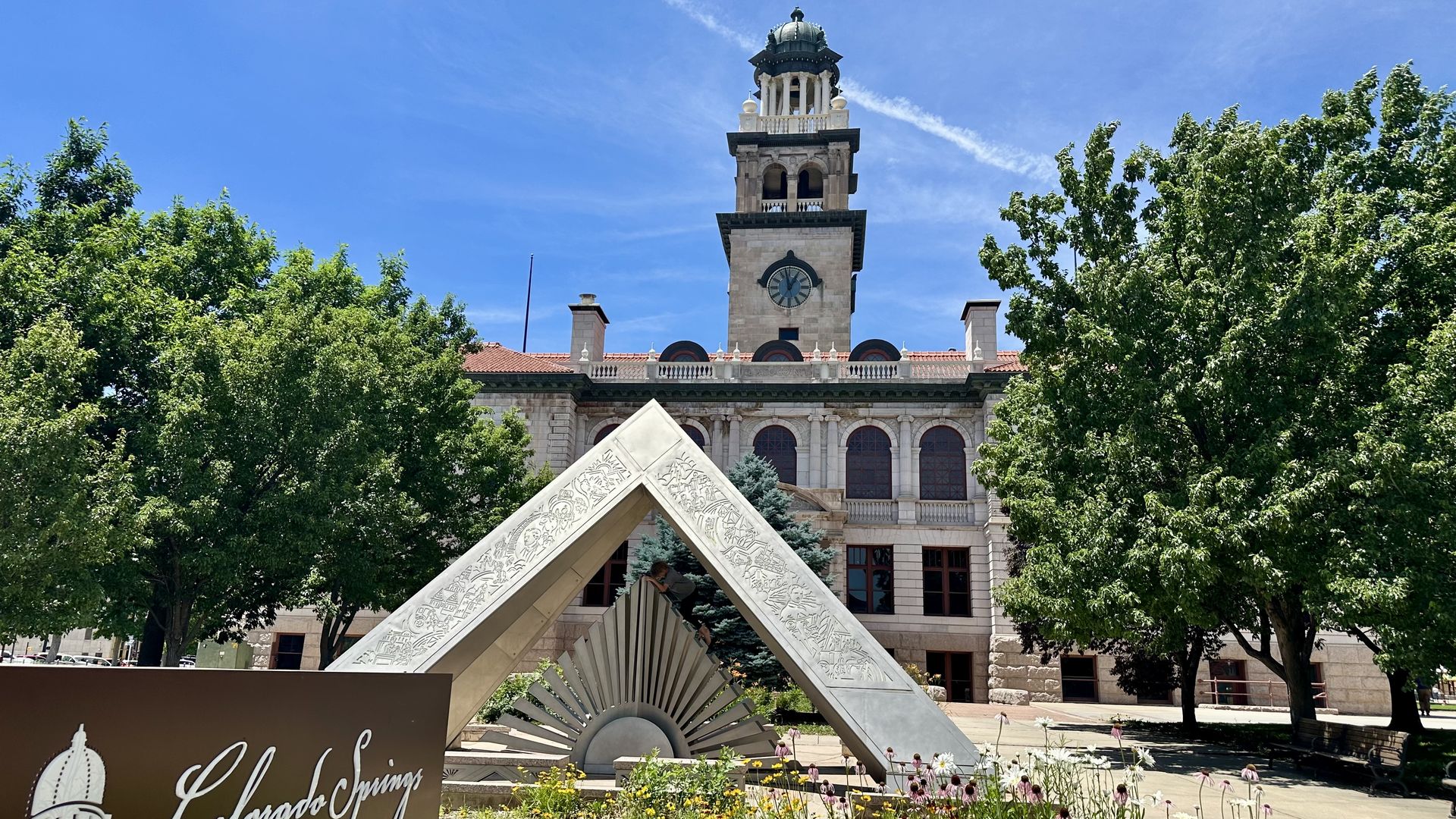
The Colorado Springs Pioneers Museum. Photo: John Frank/Axios
Colorado Springs' past is hiding in plain sight.
Why it matters: Two walking tours this month will transform familiar buildings and downtown intersections into a record of how the city was built, giving newcomers and longtime residents a stronger sense of place.
Driving the news: The Colorado Springs Pioneers Museum will offer two "Seeing History in Place" tours as part of the 250th anniversary of the Declaration of Independence and Colorado's 150th year of statehood.
- The walking talk is less like a history class, memorizing names and dates, and more of a guide to the city's history in its streets.
What they're saying: Museum program administrator Meg Yevara told the Gazette, "Our history matters. We're part of the story."
The intrigue: The Antlers hotel hosted Colorado's 25th-anniversary celebration in 1901 with speeches, parades and a women's congress.
- Near Pikes Peak Avenue, the first stake was placed for Fountain Colony — the settlement that became Colorado Springs.
If you go: Both tours begin and end at the Mining Exchange Hotel, covering roughly 1 mile in 90 minutes.
- The first is 9:30 to 11am Saturday. Tickets cost $10.
- The second is 2 to 3:30pm Sept. 26. The walk includes a cocktail at the Mining Exchange's Golden Hour bar. Tickets are $15, and participants must be 21 or older.
The big picture: The museum's strolls are part of a broader menu of ways to explore Colorado Springs history on foot.
The Downtown Partnership offers hourlong tours one Saturday a month from February through October, covering landmarks, public art and cultural attractions. The outings frequently sell out.
- The season's next tour, "Ghosts of Downtown," is scheduled for Oct. 3 and features Pikes Peak Writers Guild storytellers sharing true and invented tales from the city's early years.
The bottom line: Colorado Springs is alive with history — you just have to slow down long enough to see it.