What's wrong with Pikes Peak's bighorn sheep

Add Axios as your preferred source to
see more of our stories on Google.
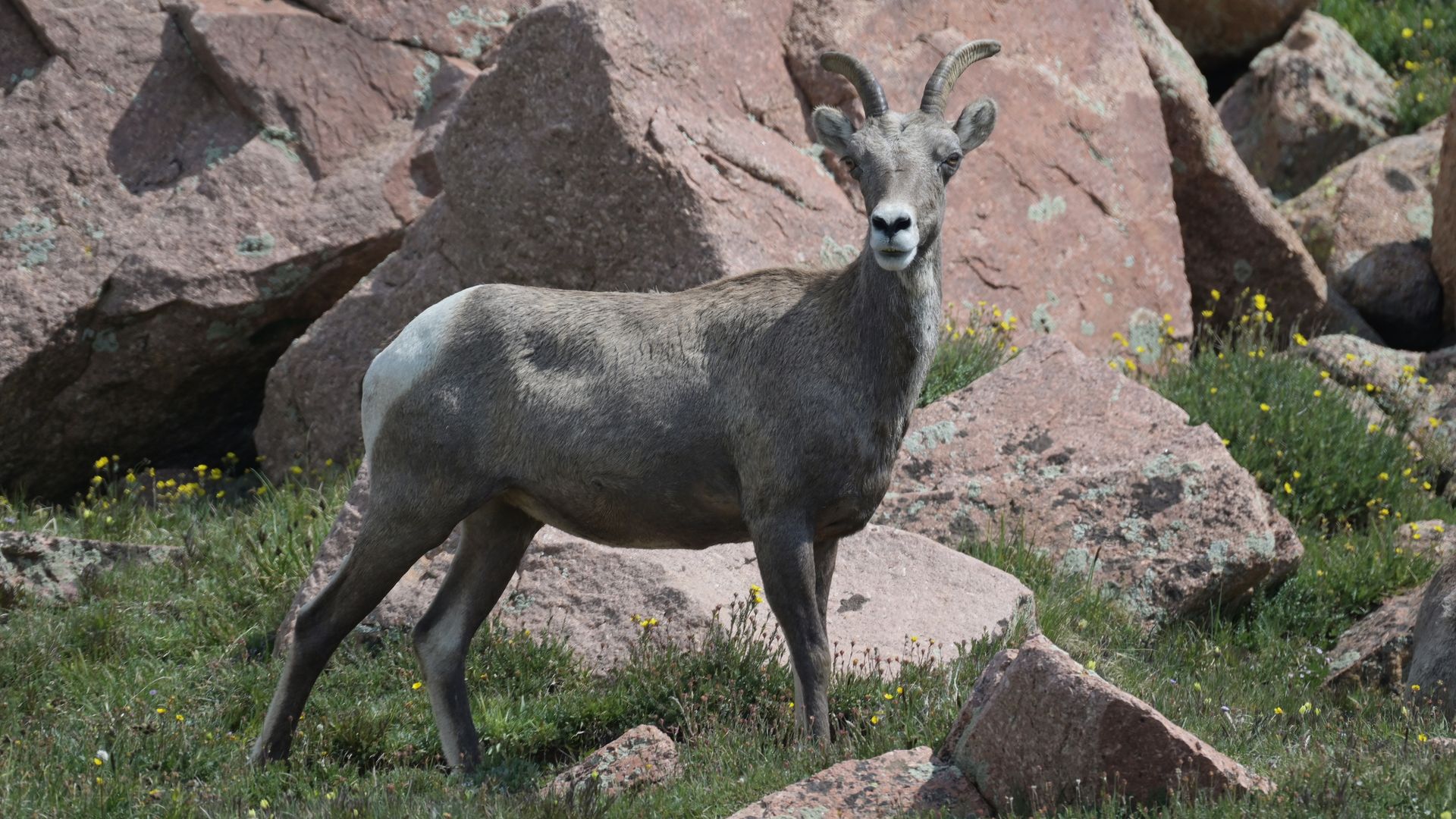
A bighorn sheep on Pikes Peak in July 2025. Photo: Hyoung Chang/The Denver Post via Getty Images
The annual count of bighorn sheep atop Pike's Peak is a window into their survival as a deadly disease threatens the herd.
Why it matters: The Pikes Peak herd is a priority for Colorado Parks and Wildlife officials because it's endemic and among the state's most closely watched, thanks to the thousands of visitors who flock to America's mountain each year.
Threat level: For the past five years, researchers and volunteers have seen high death rates among lambs who get sick with pneumonia, the Gazette reports.
- The disease manifests as a cough and makes the young sheep lethargic, a condition that can become fatal.
- In 2021, officials counted a typical population of lambs and ewes in the summer, but none survived to the fall.
The big picture: Ty Woodward, a state biologist, says the two-day count helps researchers understand how the respiratory disease is spreading and affecting the herd.
- This week, he led other state biologists, wildlife officials and trained volunteers on a mission to catalog the herd, especially the yearlings and ewes.
Zoom in: Woodward told the Gazette that the migratory herd may have contracted the disease from a gathering among mothers and their young near Devil's Playground on the mountain's west flank during nursing season.
- It is spreading, in part, because of human interactions. More bighorn sheep are congregating near the Pikes Peak Highway, where some visitors feed them.
- The closer the sheep get to each other, the greater the chances the disease spreads.
What they're saying: "They congregate, and then in the fall they disperse. They go back to all the different parts of the mountain, and they take the bugs with them," Woodward said.
What we're watching: In 1949, the survey's first year, 205 bighorn sheep resided on Pikes Peak, 9News reports. By 2025, that had fallen to 95, including 49 ewes.
- The latest count is still being catalogued.