Colorado's sunshine myth gets a reality check


Add Axios as your preferred source to
see more of our stories on Google.
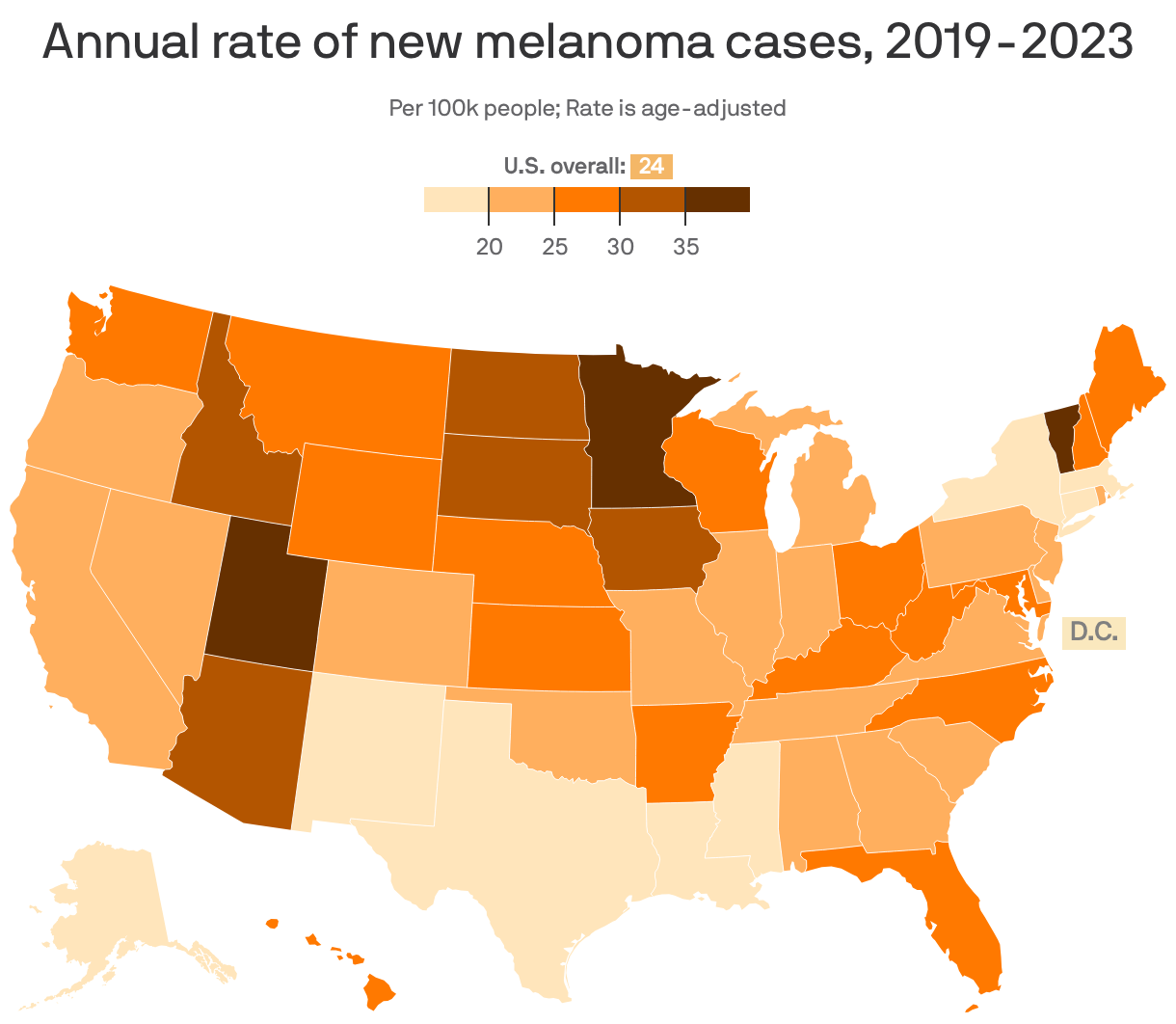
Nearly 7,900 Coloradans were diagnosed with melanoma between 2019 and 2023, newly released federal data shows.
Why it matters: Melanoma is the deadliest form of skin cancer, and Colorado's high elevation means stronger UV exposure than at sea level.
Zoom in: Colorado's age-adjusted melanoma rate was 23.9 cases per 100,000 people for 2019–2023, according to CDC data.
- In total, 7,871 cases were reported.
Reality check: Colorado's reputation for "300 days of sunshine" and its outdoorsy culture didn't translate to one of the nation's highest melanoma rates.
But sunshine is just one piece of the puzzle.
- For much of the state, it's closer to 200–250 mostly or fully sunny days per year, though brief periods of sunshine help fuel the popular myth, 9News reports.
Between the lines: Researchers say differences in screening, population demographics, indoor tanning and occupational sun exposure all help explain why some states have higher melanoma rates than others.
- Melanoma is most common among non-Hispanic White people and among people with frequent UV exposure, including many outdoor workers.
The big picture: Melanoma diagnoses continue to climb nationwide.
- New invasive melanoma cases increased roughly 47% over the past decade, per the Skin Cancer Foundation.
🧠 Be smart: UV rays can damage your skin year-round — even on cloudy days. The CDC recommends:
☀️ Seek shade when possible.
☀️ Wear protective clothing and a wide-brim hat.
☀️ Wear wraparound sunglasses.
☀️ Use broad-spectrum sunscreen with an SPF of 15 or higher.