New World screwworm: What Ohio residents should know

Add Axios as your preferred source to
see more of our stories on Google.
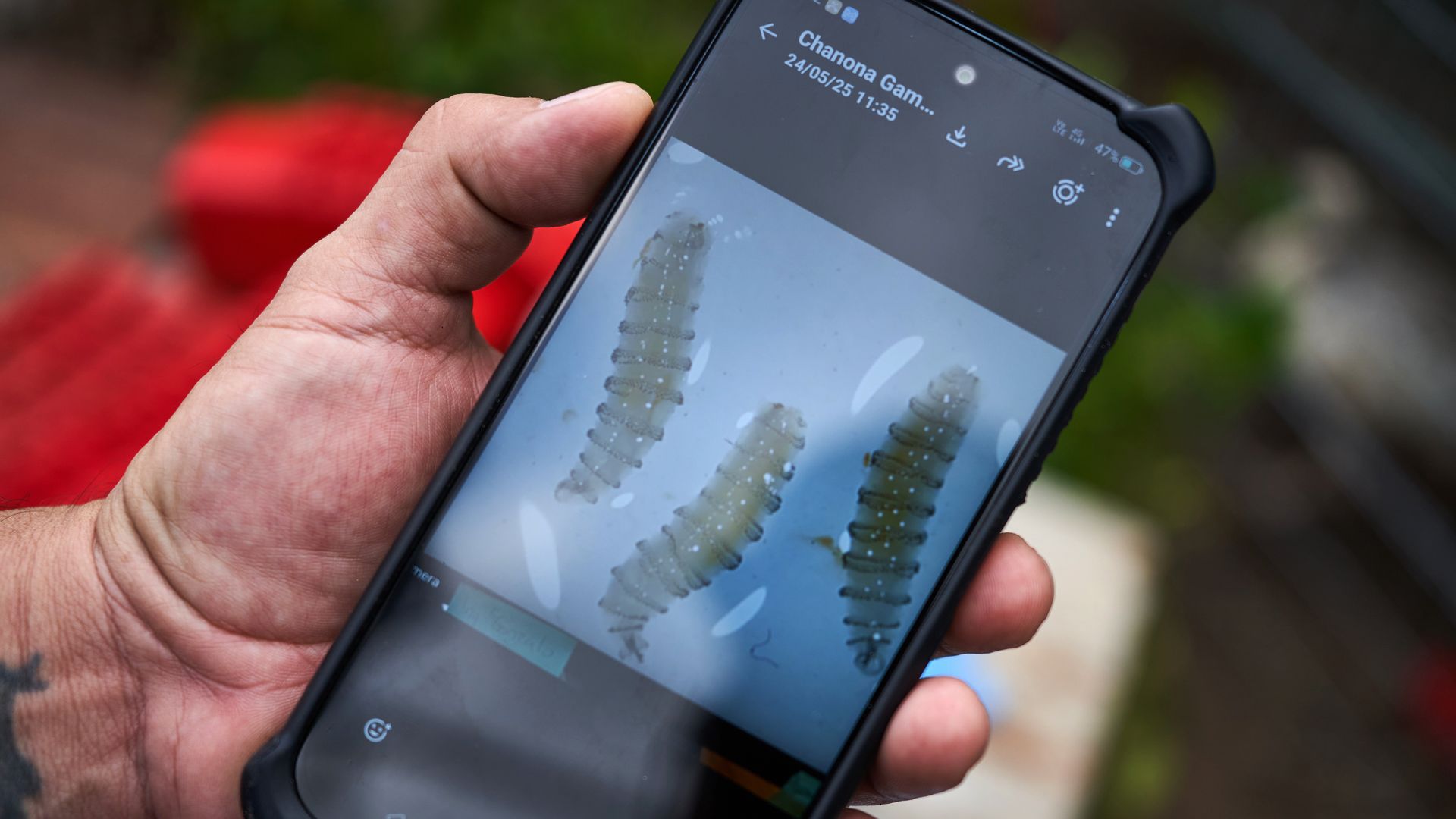
Microscopic photos of New World screwworm larvae. Photo: Mauricio Palos/Bloomberg via Getty Images
A real-life flesh-eating menace is spreading in the U.S., but Ohio has little reason to worry just yet.
Why it matters: An outbreak could be devastating for the state even if it happens elsewhere. New World screwworms are parasitic flies whose larvae feed on the living flesh of warm-blooded animals.
- That includes livestock, wildlife, pets and occasionally humans, potentially causing severe infections and death.
Zoom in: The likelihood of screwworms reaching Ohio livestock is extremely low, Hamilton County Public Health medical director Stephen Feagins tells Axios, thanks to animal quarantines, inspections and other safeguards.
- The bigger concern is an outbreak affecting cattle elsewhere could disrupt the food supply and drive up meat prices.
- "They can be very financially devastating," Feagins says of the potential impact on livestock operations.
Threat level: The U.S. Department of Agriculture confirmed Oct. 21 that screwworms were detected in a Texas elk: the first confirmed case in U.S. wildlife during the current outbreak.
- The first U.S. animal case of the current outbreak was previously confirmed in June. Subsequent cases have involved cattle, horses and dogs.
- A Maryland patient was diagnosed in 2025 after traveling to El Salvador.
Zoom out: The CDC reports more than 209,400 animal cases and 2,800 human cases across Mexico and Central America.
Flashback: Screwworms infested deer in the Florida Keys in 2016, during an outbreak eradicated the following year.
How it works: Female flies lay eggs in wounds or body openings. Their larvae feed on living tissue, potentially causing severe infections and even death if untreated.
The eerie effects: Infected cattle can become lethargic, develop bloodshot eyes and appear visibly ill — an almost zombie-like state.
- "It's a very sick cow. It's a wasting illness," Feagins says.
What's next: Officials are working to expand production of sterile flies, a technique that helped eliminate screwworms from the U.S. decades ago.
The bottom line: The threat is real, but Feagins says Ohio farmers have little reason to worry about a local outbreak right now.