What it takes to bring Blink to life

Add Axios as your preferred source to
see more of our stories on Google.
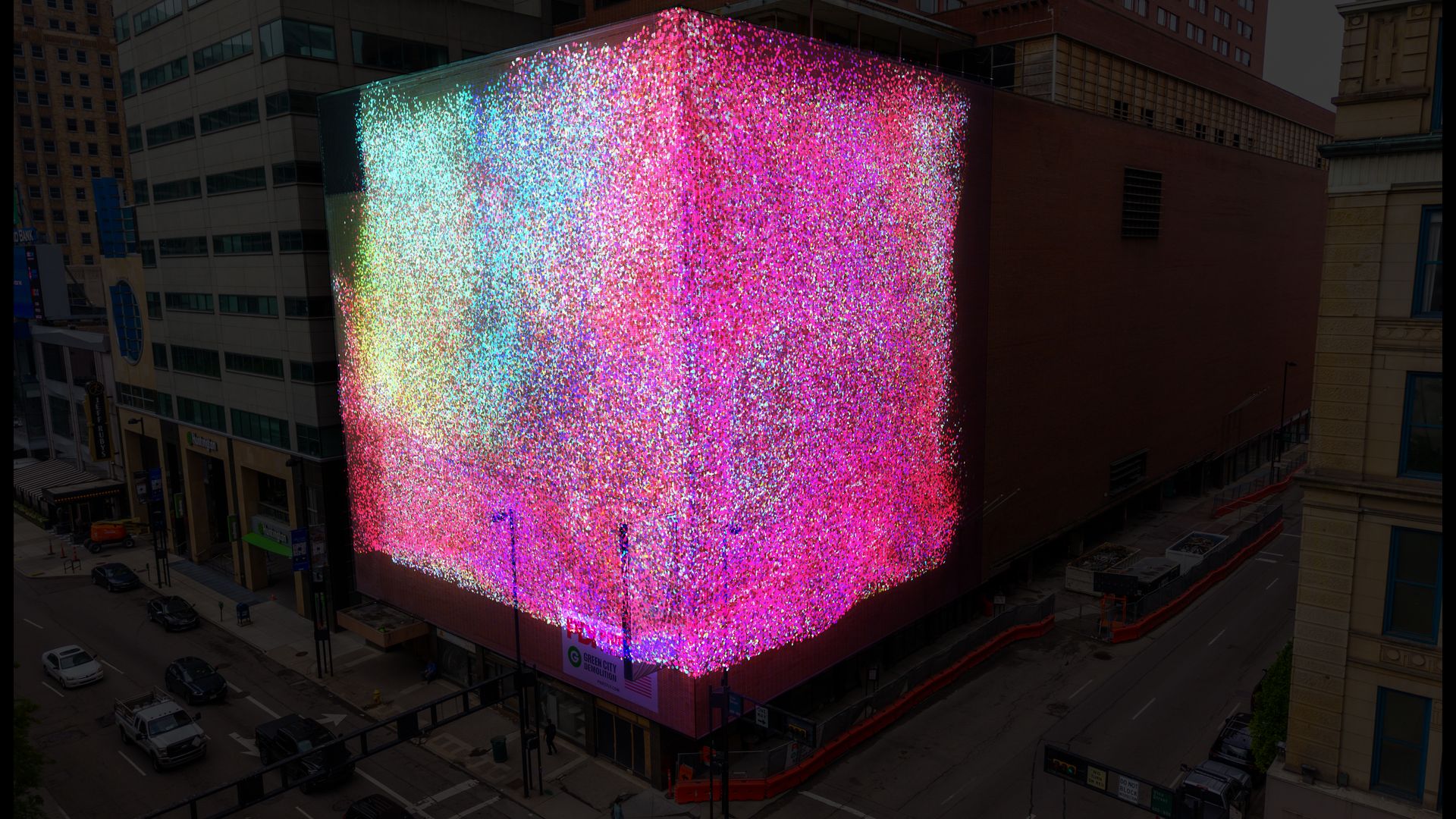
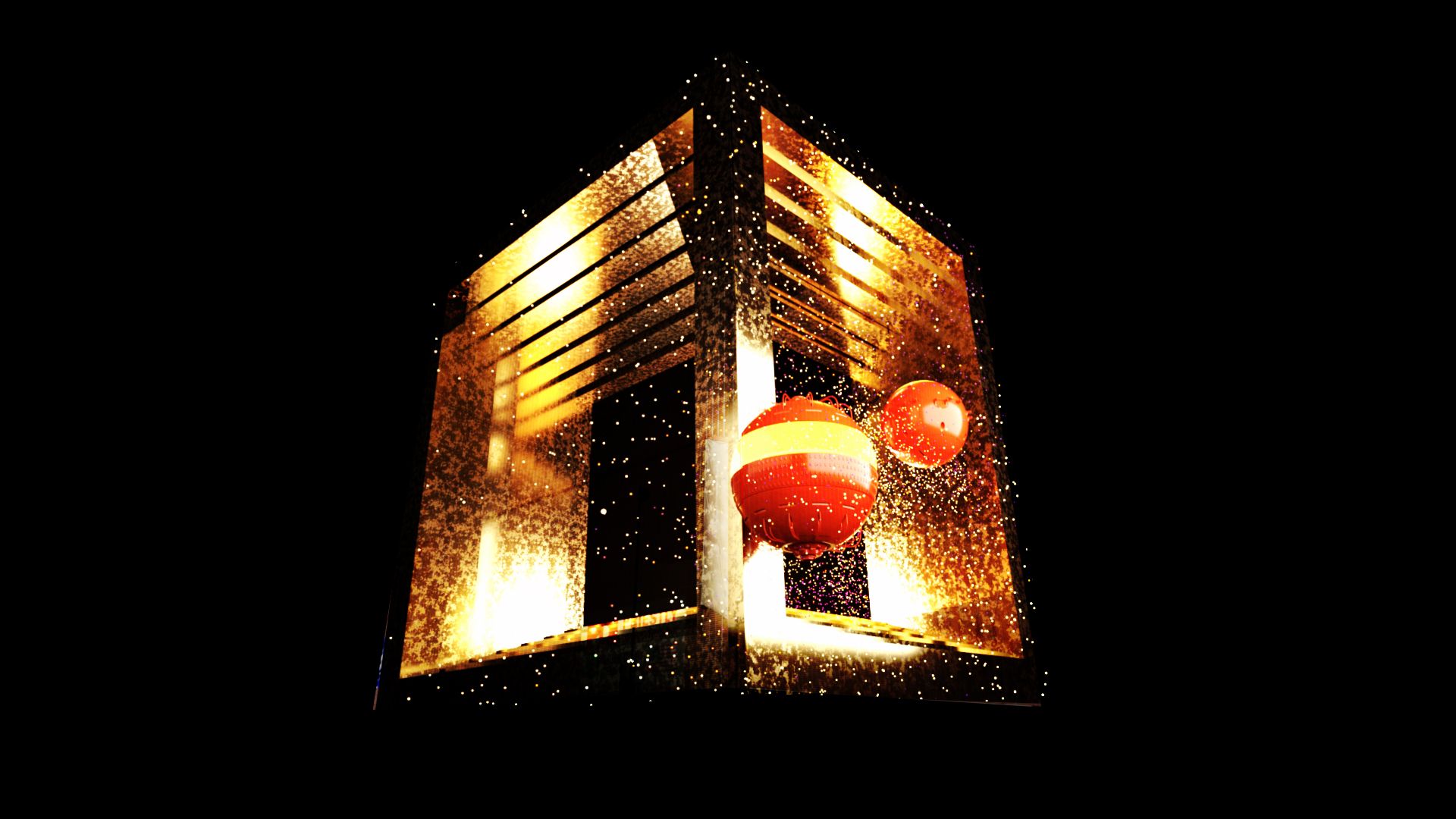
Chaske Haverkos' "The Cube," a projection-mapped audiovisual experience at Sixth and Vine streets. Renderings: Courtesy of the artist
Blink veteran Chaske Haverkos knew he wanted back in this year. The projection-mapping artist just didn't know where — or exactly what he'd create.
Why it matters: Long before the lights come on, organizers spend more than a year recruiting artists, matching their ideas with pieces of the city and taking creative chances to keep the festival fresh.
Zoom in: Haverkos, who's participated since 2019, eventually was assigned an unusual canvas: two massive brick walls meeting at Sixth and Vine on the former Terrace Plaza Hotel.
- He spent roughly four months creating "The Cube," an audiovisual experience designed to give the corner depth and movement.
- It features an original soundtrack from Cincinnati's Play Audio Agency.
What they're saying: "I've always found that to be kind of a magical thing because each site does provide such a unique challenge," he tells Axios.
Inside the room: Selecting Blink's lineup takes six or seven months, executive director Leslie Mooney tells Axios.
- This year's 92 artists represent 20 countries, with nearly as many newcomers as returners.
- Mooney, a longtime Cincinnati arts leader who took over in July 2025, says organizers aren't chasing a particular mix.
- "It's about finding the best art."
What's new: About 20% of this year's spaces, along with rethinking familiar canvases.
- Las Vegas-based lighting artist and drummer Brett Bolton will perform live at Music Hall, with his drumming driving projections in real time.
- In Covington, New York-based muralist Elléna Lourens and South African projection artist Inka Kendzia pitched their works together: Lourens painted the mural, with Kendzia designing the projection around it.
How it works: Artists don't necessarily need the finished canvas to get started.
- Blink sends projection artists detailed scans of their sites, including dimensions and architectural features, so much of the work can happen on a computer before on-site testing.
The intrigue: Some pieces come down to the wire, with several new murals getting projections still being painted this week.
Zoom out: Behind it all is roughly 18 months of work with local officials and an $8 million production budget.
- Then it's gone in four nights.
The last word: "There's definitely something magic … about being able to share that moment with people and then kind of remember it," Haverkos says, "knowing that it's not going to happen just like this ever again."