The Cincinnati that shaped my refugee father's life

Add Axios as your preferred source to
see more of our stories on Google.
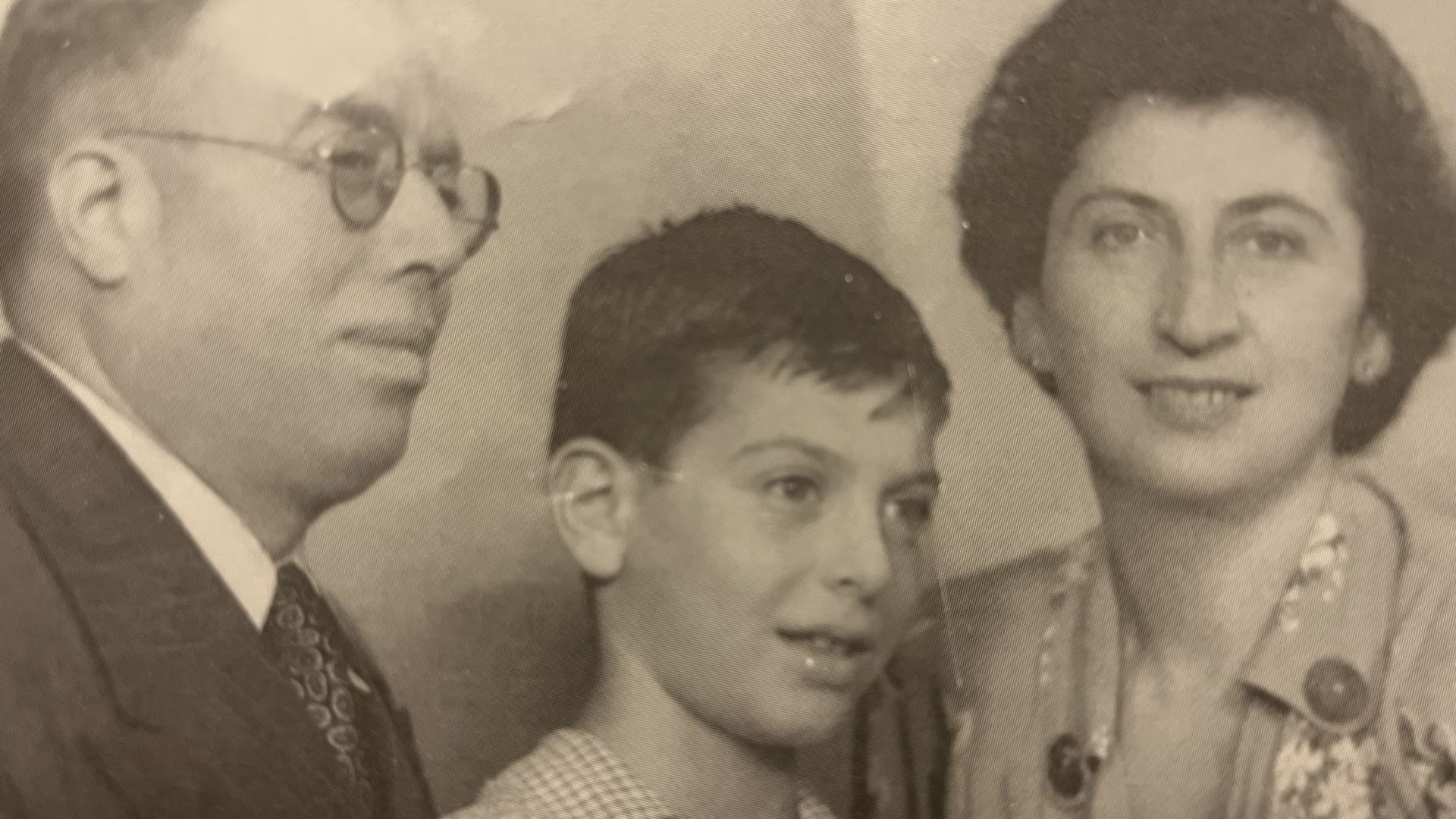
Monroe Price, center, aged about 8, with his parents in Cincinnati. Photos: Courtesy of Asher Price
Not long ago, I wrote Bob Vitz, the Walnut Hills High School contact for the class of 1956, that my dad, Monroe Price, wouldn't attend his 70th reunion being held this week. He had died in March at the age of 87.
Flashback: My father, a refugee from the Nazis, spent his formative years in Cincinnati.
- It's where he learned to be an American and about the networks of power — all while his parents built a middle-class life in a city so distant from his native Vienna, so far away from the many relatives they would never see again.
Zoom in: In Cincinnati, my dad learned to make it, acting as the teenage manager for a talented pianist in his Walnut Hills class and mowing the lawn of underworld figure Porky Lassoff at his Amberly Village estate.
- He also caddied at Losantiville Country Club — a job that "allowed me to see how rich people walked and talked," he wrote in his memoir, "Objects of Remembrance."
- By the mid-1960s, freshly out of Yale and Yale Law School, my dad was a U.S. Supreme Court clerk for Justice Potter Stewart (who, not coincidentally, also hailed from Cincinnati).
The big picture: If Cincinnati imbued him with a Midwestern sense of civic good, it was also an education in class, neighborhoods and self-presentation.
- From age 6 to 11, he lived in South Avondale, in the Warwick, a fortress-like apartment block that was "a container of striving families," he wrote. It had its own refugee doctor and refugee piano teacher, its own snobberies over accents and countries of origin, yet served as a haven for displaced people.
- By the early 1950s, his family moved to Roselawn, part of the massive migration of Jewish families to the suburbs. "I was no longer a refugee child living among other refugee children."
My dad never again lived in Cincinnati after graduating high school.
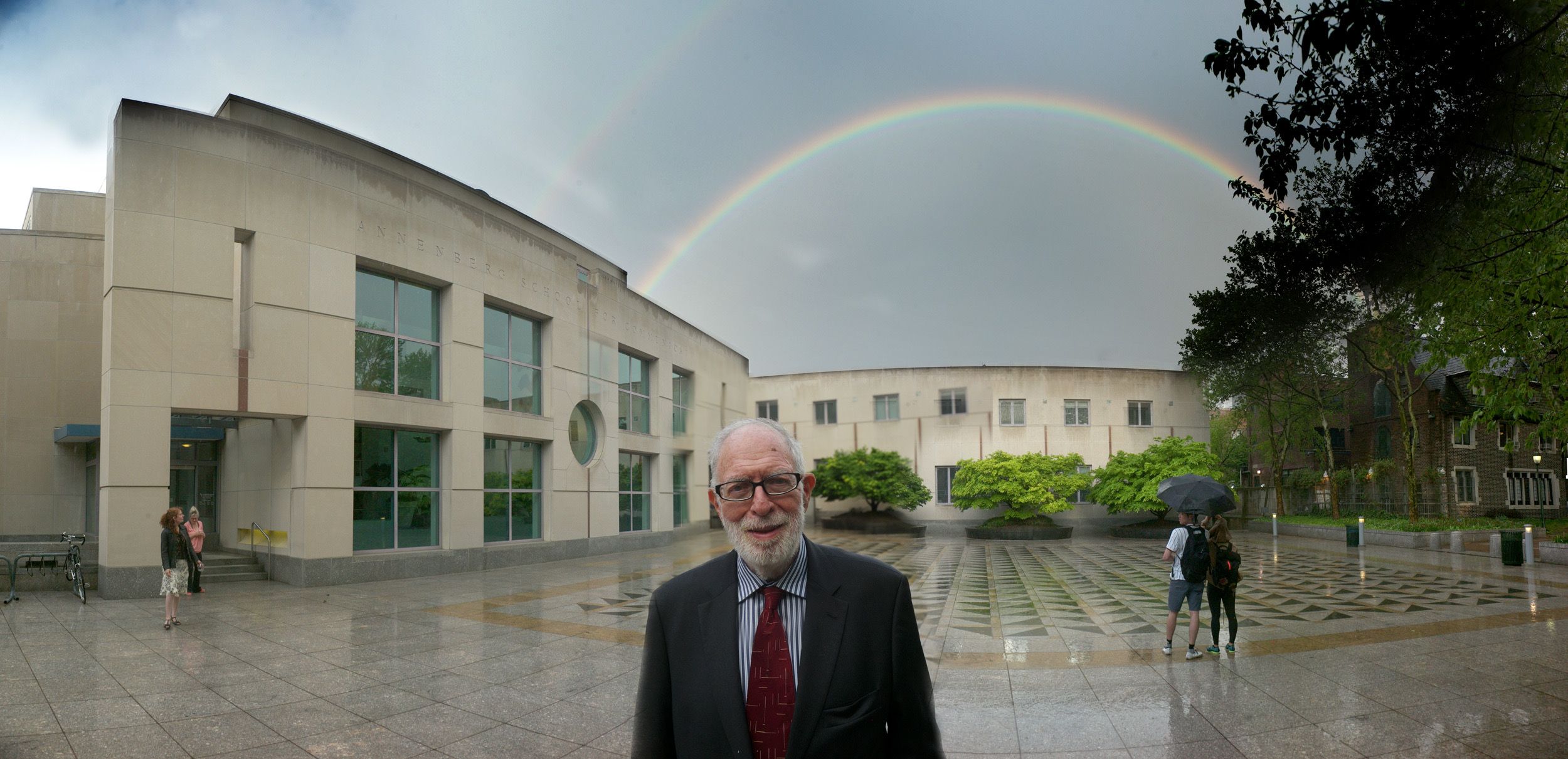
- His parents moved to New York City in the late 1950s. After Washington, he worked as a professor on the coasts, first at UCLA and ultimately at the University of Pennsylvania.
Yes, but: He happily wore a "Walnut" baseball hat until his last days, a talisman of his American formation.