Cincinnati BRT plans raise "rapid" concerns

Add Axios as your preferred source to
see more of our stories on Google.
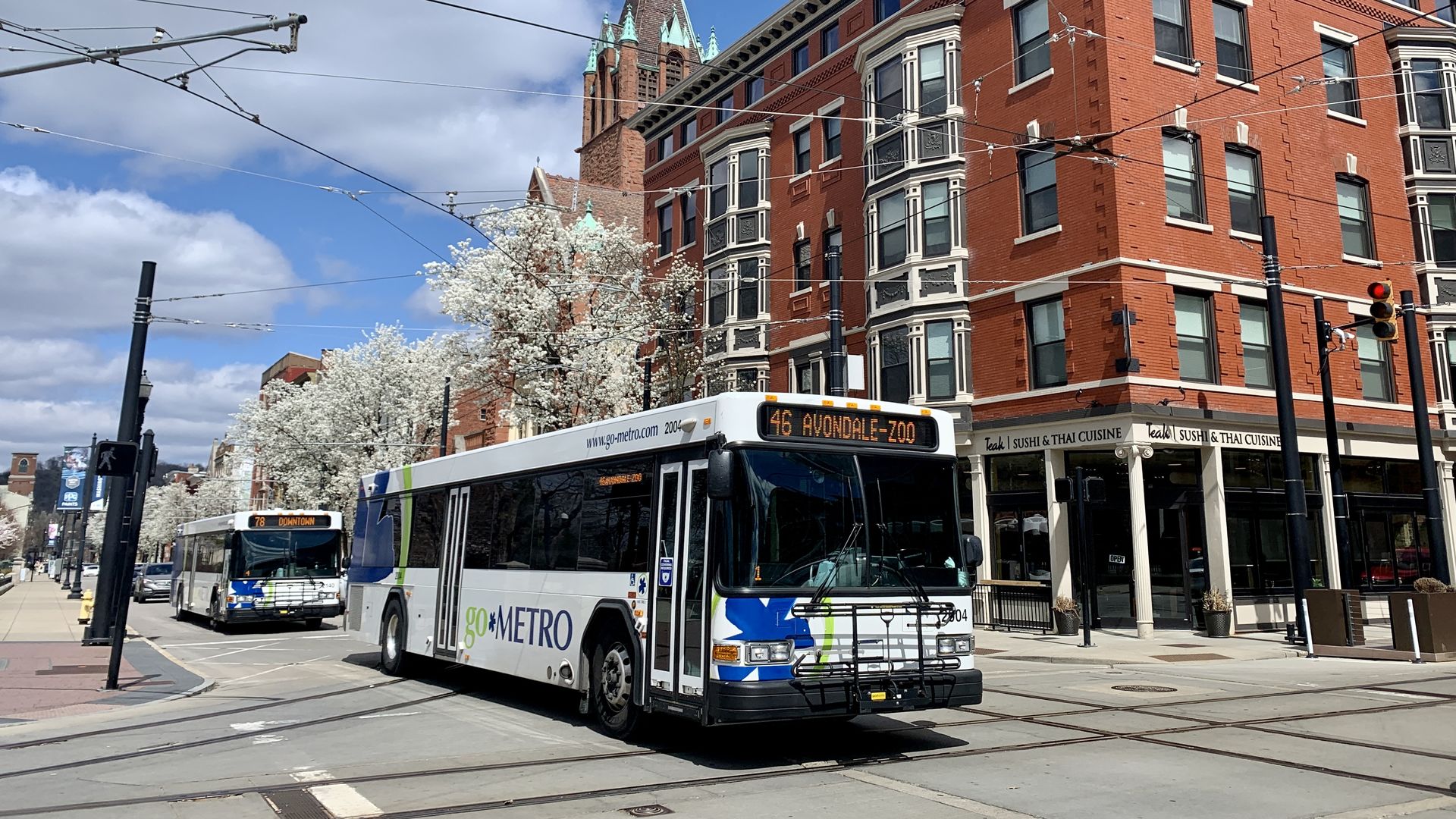
Photo: Casey Weldon/Axios
Cincinnati is spending big on its first bus rapid transit line, but some transit advocates worry it won't be "rapid" enough for the investment.
Why it matters: BRT is a signature piece of the transit overhaul Hamilton County voters agreed to fund with a 0.8% sales tax in 2020.
- It's supposed to be substantially faster and more reliable than a regular bus.
State of play: Metro has already expanded service and launched MetroNow, its on-demand option.
- It plans two BRT lines along Reading Road and Hamilton Avenue, major corridors for work and schools.
Driving the news: A new U.S. Department of Transportation report shows the nearly completed design for the 9.2-mile Reading Road line.
- The map raised eyebrows among transit advocates.
- Much of the route would run in regular traffic or in special lanes that prioritize buses but allow cars to enter for turns and business access.
- Notably, the map shows no new bus-only lanes.
Flashback: Metro's 2024 proposal included center-running lanes and said 82% of the corridor would have bus-priority lanes.
- Transit advocate Brad Thomas says every BRT map update has "gotten worse," with five sections shifted to mixed traffic.
What they're saying: BRT can be "transformative," All Aboard Ohio board chair Mitch Radakovich tells Axios — but only if implemented correctly.
- He worries Cincinnati is repeating its experience with the streetcar, where advocates watched planned features get "chipped off little by little."
- "When you're in mixed traffic, then you lose a couple of things," Radakovich says. "You're losing the speed, and you're losing that reliability piece."
Another concern: Advocates say BRT needs traffic signal priority, something no Metro bus currently has, to help make up for the lack of dedicated lanes.
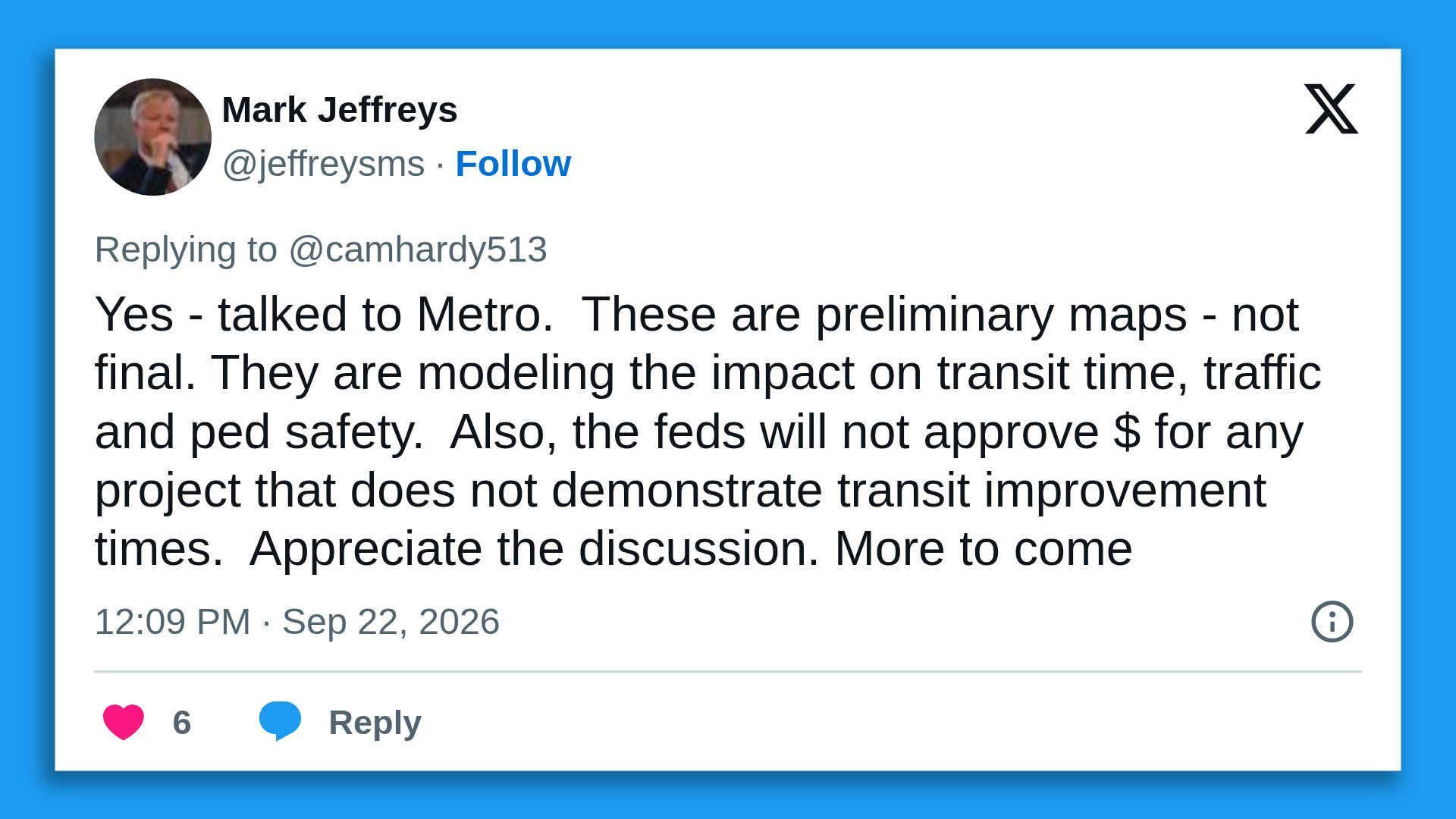
The other side: The design isn't finished, Metro spokesperson Brandy Jones tells Axios, and configurations reflect travel times, traffic delays, pedestrian safety and community input.
- Metro estimates it would save 15 minutes compared to traditional fixed bus routes.
State of play: The debate has reached City Hall.
- Mayor Aftab Pureval told transit advocates at Metro's annual meeting on Tuesday the city will "do everything in our power to maximize that investment" in BRT.
What's next: Metro will host another round of public engagement this fall.