Cincinnati Observatory keeps local eyes on the sky

Add Axios as your preferred source to
see more of our stories on Google.
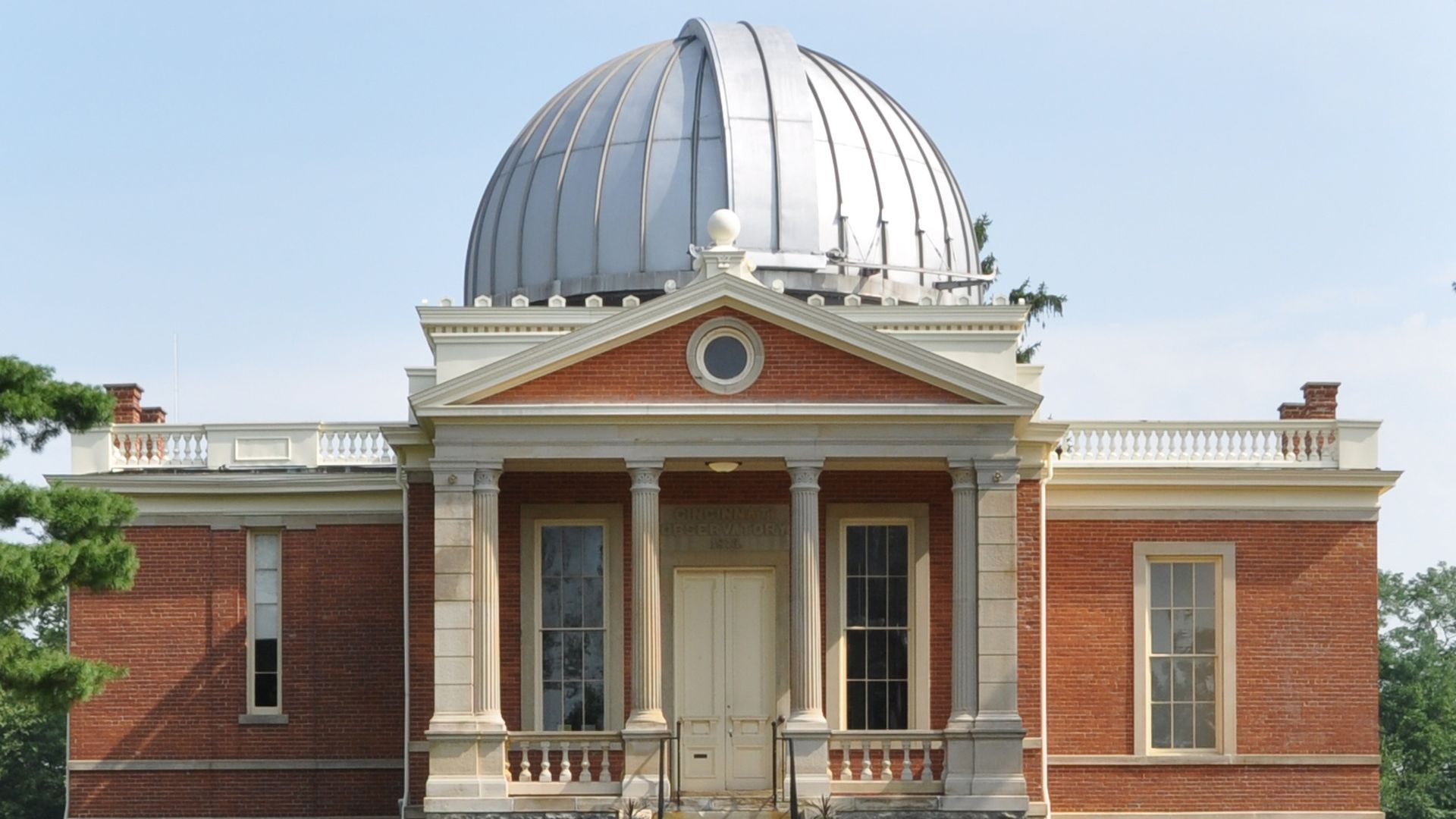
The main building at the Cincinnati Observatory in Mount Lookout has served the community since 1873. Photos: Courtesy of Cincinnati Observatory
Cincinnati became known as the birthplace of American astronomy nearly two centuries ago, and the observatory that started it is still bringing the universe to the public.
Why it matters: The technology and places where astronomers make discoveries have changed, but the Cincinnati Observatory's mission to make astronomy accessible to everyone hasn't.
What they're saying: "Our mission is to, of course, maintain the integrity and heritage of our beautiful historic 19th century observatory, which we really lean into that history," longtime executive director Anna Hehman tells Axios.
- "But we're also educating, engaging, inspiring our community, really of all ages, about astronomy and science."
Flashback: Ormsby MacKnight Mitchel founded the country's first public observatory in 1845 on a novel idea that astronomy shouldn't be just for academics or the wealthy.
- Mitchel went door to door selling shares to establish what became known as the "People's Telescope."
- The observatory moved from Mount Adams to Mount Lookout in 1873 chasing darker skies. The neighborhood took its name from the observatory.
Yes, but: Cincinnati eventually caught up.
- Light pollution put an end to serious research at the observatory, Hehman says. However, visitors can still see the Moon, Sun, planets, star clusters and some nebulas.
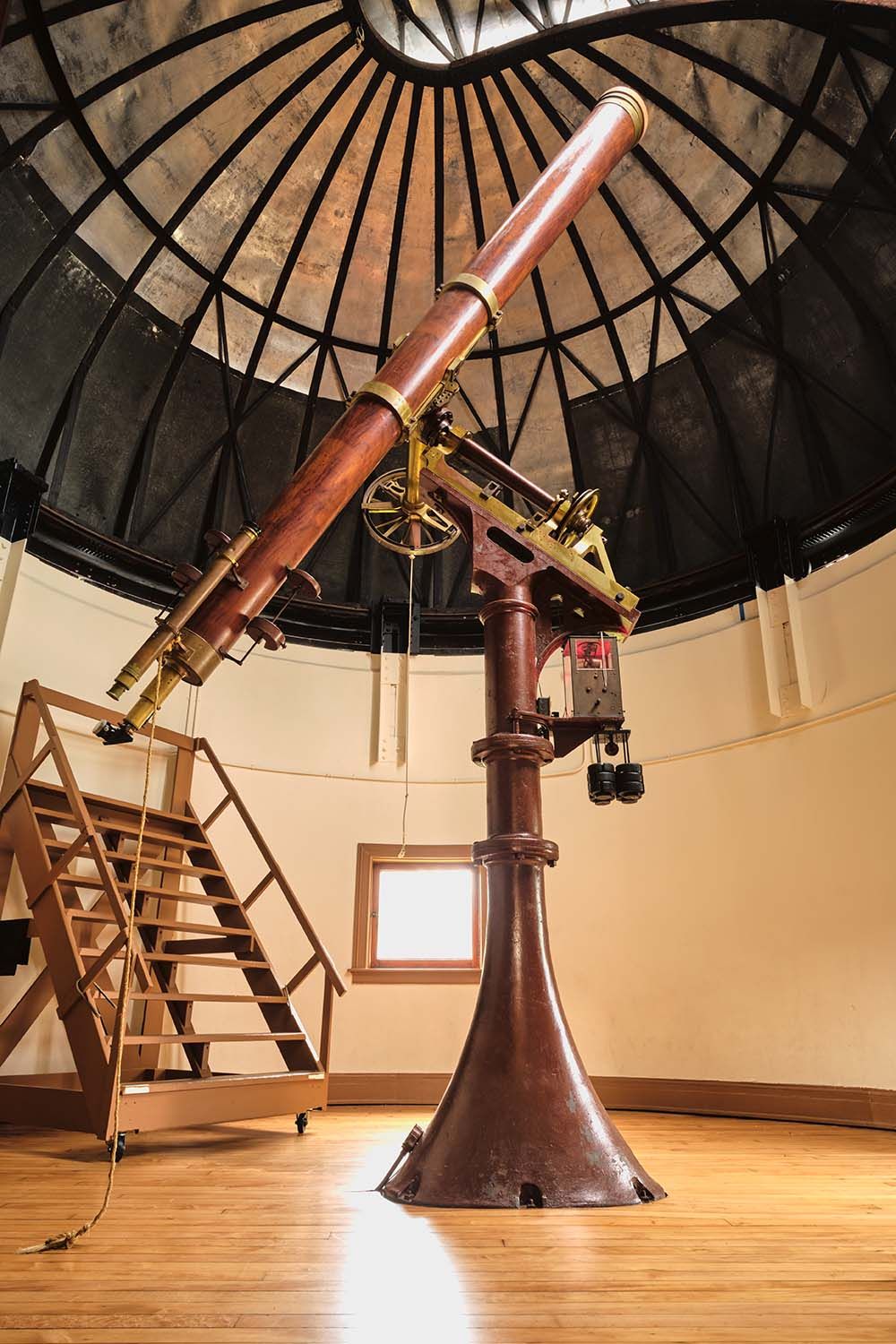
The intrigue: The observatory hasn't traded its historic telescopes for newer models.
- Its 11-inch Merz and Mahler refractor dates to 1845, while its 16-inch Alvan Clark and Sons refractor arrived in 1904.
- Robotics, a 3D printer and an inflatable planetarium add some 21st-century tech.
By the numbers: Eight generations of Cincinnatians have had the observatory in their backyard.
- More than 13,000 students participate annually, including through STEM programs in local K-12 schools.
- Roughly 20,000 more people participate in programs on and off site.
State of play: You don't have to wait for a school field trip to get in on the astronomy.
- Year-round offerings include astronomy evenings, telescope workshops, kid-friendly programs and Date Nights.
- For darker skies, the observatory partners with Stonelick State Park in Kentucky and the Stonelick Star Gazers.
Case in point: Space Week's Scope Out night at 6-10pm Saturday brings regional skywatchers and their telescopes to the grounds for visitors to try.
What's next: The observatory's main building is getting a $2.3 million makeover to add public space, improve accessibility and display more of its 30,000-plus-item collection.
- The work wraps in spring 2027, when the historic Clark telescope returns to public use.
Until then, the observatory is sticking with what it's done for nearly 200 years — getting people excited about looking up.
- "We want to have something for everyone to plug in and to get excited about the sky and the work we do and how we do it," Hehman says.