Cincinnati's streetcar fight simmers after 10 years

Add Axios as your preferred source to
see more of our stories on Google.
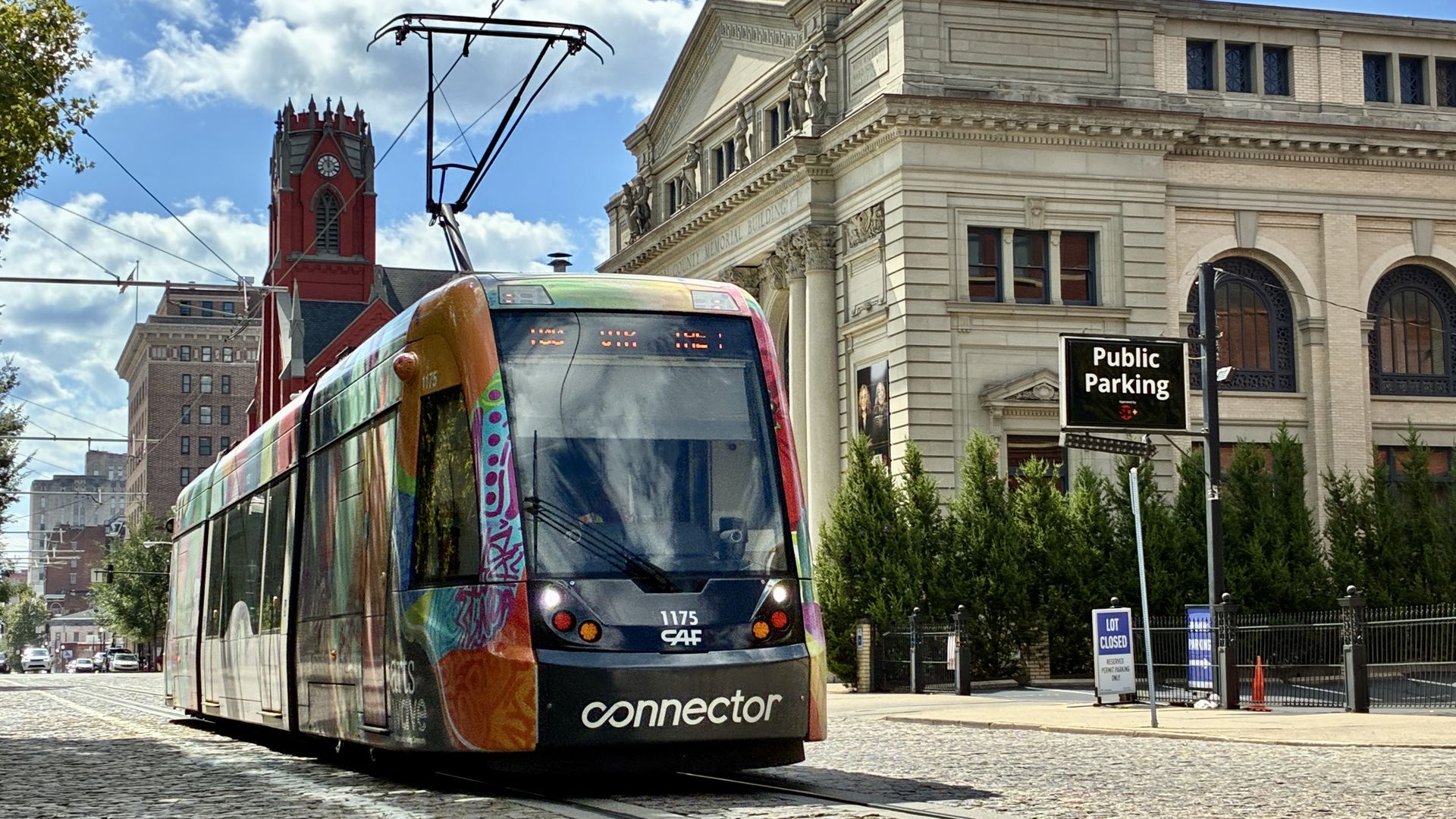
The Cincinnati Connector streetcar is one of the most divisive transportation projects in local history. Photo: Casey Weldon/Axios
Ten years after Cincinnati's streetcar began carrying passengers, one of the city's fiercest political fights has become something once unthinkable — normal.
Why it matters: The debate now is less about whether Cincinnati should have one than what it should become.
Flashback: Supporters saw a way to spur investment. Opponents saw a $144.6 million amenity for out-of-town visitors and downtowners.
- "It literally was the number one issue being talked about — pro and con — online and in the newspaper every day," longtime streetcar critic and West Side activist Pete Witte tells Axios.
Then-Gov. John Kasich helped yank state funding, essentially killing hope of the original University of Cincinnati extension.
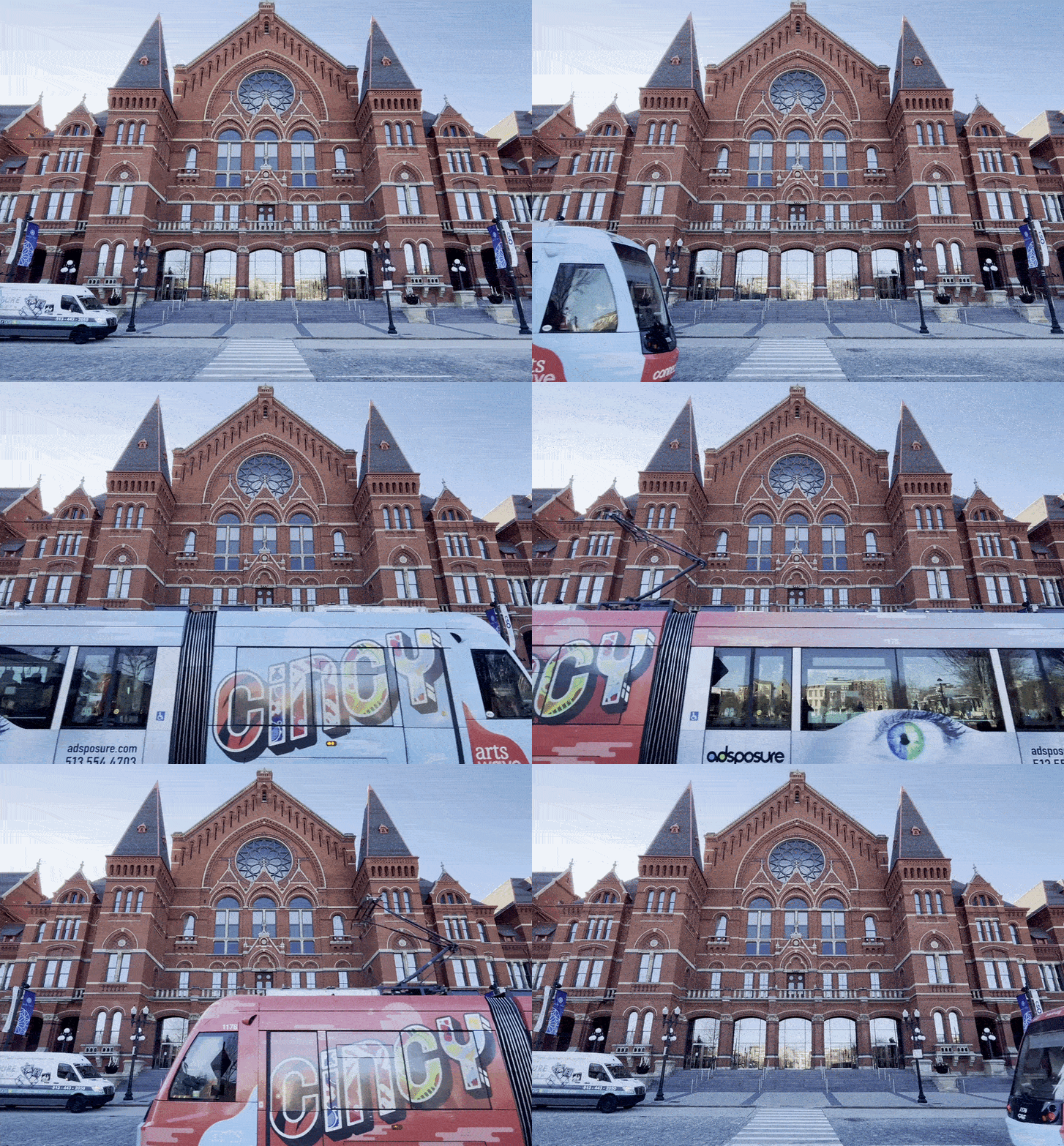
- Mayor John Cranley pushed to stop construction in December 2013 before the City Council restarted it weeks later with track already laid by Music Hall.
- "It was a really stressful moment because we didn't know if we were going to be able to get going again," recalls project executive John Deatrick.
💭 Casey's thought bubble: I worked in the City Manager's Office then, when even posting about the project on social media could make people nervous.
- The general rule: Stick to construction updates and avoid causing a streetcar fight online or at City Hall.
The project survived. The first passengers boarded Sept. 9, 2016.
- "What's really inspiring is when I see people in wheelchairs… just kind of rolling onto the streetcar, and it's really helped those downtown residents that are transportation-dependent," Deatrick says.
Beyond ridership, the streetcar project was about revitalizing downtown and OTR.
- Few people championed that potential more than developer John Schneider, dubbed "Mr. Streetcar" by former Mayor Mark Mallory.
- He took people to see Portland, Oregon's streetcar to help them envision a system in Cincinnati.
By the numbers: An Urban Fast Forward analysis found $1.1 billion in construction investment near the route between 2012 and 2019.
- Schneider doesn't give the Connector all the credit, but calls it a "force multiplier" for downtown's growth.
Even Witte has ridden it, once parking at The Banks and taking it to OTR.
- "It did save us a walk," he concedes.
- Witte still thinks neighborhoods like Price Hill and even downtown have bigger priorities.
- "I just can't imagine the streetcar even cracks its top 10 of issues on people's minds."
What's next: There's no official plans for expansion, though advocates like Schneider still see room to grow.
- He'd like to see an extension up Central Parkway toward Camp Washington.
- "If we're going to repopulate the city, that route is a key target."
Go deeper: 10 years and 7.5 million trips later, Cincinnati's streetcar rolls on