Regal Theater gets a new life as Black arts and cultural center

Add Axios as your preferred source to
see more of our stories on Google.
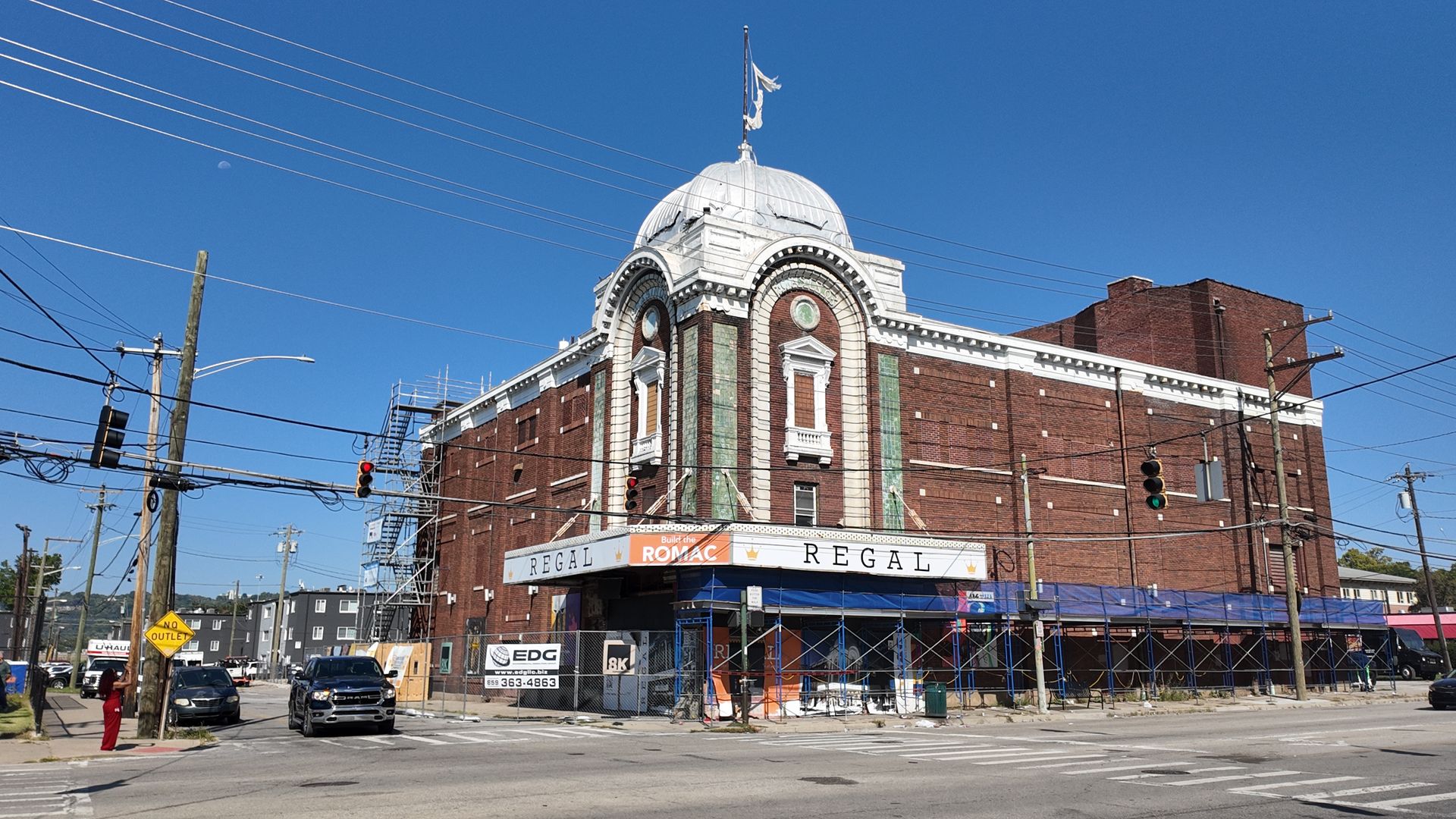
The theater building has served the West End community under several names since the early 1900s. Photo: Casey Weldon/Axios
For generations of West End residents, it was a place to see neighbors and simply be together. Now, after sitting empty for three decades, the Regal Theater is being restored as a Black arts and cultural center.
Why it matters: The theater is one of the few cultural landmarks remaining from a historically Black neighborhood transformed by urban renewal and highway construction that displaced thousands of residents.
The latest: Work is beginning on the roughly $13 million restoration of the theater at Linn and Clark streets, led by the Robert O'Neal Multicultural Arts Center, or ROMAC.
- ROMAC envisions a home for everything from live music and art exhibits to arts and crafts classes and community events, CEO Toilynn O'Neal Turner says.
- First, the organization is securing the roof, dome, exterior and awning.
- O'Neal Turner says ROMAC still needs to raise about $3 million before it can move forward with the full renovation.
- The goal is to open sometime in 2028.
What they're saying: For O'Neal Turner, the project is personal. She founded ROMAC in 2019 to honor her father, Cincinnati artist and civil rights activist Robert O'Neal, and grew up near the theater.
- "[The theater] was a safety net of the community," O'Neal Turner says.
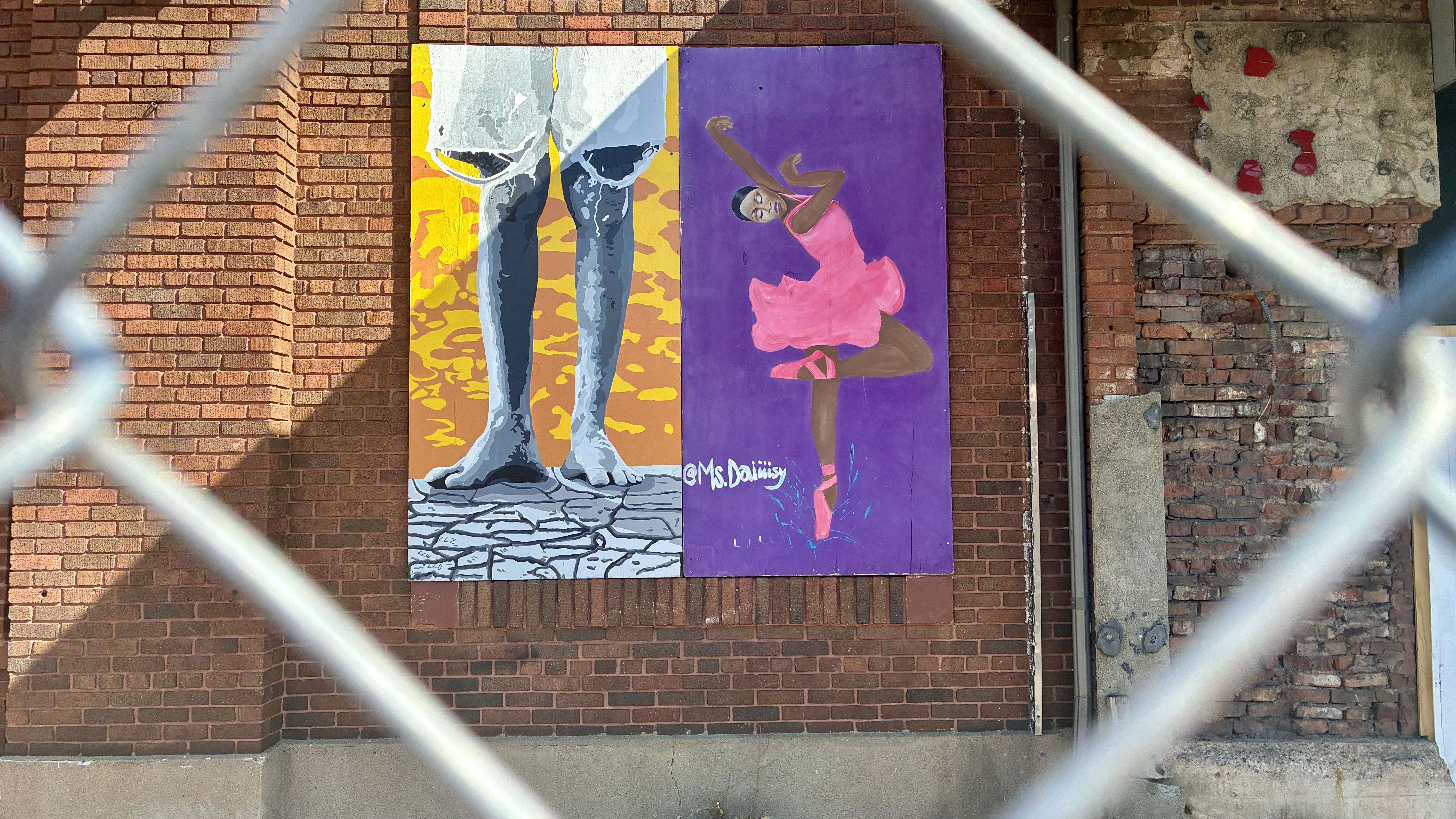
The backstory: The 1,500-seat theater opened as the Casino Theater in 1914 and became the Regal in 1941.
- As the West End became predominantly Black, the theater became a center for Black culture and entertainment, screening movies by day and hosting jazz musicians at night.
- The theater closed in 1996.
Zoom in: Anissa Lewis fondly recalls trips down to the Regal with her father and siblings for "Kung Fu Saturdays" — partly to give their mother a break, she tells Axios.
- The theater was known for hot dogs and popcorn, but Lewis' family would get fried fish and fries from around the corner.
"It acted as any kind of a third space," she says, comparing it to a community church, barber shop or beloved corner store where people would commune.
- "There's power in spaces."
Zoom out: Cincinnati Preservation executive director Beth Johnson says the Regal wasn't the only theater serving the neighborhood's Black community, but it's now "pretty much the only one left surviving."
- Urban renewal and highway construction demolished large parts of the historically Black West End, displacing residents and eliminating homes, businesses and cultural institutions.
Zoom in: Preservationists say the building itself is also worth saving.
- Johnson compares its Beaux-Arts architecture to Memorial Hall, another local example of the ornate style.
- Molds have been made from original plasterwork so details can be recreated.
- "They don't — and I don't think they can — make them like they used to," Johnson says.
But preserving the physical space is about more than cool architecture. Johnson says it gives people a tangible connection to the neighborhood's history.
- "There's something about physically being in a place or physically seeing something that triggers those kind of emotional and those memory responses," Johnson says.
For O'Neal Turner, it's about "saving our history."
"Even though it's falling apart, it's like a beacon, she says. "And we need to do what we can to protect it."