Cincinnati's lead pipe challenge isn't just the pipes

Add Axios as your preferred source to
see more of our stories on Google.
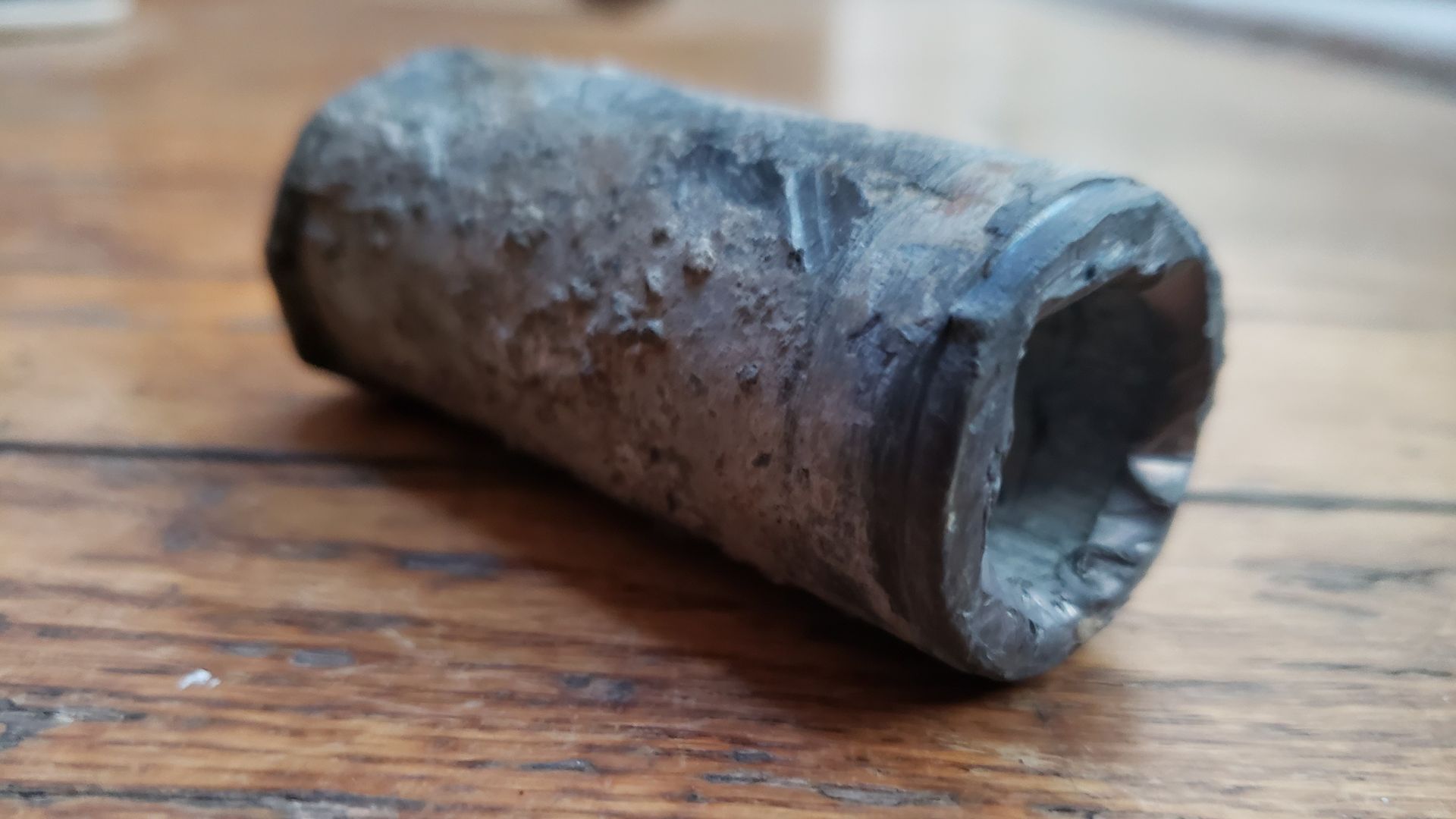
A piece of lead pipe removed from a house in Gary, Indiana, where officials started removing them in 2019. Photo: Monica Eng/Axios
Cincinnati is a national model for not only replacing lead service lines but also for figuring out how to get homeowners to agree to the work.
Why it matters: Lead service lines remain a public health concern nationwide, and the EPA estimates roughly 4 million remain in service.
- But some cities have struggled to resolve the issue, with a 2037 federal deadline looming to replace them.
Driving the news: On Wednesday, the city and Greater Cincinnati Water Works formally marked the removal of its 10,000th LSL since 2018.
Catch up quick: A 2024 Environmental Defense Fund analysis ranked us among the nation's top utilities for lead service lines while citing GCWW's replacement effort as a model.
- Following the water crisis in Flint, Michigan, Cincinnati launched a voluntary LSL replacement program.
- Utility officials identified roughly 42,200 lead, galvanized steel or unknown service lines.
- In 2021, the city started funding all replacements for homeowners, schools and child care centers.
Follow the money: To do that, GCWW raised rates 3.75% in 2022, followed by annual increases of 5.55% through 2026.
- Spokesperson Kevin Osborne tells Axios the program is part of Water Works' budget, with grants and loans helping offset costs when possible.


State of play: Making replacements free caused homeowner participation to jump from roughly 42% to 90%, Osborne says. But money isn't the only barrier.
- Some residents don't know they have lead service lines or worry about disruption, even though a typical replacement takes about five hours. Out-of-town landlords can also be difficult to reach.
"The replacement program relies on trust because owners need to provide signed authorization before any work can move forward," Osborne said.
Case in point: Clifton Heights homeowner Jacob Mecklenborg ignored the city's outreach for years before he signed up for the program.
- "I paid no attention to it, and I wasn't worried about my house having lead pipes since the risk is minimal with established pipes, especially for adults," he said.
- That changed in 2023 when a plumber discovered a leaking lead service line and estimated replacement could cost about $10,000.
What they're saying: GCWW partners with neighborhood councils, churches, community groups and local leaders to spread the word.
- The goal is to make the program feel less like a government initiative and more like advice from a trusted neighbor, Osborne says.


What's next: Cincinnati still has about 30,000 LSLs and must ramp up replacements to meet federal requirements.
- GCWW plans to boost replacements to about 3,000 lines annually and says it's confident it can meet the 2037 deadline.
The bottom line: "This is a major public health initiative," Osborne says. "It's going to require a lot of coordination and cooperation at the local, state and federal levels to get it done."