Cincy preps for a future of more extreme weather

Add Axios as your preferred source to
see more of our stories on Google.
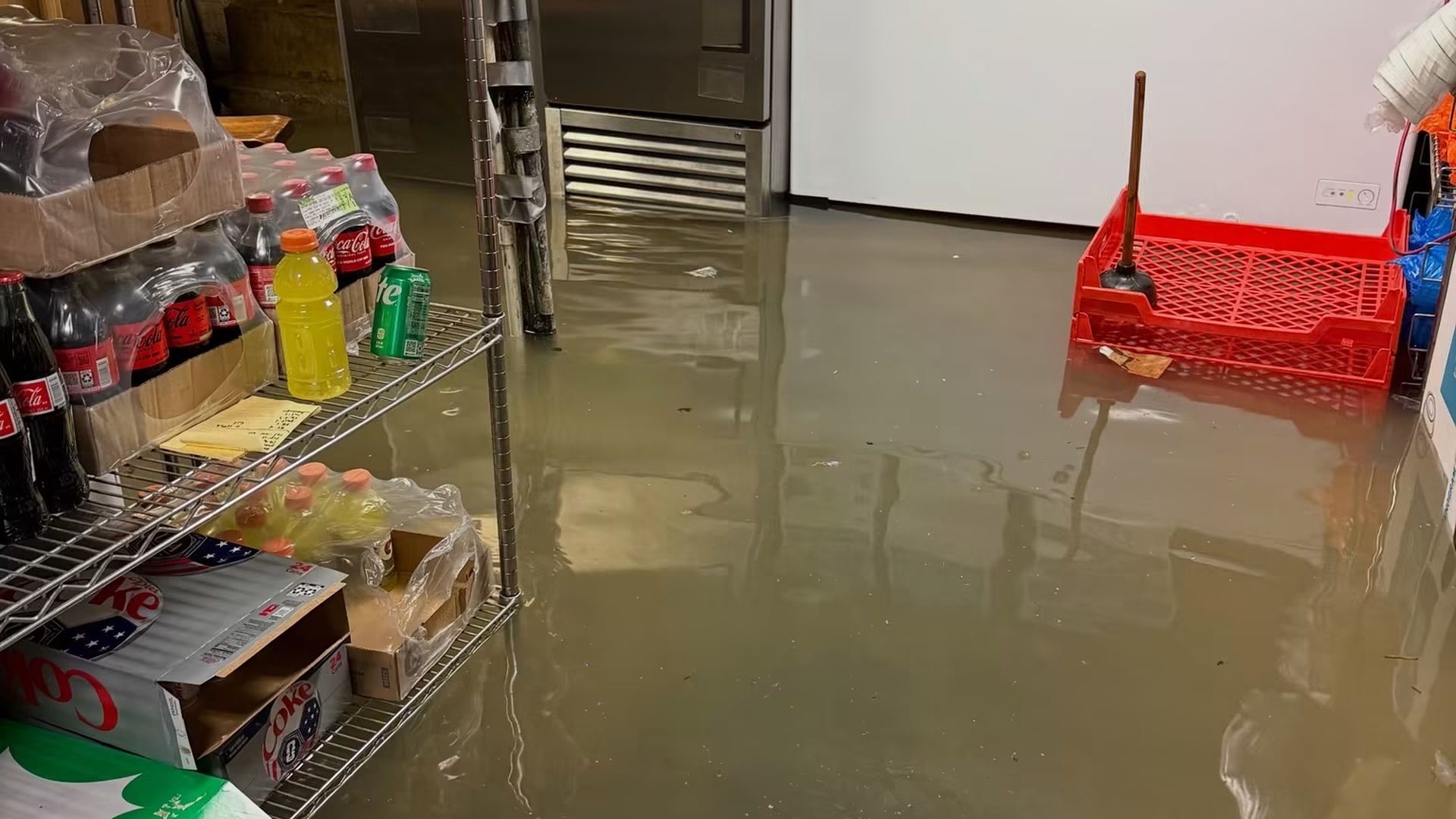
Local businesses, including Carl's Deli in Hyde Park, experienced major flooding in July. Photo: Courtesy of the Hyde Park Neighborhood Council
Weeks after flash flooding devastated Cincinnati's East Side, city leaders say the storms reinforced years of planning for a wetter future.
Why it matters: Officials say Cincinnati isn't getting much more rain overall. It's getting heavier rain in shorter bursts, pushing infrastructure beyond what it was designed to handle.
The big picture: That response is guided by the Green Cincinnati Plan, the city's long-term sustainability blueprint, updated every five years.
- The plan, approved by City Council in 2023, isn't law but rather is a guide for development, infrastructure investments and future policy.
- The plan calls for a mix of engineering projects, green infrastructure, housing, transportation and energy investments to make Cincinnati more resilient.
- "It's hard to say a catastrophic storm is good," Oliver Kroner, who leads the city's Office of Environment and Sustainability, tells Axios. "But I do think it puts an exclamation mark on the patterns we're seeing."
By the numbers: A rain gauge in Oakley recorded 5.62 inches during the July storm, including 5.04 inches in just 90 minutes, NOAA meteorologist Julia Dian-Reed tells Axios.
What they're saying: The extraordinary rainfall, not a sewer system failure, is what caused the flooding, Metropolitan Sewer District (MSD) director Diana Christy told a City Council committee on Tuesday.
- "Extreme storms can exceed the design capacity of any sewer system, even when the system is operating as designed," she said.
- MSD reported more than 1,900 claims of sewer backups.
Between the lines: Adapting will take more than bigger sewers because "these aren't solutions that MSD can deliver on its own," she said.
- In the short term, crews are working extra hours to inspect infrastructure, analyze damage and repair what they can after last month's flooding.
Zoom in: The Green Cincinnati Plan embraces what Kroner calls a "sponge city" approach — keeping more rain where it falls instead of rushing it into sewers.
- That means more trees, bioswales, permeable pavement and other green infrastructure that slows runoff and helps water soak into the ground.
- Kroner pointed to MSD's work at Lick Run Greenway and West Fork Creek as examples where green infrastructure has already reduced stormwater problems.
The last word: "It does help crystallize our collective understanding that change is happening before our eyes," Kroner said, "and that we are going to need to adapt our systems to accommodate that change."