NASA's Voyager 1 reaches 1 light-day from Earth

Add Axios as your preferred source to
see more of our stories on Google.
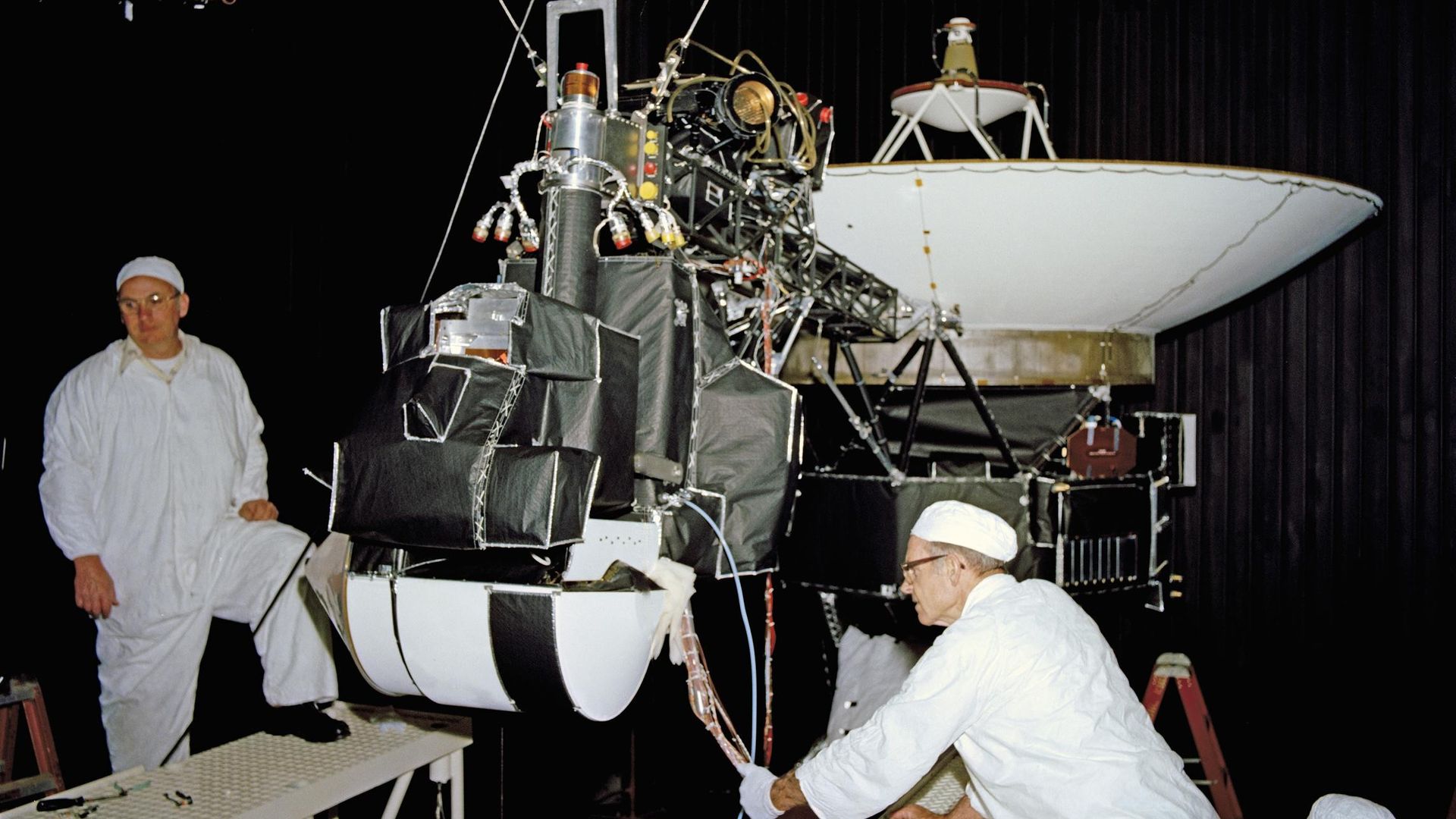
Engineers work on Voyager 1 before its launch in 1977. Photo: NASA
It took nearly 50 years, some Boulder-built technology and a whole lot of patience. Now, NASA's Voyager 1 spacecraft has officially traveled one light-day from Earth.
Why it matters: No human-made object has traveled farther, and CU Boulder scientists helped make the historic journey possible.
Driving the news: Voyager 1 hit the one-light-day milestone at 3:16am MT Wednesday, becoming the first spacecraft to travel far enough from Earth that light takes an entire day to reach it.
- Launched in September 1977, Voyager 1 has traveled more than 16 billion miles and is still cruising at nearly 38,000 mph.
- Its twin, Voyager 2, is expected to reach the same milestone in November 2035.
For all its achievements, Voyager 1 has outlasted expectations by decades, despite having less computing power than a modern key fob.
- Fran Bagenal, a CU Boulder research scientist who worked on the Voyager program as an MIT graduate student, said the spacecraft were originally expected to operate for about 12 years.
Zoom in: Scientists at CU Boulder's Laboratory for Atmospheric and Space Physics designed and built instruments for both spacecraft, helping researchers explore everything from Jupiter's Great Red Spot to Saturn's intricate rings.
- The twin Voyagers transformed our understanding of the outer solar system, revealing active volcanoes on Jupiter's moon Io, intricate structures in Saturn's rings and unprecedented views of Uranus and Neptune.
- And the timing was cosmic: The twin Voyagers launched during a window when the outer planets aligned for a series of gravitational slingshots, an opportunity that comes around only once every 176 years.
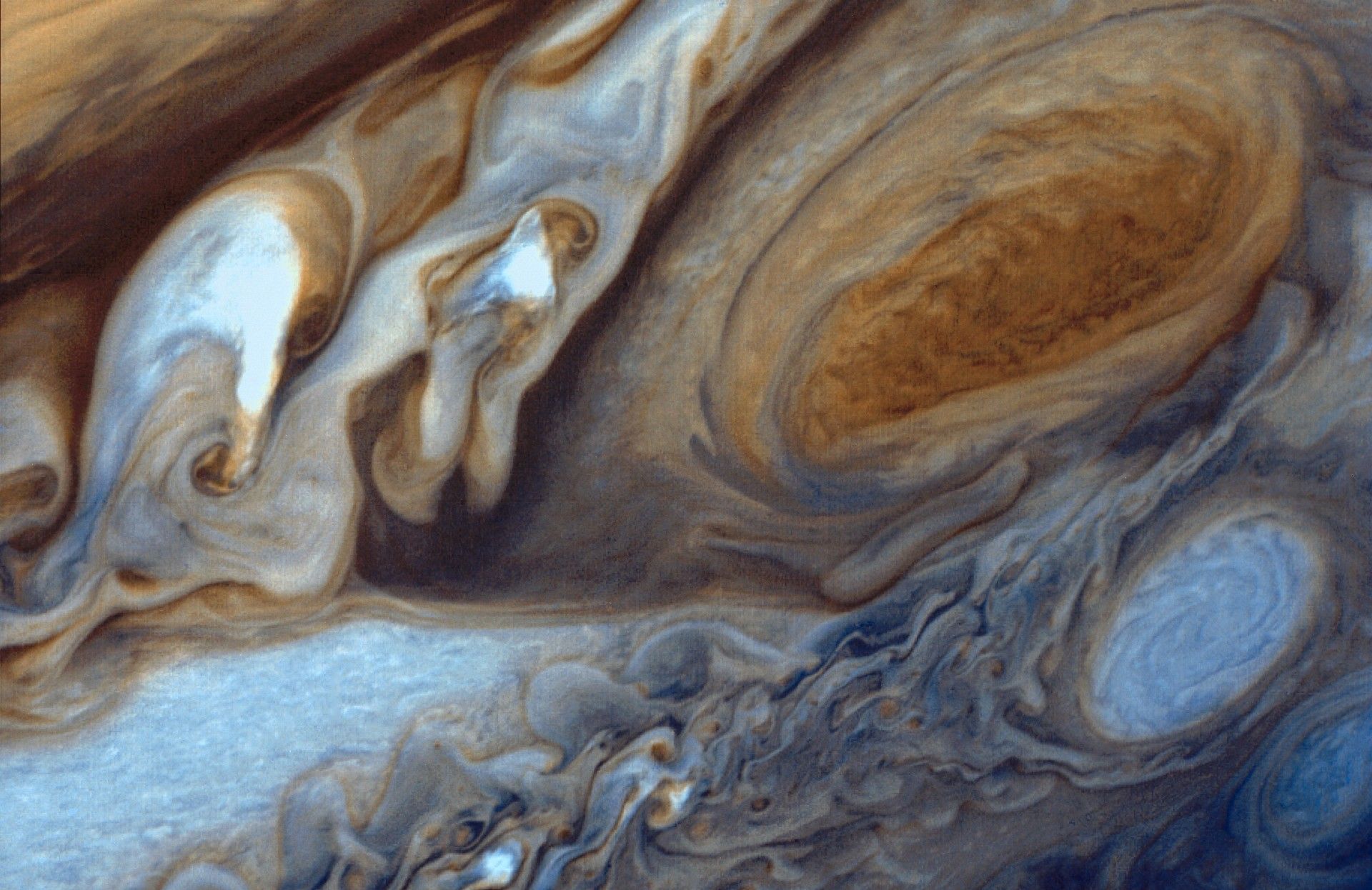
The big picture: Voyager 1 entered interstellar space in 2012, and continues sending scientific data home.
- Its two remaining active instruments measure magnetic fields and plasma waves.
Fun fact: Just in case Voyager encounters some extraterrestrial life, NASA made sure it wouldn't arrive empty-handed.
- Both spacecraft carry a Golden Record — essentially humanity's mixtape for aliens — featuring greetings, photographs, sounds of Earth and music from Beethoven to Chuck Berry.
- Yes, but: "I don't think aliens are going to find it, to be honest with you," Bagenal said. "But it was kind of interesting to go through that exercise."
What's next: Voyager's days of sending postcards home are numbered. Bagenal estimates its dwindling power supply will end communications within five years.
- The spacecraft itself could keep traveling through space, potentially for millions of years.
- NASA estimates it'll pass within 1.7 light-years of another star in about 40,000 years. Not exactly a quick trip.
The bottom line: Bagenal hopes the milestone inspires people to revisit Voyager's famous 1990 "Pale Blue Dot" photograph, which inspired astronomer Carl Sagan's famous reflection on humanity's place in the universe.
- "He points out how this little dot is where all the people are," Bagenal said. "That is profound and prophetic, and it's really important to think about now."