Colorado targets competency treatment delays

Add Axios as your preferred source to
see more of our stories on Google.
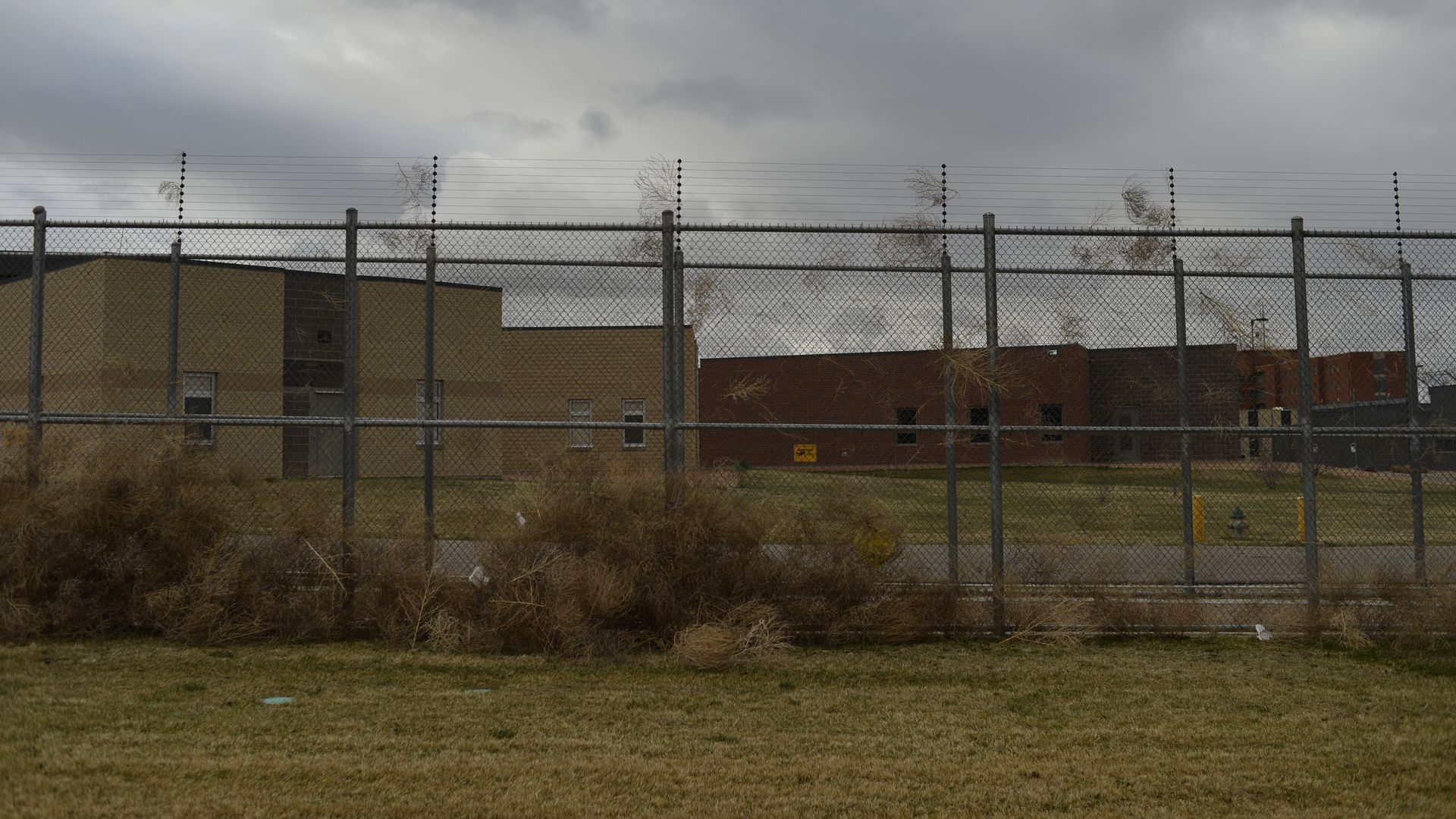
The Colorado Mental Health Institute at Pueblo. Photo: RJ Sangosti/The Denver Post via Getty Images
Colorado has convened a task force to address delays in the state's court competency system as hundreds of inmates deemed mentally unfit to stand trial await treatment.
Why it matters: Colorado has struggled with backlogs at its state hospital in Pueblo for years, but a pending lawsuit resettlement that could cost the state millions has added new urgency to fixing the problem.
The latest: Gov. Jared Polis issued an executive order this summer creating a task force of lawmakers, state agency representatives, prosecutors and defense attorneys.
- "Obviously, it's good to have all these stakeholders in a room," said Boulder County state Sen. Judy Amabile, who sits on the task force. "The goal here is to figure out a way to end the waitlist."
Follow the money: A 2019 settlement with advocacy group Disability Justice, formerly Disability Law Colorado, requires the state to pay up to $12 million a year in fines when it fails to meet required timelines for competency services.
- The state has paid the maximum fine yearly since the settlement.
- That agreement is set to expire next year, and state officials worry a new agreement won't include a cap on penalties, exposing the state to possibly hundreds of millions in fines.
By the numbers: The state health department said 394 jail inmates across the state await treatment, due largely to funding and staffing issues at the Colorado Mental Health Institute.
- Of those inmates, 270 have waited more than 28 days — with the longest stay at 289 days.
Zoom in: Boulder County is one of just a few districts that have tried a new competency docket to get inmates with nonviolent charges mental health treatment earlier.
- District Attorney Michael Dougherty told Axios the number of local inmates on the state hospital waitlist has gone from more than 50 to about 20 in the year or so since adopting the new process.
- "We've seen a lot of success in addressing competency issues before they get to a point where the state hospital is even getting involved," Dougherty said.
Between the lines: Both Dougherty and Amabile said that beyond state hospital issues, Colorado needs a more robust community mental health system.
- Amabile noted the state hospital's job is to ensure a defendant can stand trial, not necessarily to treat the underlying mental health issue.
- "So a lot of those people are cycling back into the system in various ways, not always the competency system, but the criminal justice system," Amabile said.
The bottom line: Dougherty said the task force should build on recent changes to Colorado's competency system, including the new competency docket and a law sponsored by Amabile addressing what happens when criminal cases involving serious charges end.
- "It should never have taken Colorado this long to address competency, and I'm really excited about the positive steps that are being taken now," Dougherty said.