Arapahoe County food insecurity fuels free pantry

Add Axios as your preferred source to
see more of our stories on Google.
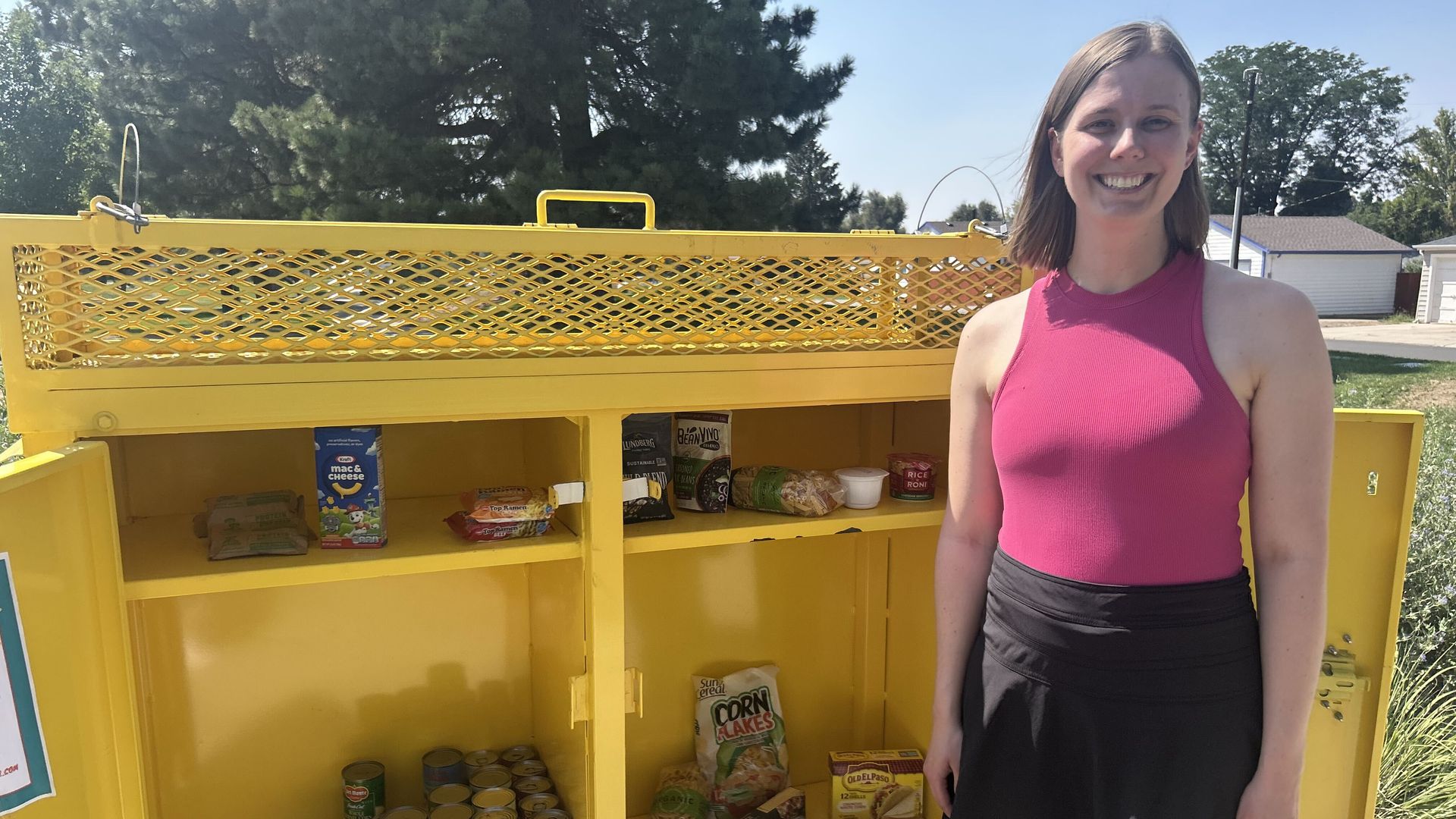
Aleea Eick and her Little Food Pantry, in Englewood. Photo: Robert Sanchez/Axios
Aleea Eick saw her Englewood neighbors rally last year when a government shutdown disrupted SNAP benefits and left families scrambling for groceries.
The big picture: The experience inspired the 31-year-old actuary to launch a Little Free Pantry where anyone can grab food when they need it.
Why it matters: Food insecurity is rising across Arapahoe County as high living costs squeeze household budgets and federal food assistance faces uncertainty.
By the numbers: Feeding America's latest "Map the Meal Gap" estimates 80,080 Arapahoe County residents experienced food insecurity in 2024, up from 58,220 in 2020.
- The rate jumped from 9% to 12.1%.
- And the annual food budget shortfall climbed to nearly $60 million, from $33.7 million.
Zoom in: Feeding America estimates roughly 41,600 food-insecure Arapahoe County residents earn too much to quality for SNAP.
Flashback: Eick saw that gap during the shutdown, when she joined a neighbor's effort to connect people who lost SNAP benefits with residents willing to buy groceries or gift cards.
- It showed her how close hunger hit to home — and how neighbors could bridge the gap.
How it works: Eick won roughly $1,300 this spring through Englewood's Neighborhood Improvement Grant program to create the pantry in Romans Park — north of Hampden Avenue and about a half-mile from South University Boulevard.
- The city installed a roughly-6-foot-by-5-foot yellow metal box near some picnic tables this summer.
Between the lines: Arapahoe County is part of a statewide trend. Colorado's food insecurity rate jumped from 8.3% in 2020 to 13.3% in 2004, the report shows.
- About 791,000 people statewide went without access to adequate food.
Reality check: The state would need to spend $570.5 million to adequately address the problem.
What they're saying: Eick doesn't expect her pantry to solve hunger.
- But she hopes it can make someone's tough day a little easier.
"This whole thing is opening my eyes to how prevalent food insecurity is, and how close to home it really is," she tells Axios.
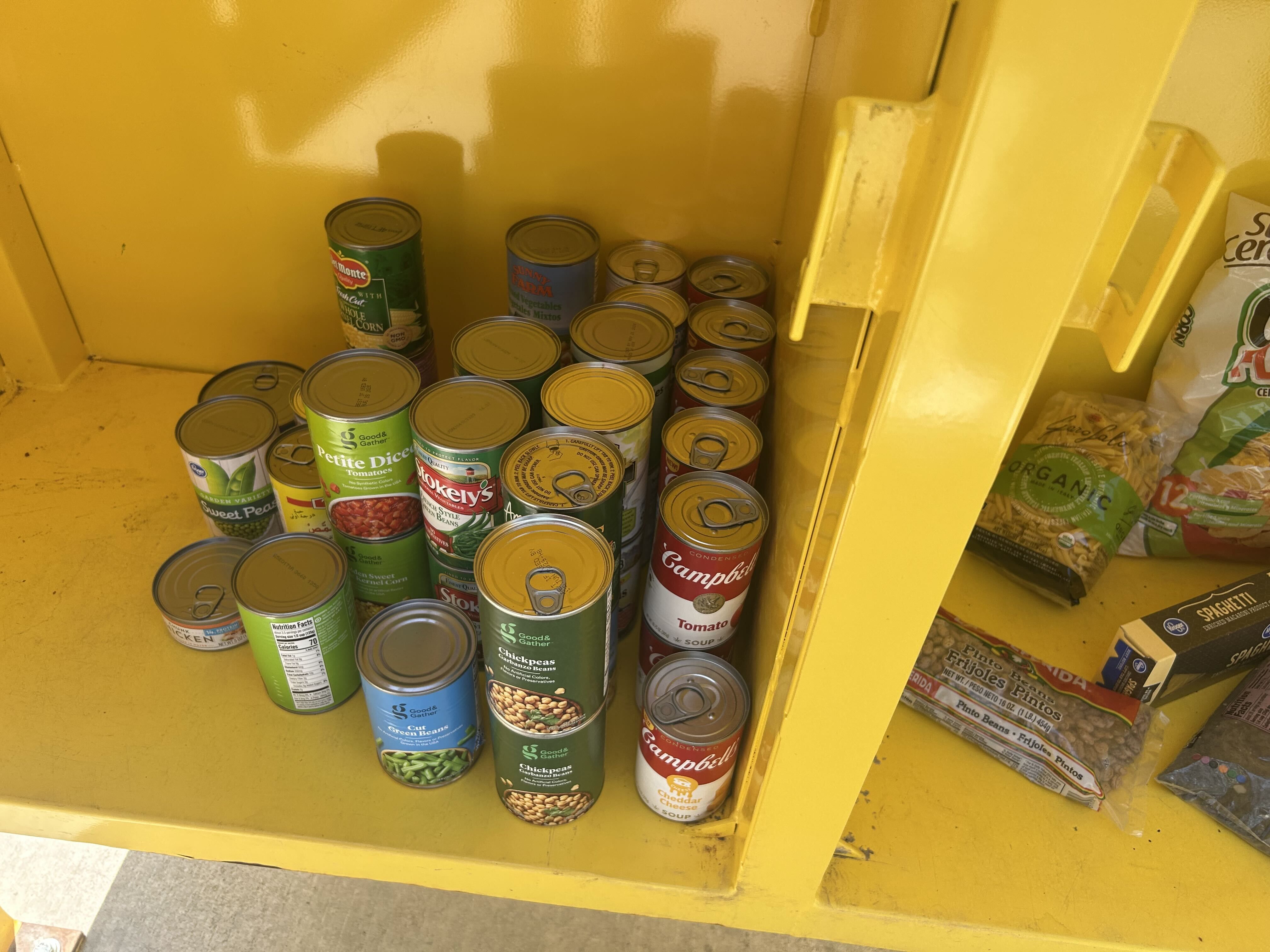
On a recent weekday, the pantry had cans of chickpeas, tuna, soup and cereal. Eick added taco shells, ready-to-heat ramen, oatmeal and microwavable rice meals.
And she's seeing encouraging signs.
- Instant oatmeal and pancake mix disappear regularly.
- "That's someone who's making a meal," and not just grabbing a snack.
- "People I've probably never met are helping people they've never met — and that means a lot."
What's next: An elementary school student plans to paint a design on the pantry. Eick wants to add shelves and a cooler for bottled water.