Aurora's mayor sleeps Fridays at shelter

Add Axios as your preferred source to
see more of our stories on Google.
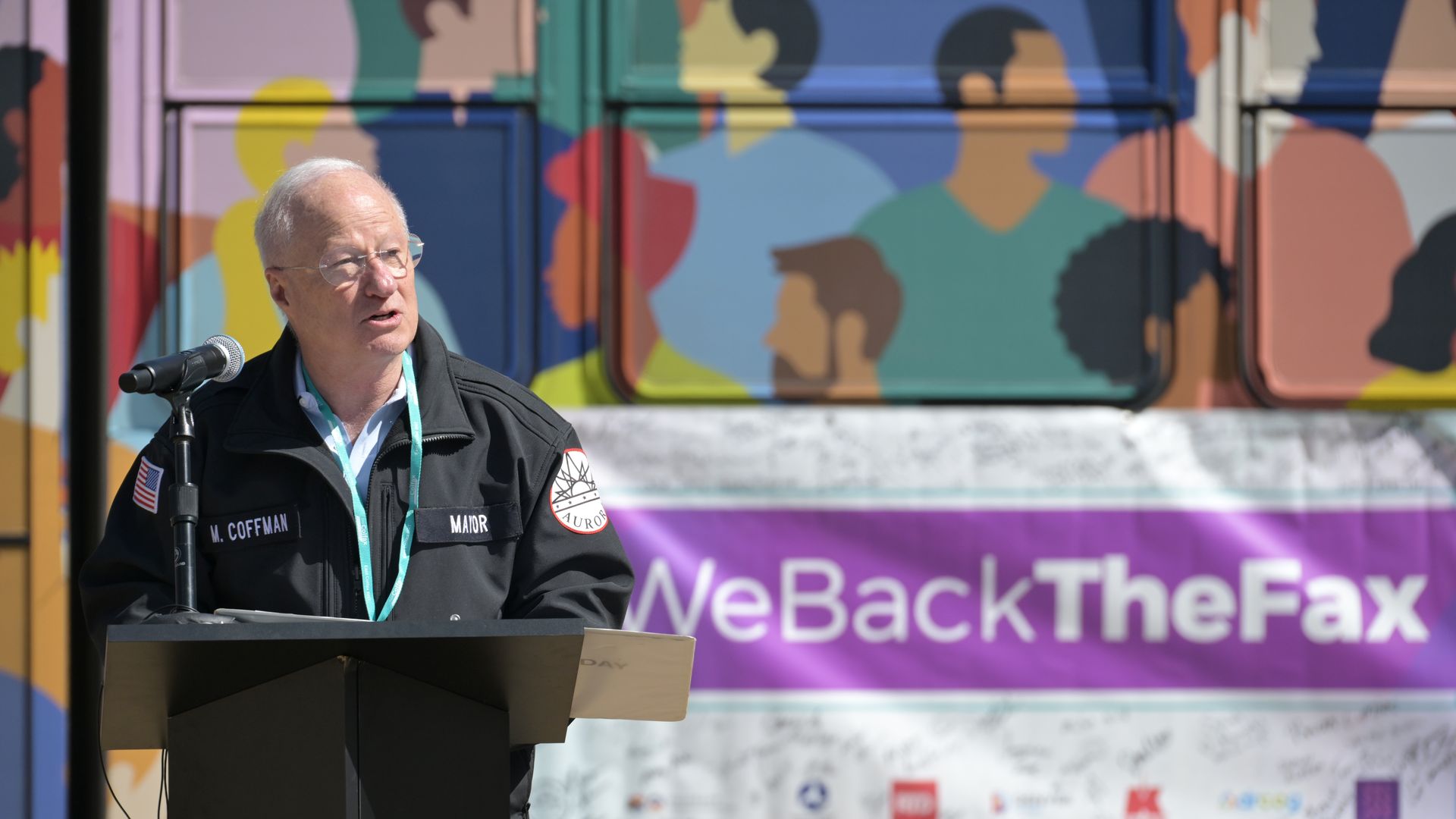
Aurora Mayor Mike Coffman in May. Photo: Hyoung Chang/The Denver Post
Aurora Mayor Mike Coffman has spent every Friday night since late February sleeping on a cot at the city's regional homeless shelter.
Why it matters: Coffman says the overnight stays test whether Aurora's new incentive-based model is moving people toward treatment, work and housing.
The latest: Coffman wrote on Facebook last week that he leaves his office every Friday afternoon for Aurora Regional Navigation Campus, where he meets residents, sleeps in the men's entry-level dorm and helps serve breakfast Saturday morning.
Zoom in: The 71-year-old has inserted himself into a broader debate over homelessness policy and the balance of housing, treatment and accountability.
- "It's definitely a humbling experience being there, and it ... has made me more compassionate toward" people experiencing homelessness, Coffman tells Axios.
Some residents now recognize him as the mayor, though staff were aware of the arrangement from the start.
Coffman sits on the board of Advance Pathways, which operates the center.
- The facility, which opened in November, can house roughly 600 people and operates an estimated $10 million annual budget, including about $2 million from Aurora.
How it works: The center uses a three-tier system that rewards engagement.
- Residents enter basic shelter first,
- Those who participate in services can move into better living conditions.
- Working residents can eventually qualify for transitional housing.
Coffman stays in the entry-level dorm, where residents sleep on cots, receive basic meals and undergo twice-daily searches.
Tier III housing is closed until at least late summer because of mold and leaking pipes, city officials tell Axios.
The center's promise, Coffman says, is in its ladder structure.
- Success depends on whether people move out of basic shelter and into treatment, job training, work and housing — rather than simply remaining in the shelter indefinitely.
Zoom out: What Coffman expected to be a short-term experiment has stretched beyond May. He says he'll continue spending Friday nights at the shelter until the program becomes "a model for Colorado and a model for the country."
- Among his biggest takeaways: The center may need time limits for residents who are capable of moving up but don't use the services.
What they're saying: The mayor's Facebook post drew more than 600 comments, many praising the effort.
- "You can pretend to care, but you can't pretend to show up," one person wrote.
Friction point: Some questioned whether Coffman could truly understand homelessness since he gets to go home each Saturday.
- "[Y]ou aren't homeless, you are cosplaying..." another person wrote.
Flashback: Coffman isn't new to immersive research on this issue, posing as "Homeless Mike" in 2020. But he says this has been a different experience.
- "It's helping me understand this program at the base level, and what's working," he says.
The bottom line: The mayor says his weekly stays are giving him a real-time audit of the shelter as Aurora tries to turn its incentive-based approach into a broader homelessness model.