"Raw" emotions as Aurora revisits McClain accountability

Add Axios as your preferred source to
see more of our stories on Google.
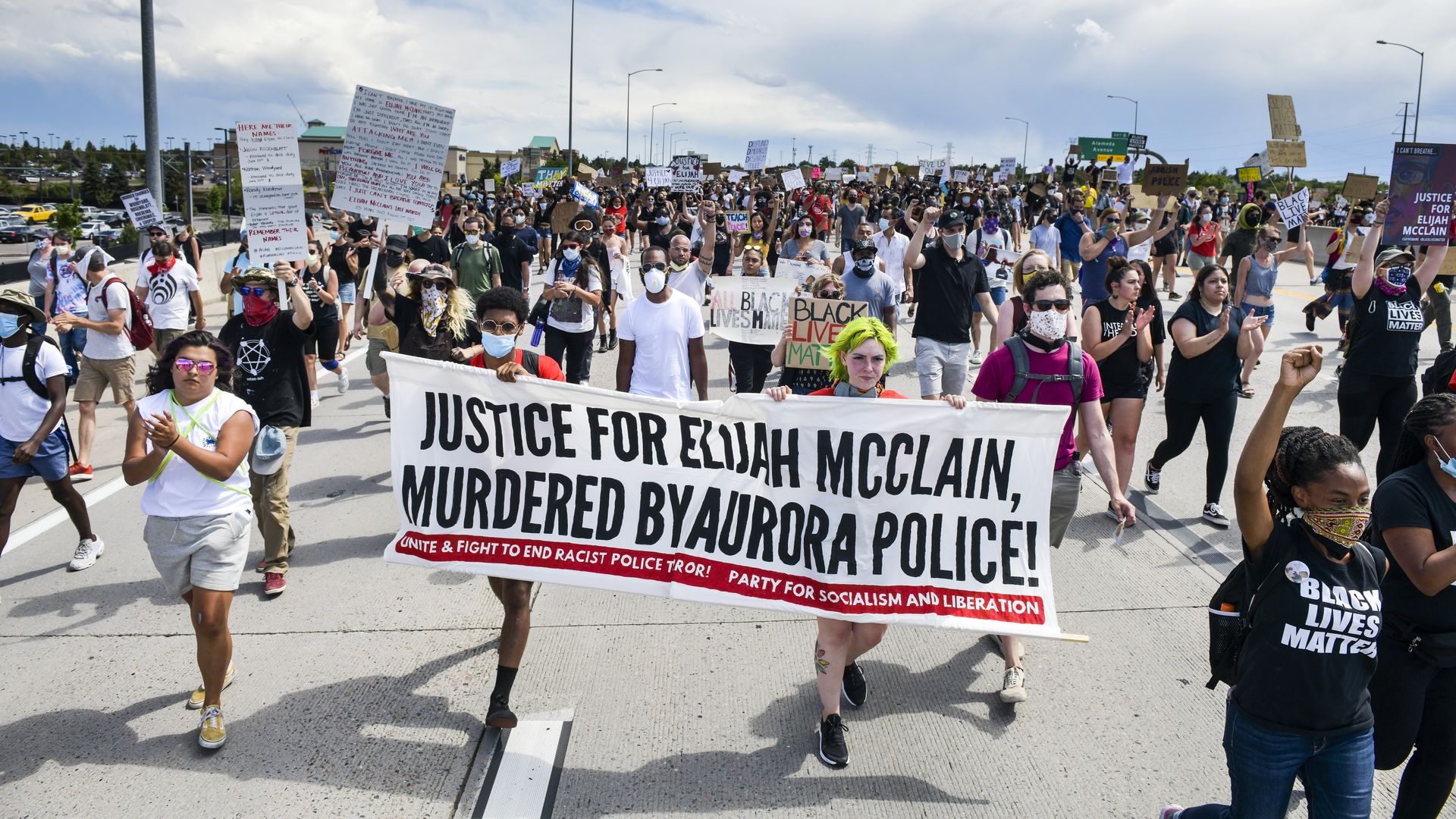
Protestors shut down I-225 in both directions as they demanded justice for Elijah McClain on June 27, 2020. Photo: Michael Ciaglo/Getty Images
Aurora City Council this week addressed a court order granting new trials for two paramedics convicted in Elijah McClain's 2019 death.
The big picture: Monday's council meeting marked the first chance for Aurora's elected leaders to respond collectively after a Colorado appeals court ordered new trials for Jeremy Cooper and Peter Cichuniec.
Driving the news: The appeals court last week overturned the paramedics' criminally negligent homicide convictions, ruling jurors received flawed instructions on the legal standards governing the pair's conduct.
Zoom in: Several Aurora council members said the ruling forced McClain's family and residents to revisit years of grief and demands for accountability after the 23-year-old's death.
Councilmember Amy Wiles fought back tears as she spoke.
- "[T]he small amount of justice Elijah received is now at risk, and this opens wounds that were never fully healed," she said. "This was a systemic failure in our city, from the moment he was stopped."
What they're saying: "Most of our community had to learn about [McClain's death] after community members came to call for justice … because his murder was treated as not important," Mayor Pro Tem Alison Coombs said.
- After the court's ruling, Coombs added, Sheneen McClain's "pain and our community's desire for accountability and reckoning have been reopened and are raw."
Mayor Mike Coffman did not address the court's decision.
In the room: Several members of the public addressed the council about McClain's death and the court's decision.
- Each praised McClain's mother, pointing to her grace and persistence through years of investigations, hearings and trials.
- Several speakers used only part of their allotted three minutes before yielding the remainder for a moment of silence.
Zoom out: Councilmember Rob Andrews read remarks from a constituent who said the ruling carries significance beyond legal questions.
- "The overturning of these convictions feels like the unsettling of something we believed had finally been acknowledged, that a young Black man's life mattered, that his death mattered and that the pain carried by the family and the community had not gone unseen."
What's next: Attorney General Phil Weiser's office plans to appeal the ruling to the Colorado Supreme Court.
The bottom line: The appeal centered on jury instructions. But Aurora's response showed the broader debate over accountability remains unresolved.