Catch up on the day's biggest business stories
Subscribe to Axios Closer for insights into the day’s business news and trends and why they matter
Stay on top of the latest market trends
Subscribe to Axios Markets for the latest market trends and economic insights. Sign up for free.
Sports news worthy of your time
Binge on the stats and stories that drive the sports world with Axios Sports. Sign up for free.
Tech news worthy of your time
Get our smart take on technology from the Valley and D.C. with Axios Login. Sign up for free.
Get the inside stories
Get an insider's guide to the new White House with Axios Sneak Peek. Sign up for free.
Communicate like Axios
Keep teams engaged and aligned with Axios-style communications crafted with Axios HQ.
Learn more
Catch up on coronavirus stories and special reports, curated by Mike Allen everyday
Want a daily digest of the top Denver news?
Get a daily digest of the most important stories affecting your hometown with Axios Denver
Want a daily digest of the top Des Moines news?
Get a daily digest of the most important stories affecting your hometown with Axios Des Moines
Want a daily digest of the top Twin Cities news?
Get a daily digest of the most important stories affecting your hometown with Axios Twin Cities
Want a daily digest of the top Tampa Bay news?
Get a daily digest of the most important stories affecting your hometown with Axios Tampa Bay
Want a daily digest of the top Charlotte news?
Get a daily digest of the most important stories affecting your hometown with Axios Charlotte
Sign up for Axios NW Arkansas
Stay up-to-date on the most important and interesting stories affecting NW Arkansas, authored by local reporters
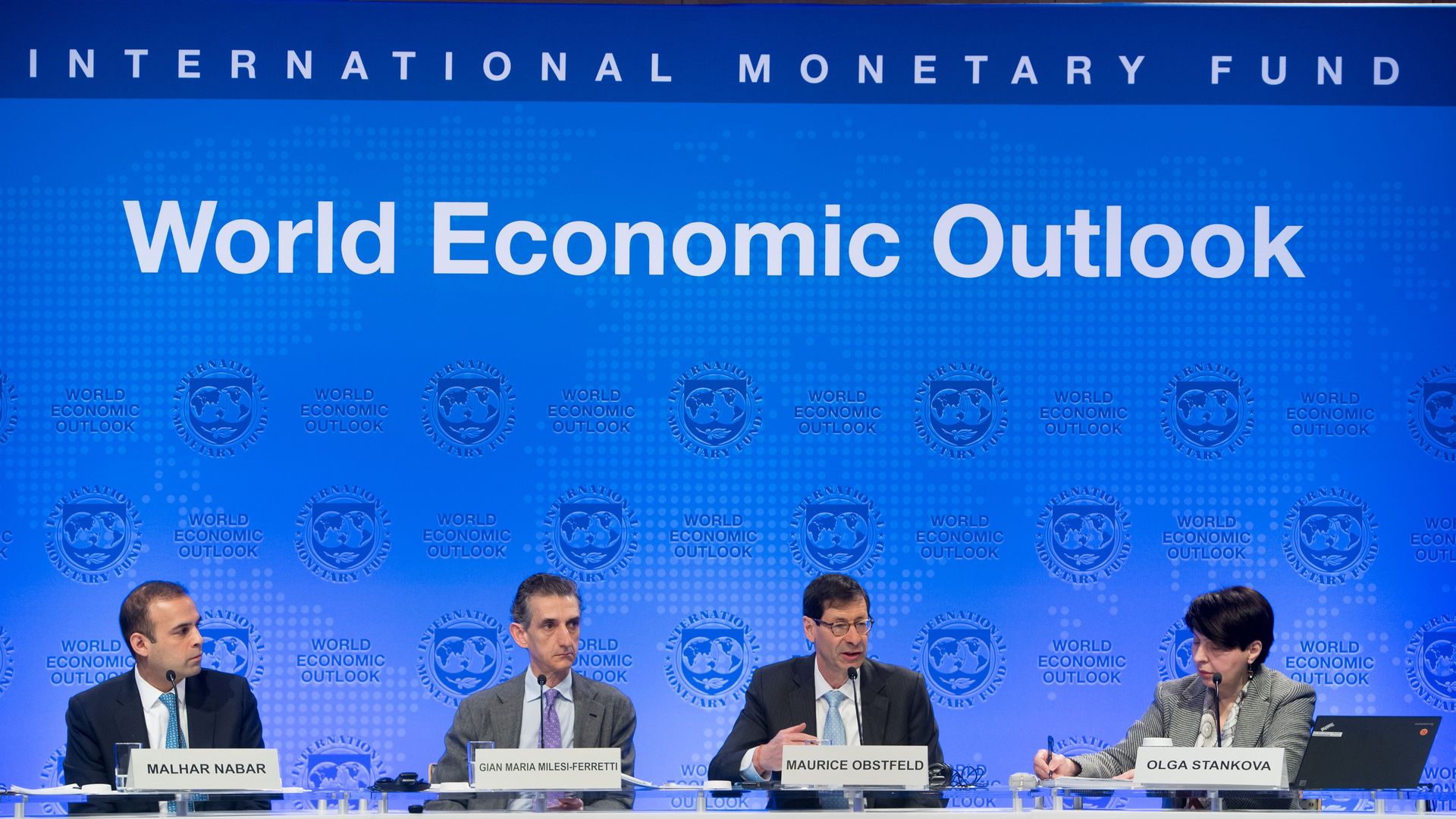
International Monetary Fund officials hold a press briefing during the World Bank and IMF's 2018 Spring Meetings in Washington, D.C., on April 17, 2018. Photo: Saul Loeb/AFP via Getty Images
Last week, the Financial Times reported that the Trump administration will support a $13-billion capital increase to the World Bank. The announcement is expected to be made at the World Bank's spring meetings with the International Monetary Fund in Washington, D.C., later this week.
Why it matters: The spending increase is good news for the world's lowest-income countries, and marks an unexpected turn from the Trump administration’s isolationist agenda.
The increase will be split two ways: $7.5 billion to the International Bank for Reconstruction and Development, which provides long-term, low-interest loans to developing countries to support projects ranging from government institutions to critical infrastructure; and $5.5 billion to the International Finance Corporation, which lends to the private sector in those countries.
While not guaranteed, the capital increase is expected to lead to an increase in low-interest lending to the world's poorest countries, 39 of which are in Africa, and fewer loans, possibly with stricter terms, for middle-income countries such as China. In return, China will see its share in the Bank rise from 4.68 %to 6% (the U.S. has a 16% share, making it the largest shareholder). The increase might also be used to fund grants and more generous loans to African countries, which are at risk of being highly indebted.
The bottom line: Investment in strengthening systems and providing basic public services, such as health care and education, is driven by governments and not particularly attractive to the private sector. For that reason, this deal could be a boon to poor, fragile and post-conflict countries, where the share of people living in extreme poverty is poised to rise to 60% by 2030.
Tanvi Nagpal is acting director of the International Development Program and practitioner in residence at Johns Hopkins SAIS.