Heavier electric vehicles increase safety risks, study says

Add Axios as your preferred source to
see more of our stories on Google.
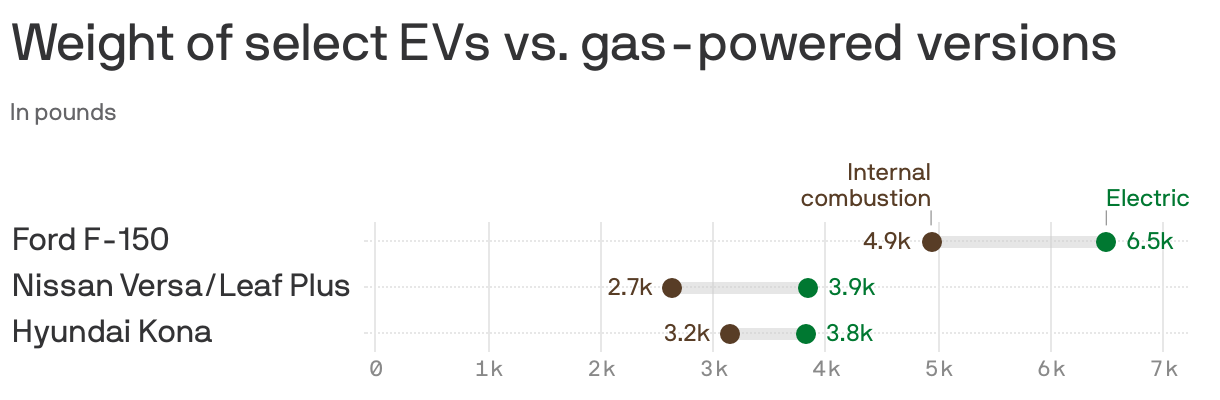
Analysis in the journal Nature finds electric vehicles' high weight relative to gas-powered models creates safety risks that can be addressed through design and policy changes.
The big picture: EVs are heavy due to battery weights and heavier equipment to provide "necessary structural support." That's a problem because heavier vehicles mean more deaths in accidents.
Threat level: This erodes the benefits of climate-friendly transport.
- The authors — while warning this is a back-of-the-envelope tally — say the cost of extra lives lost by adding 1,500 pounds to a truck "rivals the climate benefits" of avoided emissions.
- Heavier vehicles also create pollution from wear on tires and require more materials and energy to build and propel.
What's next: They propose setting vehicle registration charges based on weight to encourage the use of lighter vehicles.
- Another idea is focusing more on cutting battery weight, not just today's emphasis on range extension. One specific suggestion: altering EV subsidies to make them based on storage per unit of weight to incentivize lighter batteries.
- Other recommendations are around ways to lighten vehicle frames; technology and street-design changes to reduce accidents; and policies that encourage walking, biking and public transit.
The bottom line: EVs are "essential for decarbonizing transport" and "a focus on driving lighter, safer, cleaner and less can ensure a better future for everyone."
