Axios Live: Democrats have a "mandate" on health care affordability, Rep. Raul Ruiz says

Add Axios as your preferred source to
see more of our stories on Google.
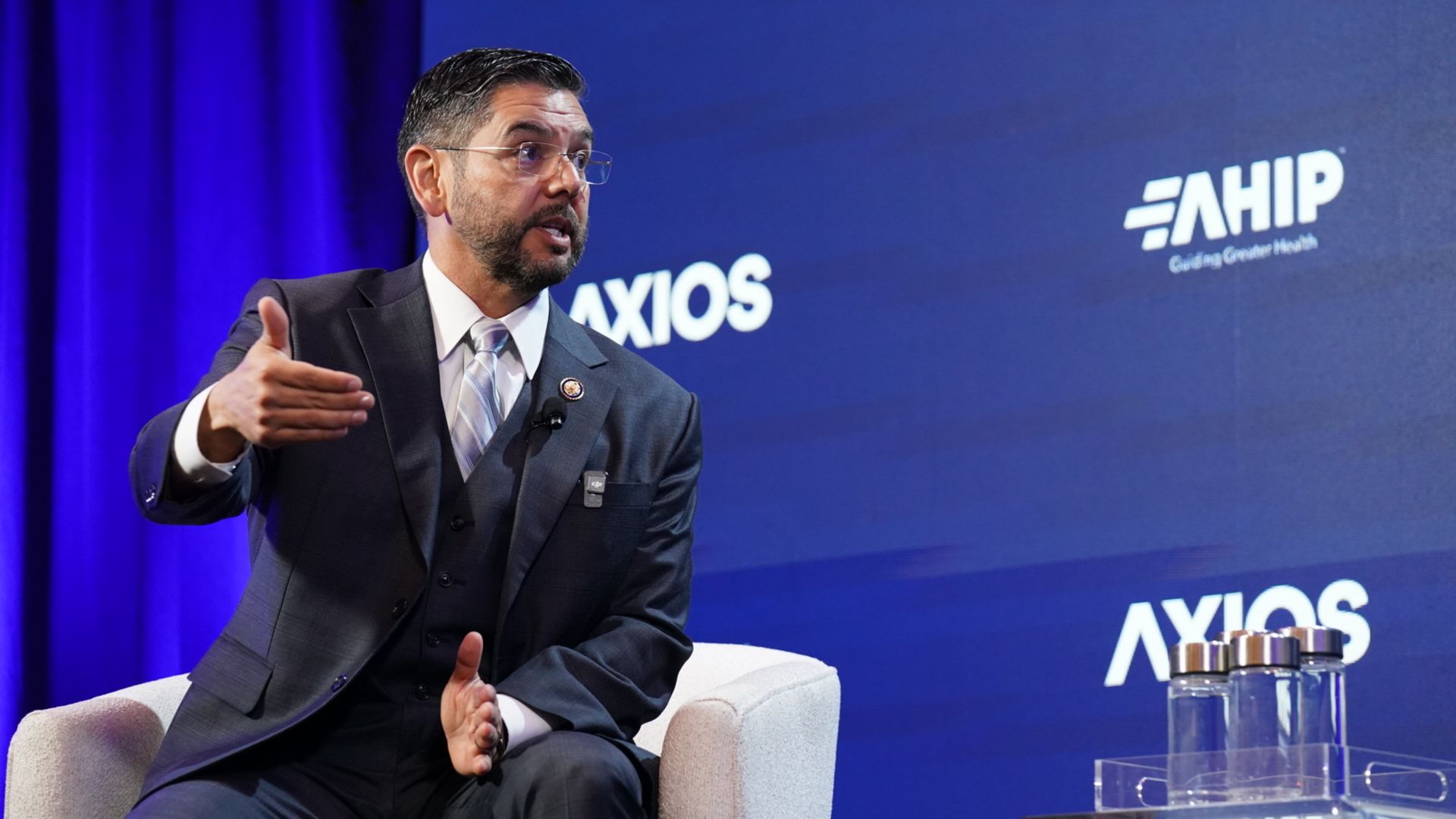
Rep. Raul Ruiz (D-Calif.) on stage at a Nov. 10 Axios Live event. Photo: Denny Henry for Axios
WASHINGTON, D.C. — Lower costs and broader access to medical care are priorities for Democrats after the "blue tsunami" of the midterm elections, Rep. Raul Ruiz (D-Calif.) said at an Axios Live event.
Why it matters: Health care costs have continued to rise through 2026, and any attempt to offer voters relief will require Democrats to work with President Trump during his final two years in office.
Axios' Caitlin Owens and Andrew Solender spoke to Ruiz; Sabrina Corlette, founder and co-director of Georgetown University's Center on Health Insurance Reforms; and Rep. Morgan Griffith (R-Va.). The Nov. 10 event was sponsored by AHIP.
By the numbers: One-third of Americans report making financial sacrifices to afford health care, including skipping meals and borrowing money, according to a Gallup and West Health poll.
What they're saying: "People — households — are being crushed in this health care affordability crisis," Corlette said.
- "Priority No. 1 needs to be to roll back the cuts that have been made to Medicaid in the marketplaces."
- "If left untouched, 15 million people will lose their health insurance," she added.
- Democrats are "full speed ahead" on addressing costs, and especially health care costs, Ruiz said.
Meanwhile, Morgan said one reason Republicans lost in the midterms is that they weren't transparent enough with their messaging.
- "We did not get out and explain our position well enough," he said.
What's next: Democrats should first restore Medicaid funding, support struggling rural hospitals and return ACA subsidies before turning to broader health system reform, Ruiz said.
- Lawmakers "need to take a good, hard look at what is driving health care costs in the commercial market, and No. 1 [is] hospital costs and No. 2 [is] drug costs," Corlette said.
- "We can do bipartisan things if we look at the ideas and not who the patron is," Morgan said.
Content from the sponsor's segment:

In a View From the Top conversation, AHIP president and CEO Mike Tuffin said flawed incentives contribute to high health care costs.
- "We need reforms that focus on bringing down those costs, because when drug makers set high prices, when consolidated hospitals set high prices, that shows up for people in the form of higher premiums and higher out-of-pocket costs," he said.
Go deeper: Watch the full event.
