Axios Live: Houston's competitive life sciences environment aims to attract VCs

Add Axios as your preferred source to
see more of our stories on Google.
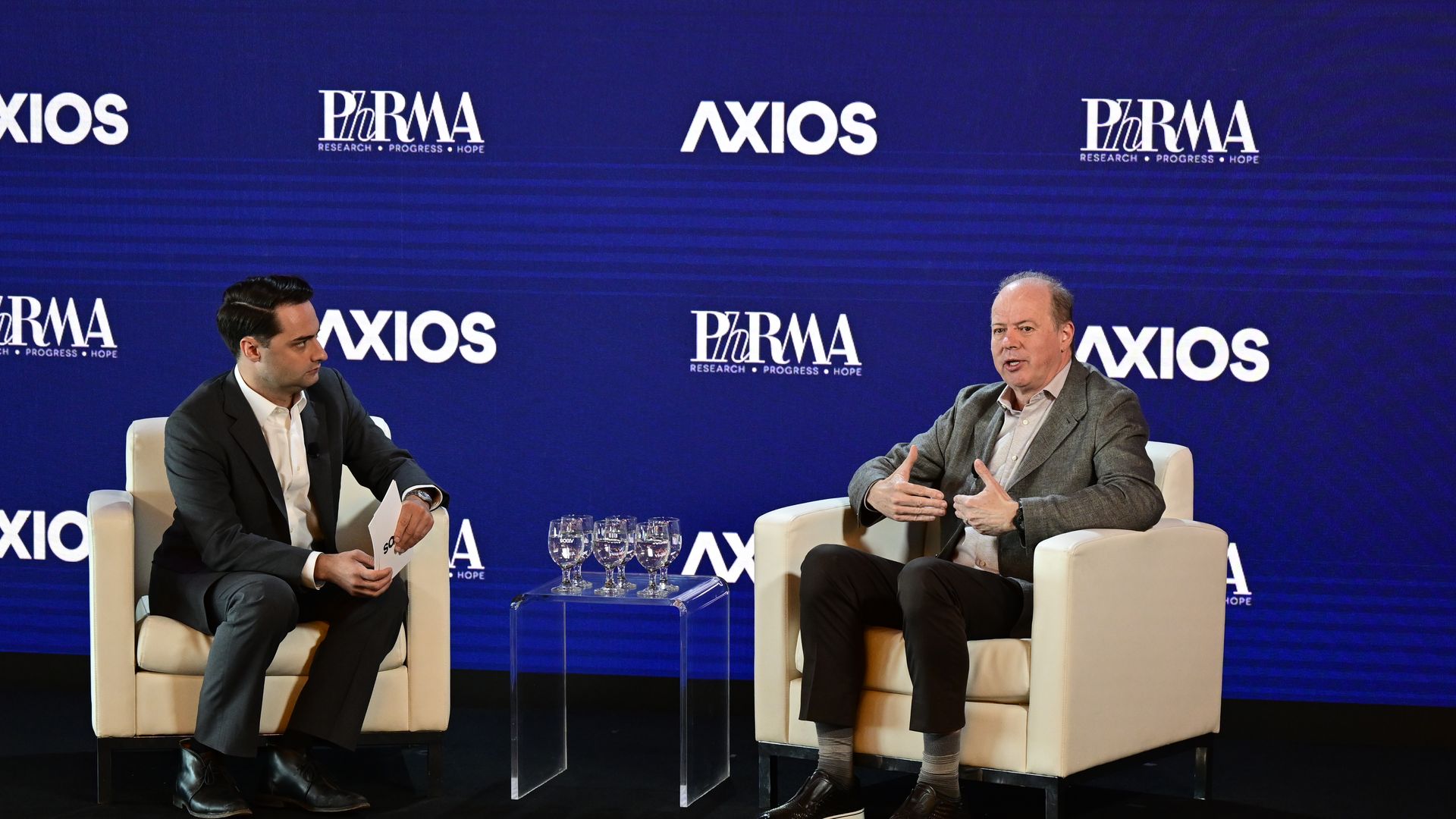
Axios' Brock Turner and Paul Wotton of Rice University Biotech Launch Pad and RBL Ventures. Photo: Dee Zunker for Axios
HOUSTON — Southeast Texas is attracting pharmaceutical and biotech companies, and leaders say there's an open invitation to venture capitalists, too.
Why it matters: Houston's health care systems coupled with its "cooperative" work culture position it as a medical innovation hub — and it's turned out to be "magic," said Greater Houston Partnership president and CEO Steve Kean.
Axios' Shafaq Patel and Brock Turner spoke with Kean, Texas state Rep. Suleman Lalani (D-Sugar Land) and Rice University Biotech Launch Pad executive director Paul Wotton. PhRMA sponsored the Oct. 6 event.
State of play: Eli Lilly broke ground last month on a $6.5 billion pharmaceutical manufacturing plant in northeast Houston, and Bristol Myers Squibb will invest $2.3 billion in a new manufacturing campus.
- Kean said that Houston intentionally pursued a for-profit life sciences company like Eli Lilly.
- He noted that high-paying jobs are a large benefit to flagship companies moving into the city. "[W]e've got a workforce that's ambitious, young, diverse, and a great community college system that's going to help train the workforce that we need in order to win more of this business."
Zoom in: While Houston boasts low taxes compared to other hubs, "excellent" academic centers, a well-trained workforce, and an abundance of ongoing clinical trials, Wotton said there's still a communication gap in attracting VCs.
- "I'll say this for what it's worth: I just think we could be much better at PR down here with respect to what we do in Texas, because there's a lot to be proud of down here, but we don't shout very loudly," said Wotton, who is also the CEO and founding partner of accelerator RBL LLC.
Meanwhile, Lalani, who's also a medical doctor, said he wants clinical trials to draw on the region's age and demographic diversity to yield quality data.
- For instance, when a study's participants are all 30 to 50 years old, he said it's challenging to generalize the results for an 80-year-old patient.
- Lalani said he specifically wants to see more research in preventive medicine.
What's next: When the 90th Texas Legislature convenes in January, Lalani said he plans to look at insurance transparency, affordable medication and fair market competition policies.
- "We take pride and we say we are the eighth largest global economy, but at the same time, the sad truth is that Texas has the highest number of uninsured people."
- There's a large number of underinsured people as well, Lalani said, where "people have a fancy health card in their pocket, but they don't use it" because the deductibles are too high.
Content from the sponsor's segment:
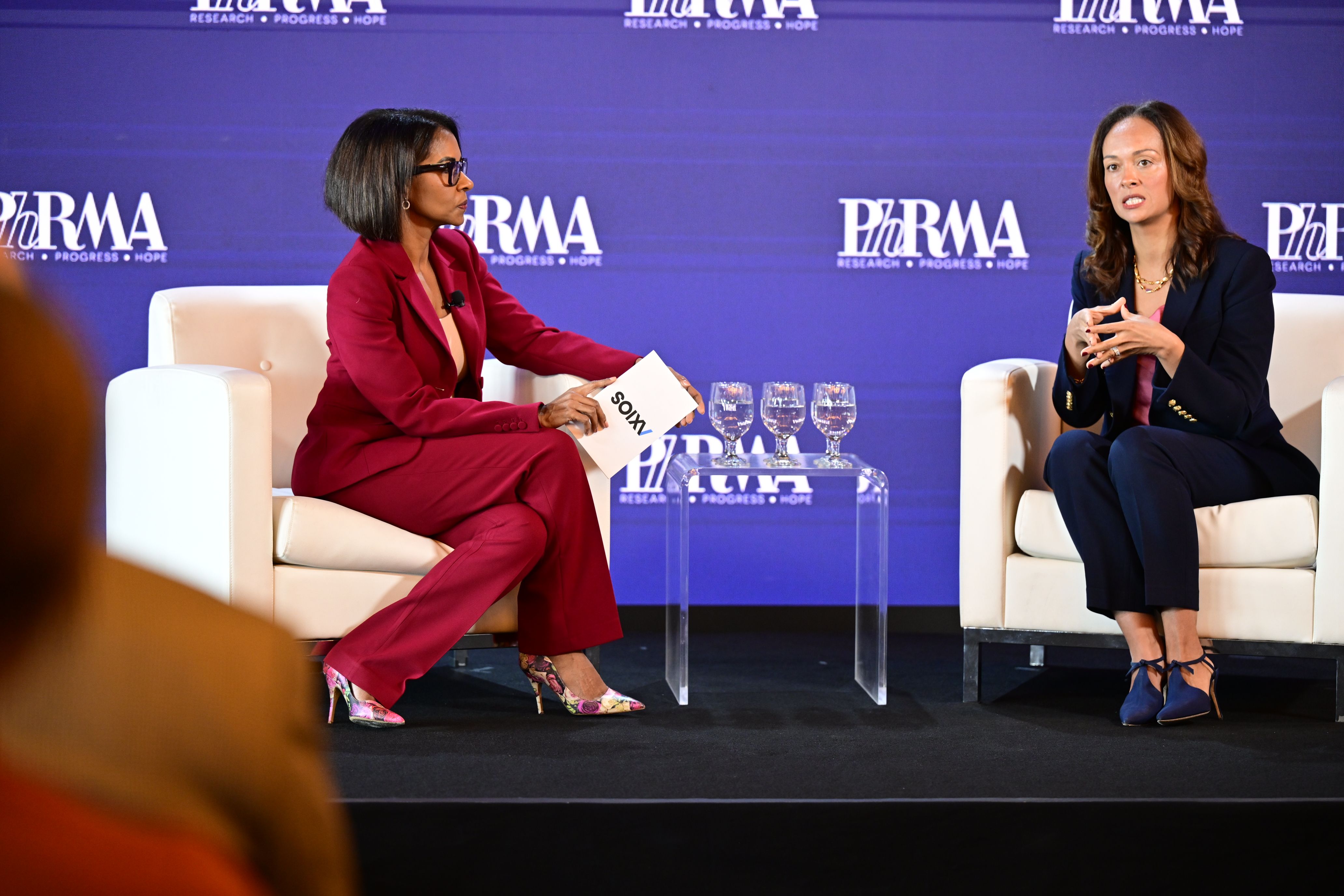
In a View From the Top conversation, Bristol Myers Squibb EVP, general counsel and chief policy officer Cari Gallman said that for the U.S. to lead in developing new medicines, it needs a strong ecosystem that supports health care investment.
- She compared drug discovery to the middle part of a race, where there's no celebration but it's where all the hard work happens. "Development is not glamorous, and yet it is really the critical part of bringing scientific discovery into a patient's medicine cabinet."
Go deeper: Watch the full event.
