Trump moves to ease environmental rules for data centers

Add Axios as your preferred source to
see more of our stories on Google.
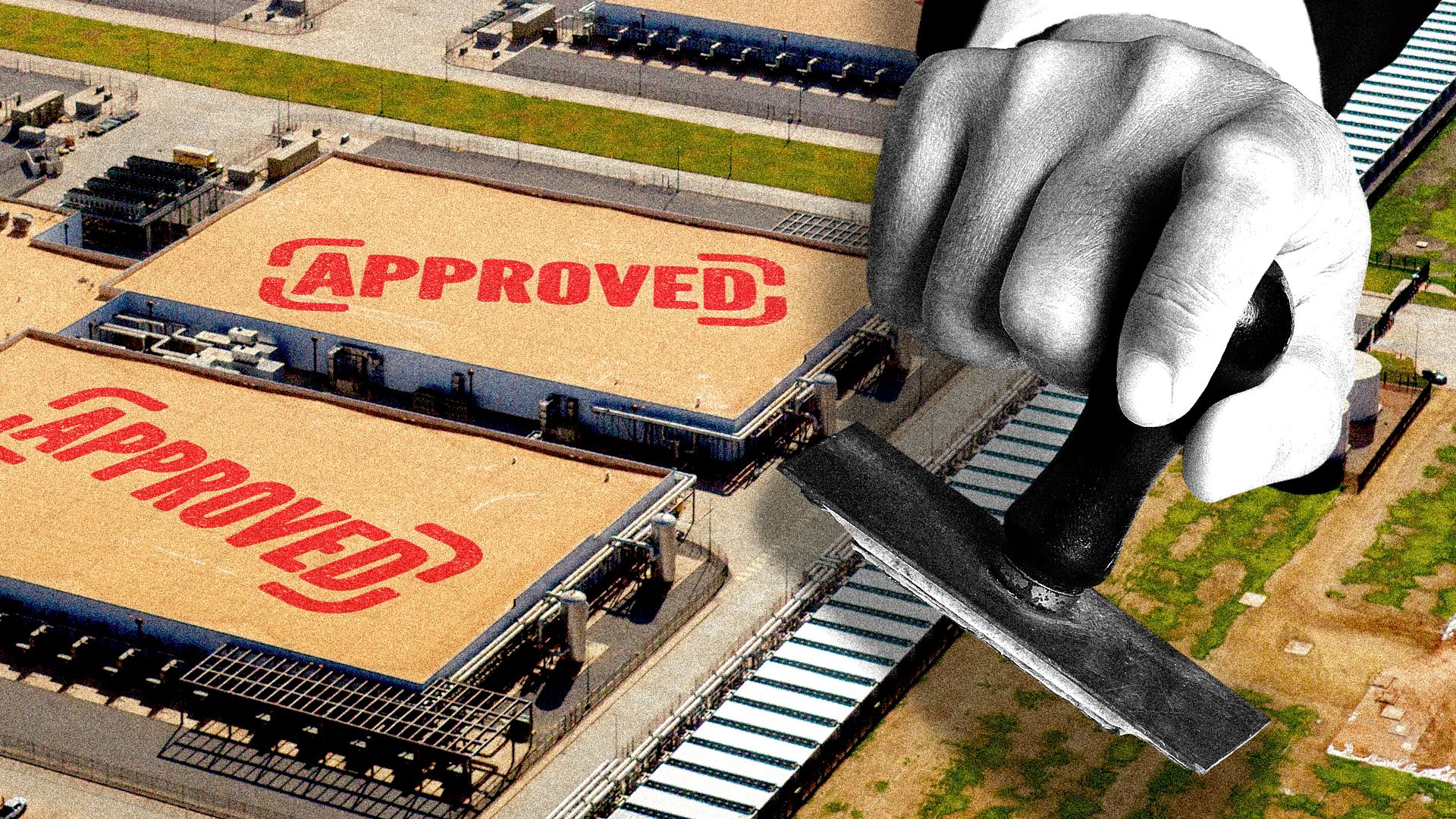
Photo illustration: Brendan Lynch/Axios. Photo: Brandon Bell/Getty Images
The Trump administration is reshaping regulations to make data centers — and the fossil-fuel power fueling them — easier to build. Critics say the changes could increase pollution and reduce public input.
Why it matters: The moves risk inflaming an already fierce and bipartisan backlash to data centers, the backbone of the AI boom.
Driving the news: The Environmental Protection Agency is considering a rule that could treat some temporary gas turbines as mobile equipment rather than stationary pollution sources, potentially making them easier to permit, according to the Natural Resources Defense Council's John Walke.
- "We have been told by senior people at EPA that there is a pants-on-fire, hasty rulemaking proposal underway," said Walke, director of NRDC's federal clean air program. "It's being driven squarely by concern for data centers."
The intrigue: EPA laid groundwork for such a move in a January rule, saying treating portable turbines as mobile equipment could reduce permitting burdens.
- The agency created a conditional exclusion that would kick in if it later adopts "nonroad" standards for portable turbines.
- EPA also acknowledged concerns about the air-quality effects of operating many temporary turbines in one place.
- An EPA spokesperson referred Axios to the January rule when asked about the possible new rulemaking.
State of play: This possible rule is on top of at least three others EPA has proposed or developed in the last year to ease permitting procedures or environmental regulations for AI infrastructure.
- The agency is proposing to eliminate federal minimum requirements for public participation in permits for smaller pollution sources, leaving those decisions to state and local regulators.
- EPA would allow more construction to occur at data center sites before receiving permits, according to a rule proposed in May.
- EPA said in guidance this summer that power plants not connected to the electric grid — an increasingly common way to power data centers — generally aren't subject to EPA's Acid Rain Program, a landmark program restricting sulfur dioxide and nitrogen oxide pollution.
The big picture: Developers are racing to build data centers and turning to natural gas for power amid mounting local opposition.
- Environmental and resource concerns top the list of reasons roughly 70% of Americans oppose data centers in their area, according to Gallup polling published in May.
EPA has characterized the moves as ways to streamline permitting and speed development without weakening environmental protections.
- The White House, asked specifically about concerns that the administration's push could weaken environmental protections or increase pollution, did not address those concerns.
- Instead, spokesperson Davis Ingle said President Trump is turning data centers into "engines of growth and opportunity" while cementing U.S. dominance over China in AI.
What they're saying: "He's attempting a wholesale bypass of environmental law," Michael Gerrard, founder of Columbia University's Sabin Center for Climate Change Law, said of Trump. "He hunts for loopholes, and when he can't find one, he punches through to create a new one."
- The Data Center Coalition, an industry trade group representing most developers of AI infrastructure, said in a statement it supports the federal push to streamline permitting, though it didn't respond to specific questions about the changes.
- "Accelerating infrastructure buildout and upholding robust environmental safeguards are not mutually exclusive," said Michele Nellenbach, the group's vice president of federal affairs.
Friction point: Some of EPA's regulatory moves touch on issues being fought over in court.
- Elon Musk's xAI faces litigation over temporary gas turbines powering its data centers near the Tennessee-Mississippi border. The dispute centers partly on whether the turbines could be treated as portable "nonroad" equipment exempt from stationary-source permitting. xAI didn't respond to a request for comment.
- Environmental groups have also threatened litigation against two Texas data center projects, alleging they improperly used less-stringent minor-source permits to avoid tougher pollution controls and public review.
Zoom in: One permit, for developer VoltaGrid, limits nitrogen oxide emissions to 49.97 tons annually — just below the area's 50-ton threshold for major sources, according to a July 22 notice of intent to sue from the Environmental Integrity Project, Sierra Club and Public Citizen.
- The groups allege companies are dividing or limiting projects to qualify for minor-source permits — which would no longer be subject to federal public-participation requirements under EPA's proposal.
- VoltaGrid and Vantage, the other company named in the notice, didn't respond to requests for comment.
What we're watching: The Environmental Integrity Project is investigating additional cases in which companies may be structuring permit applications to avoid more stringent reviews, enforcement director Mary Greene said.
Sign up here for Axios' Future of Energy newsletter.
