The coming verdict on Trump's Strait of Hormuz claims

Add Axios as your preferred source to
see more of our stories on Google.
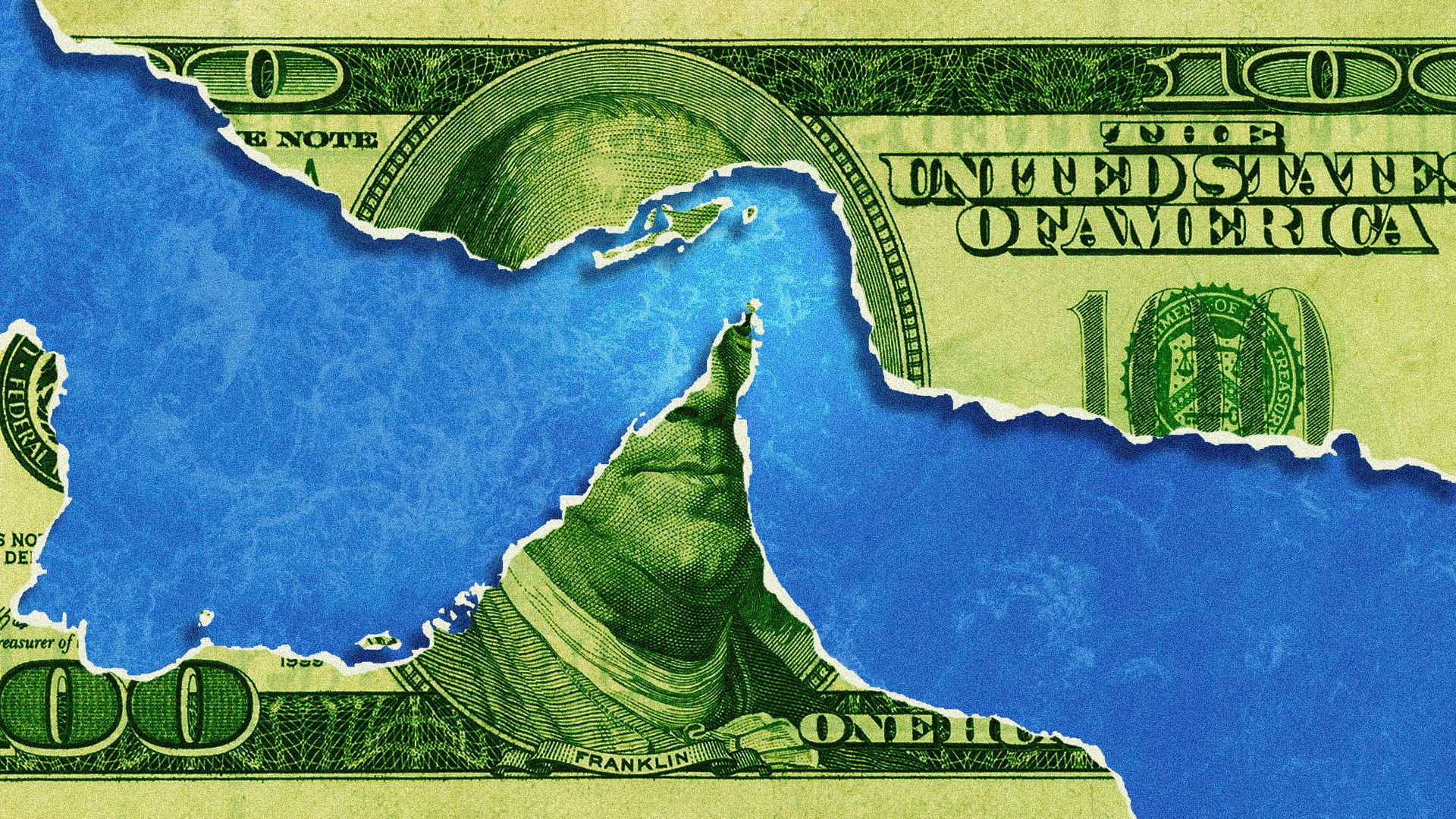
Illustration: Sarah Grillo/Axios. Stock: Getty Images
The White House is at odds with some private sector analysts over how much oil is leaving the Strait of Hormuz — but it will take weeks until the picture of what's truly getting through becomes clear.
Why it matters: How much oil exits the waterway sways the price of gasoline and other consumer products.
- The White House is claiming success in forcing open the world's most important energy chokepoint, which handled 20 million barrels of crude and oil products each day before the Iran war.
- The verdict could arrive as fall election campaigns near fever pitch.
Driving the news: President Trump claimed yesterday that 18 million barrels per day are moving, saying via Truth Social that "Hormuz Volumes are BACK."
- Energy Secretary Chris Wright told CNBC Tuesday that 17 million barrels of crude and products combined flowed on Monday, but he has also noted the multi-day rolling average is much lower.
What we're watching: There's not enough information to know precisely now — but more data will emerge that will better reveal how much oil movements have recently risen.
- "We will know the truth or closer to it in a few weeks. If all that oil came out, it has to go somewhere and eventually it will be recorded," Rapidan Energy Group founder and president Bob McNally said via email.
The intrigue: Tanker tracking services have tallied less oil than some of the administration's claims in recent weeks.
- But barrel counting is a mix of art and science, especially in wartime. Many tankers are going dark by turning off their "automatic identification system" transponders and using other tactics to move oil.
- That makes things harder for market intelligence firms, though they rely on multiple information sources like satellite imagery and cargo loading data.
- Port and customs information in oil-buying countries, and the size of their crude stockpiles, will complement the outbound data estimates. But it takes tankers weeks to reach some major importers.
What they're saying: "In coordination with the U.S. military, the U.S. Department of Energy maintains the best available data related to oil and oil products leaving the Arabian gulf," an Energy Department spokesperson said via email.
Between the lines: The 17 million barrels that Wright claimed may be plausible on a given day, analysts say, though what's most important is the multi-day average.
- Wright said early this week that flows have been averaging around 8 million barrels per day, per Bloomberg.
- The Energy Department spokesperson told Axios that on Wednesday, nearly 12 million barrels of oil and oil products moved through the strait.
My thought bubble: While analysts are skeptical of some of the eye-popping administration claims, there's rough agreement between some private sector trackers and the Energy Department's multi-day average tally.
State of play: Apples-to-apples comparisons are tricky, depending on the time period and what's getting counted.
- Data from Vortexa, a commodity tracking and intelligence firm, shows a 28-day moving average of around 8 million barrels of crude and products as of August 31, per senior analyst Rohit Rathod.
- Tanker Trackers, another firm, said Wednesday that its preliminary data shows crude transit specifically rising to an average of 5.94 million barrels per day over the past seven days.
The bottom line: Eurasia Group analyst Gregory Brew says it appears more oil is indeed making it out. "It's probably not as much as they are claiming," he said of the Trump administration.
- "But it's enough to give Trump the idea that time is on his side, and that the US has the upper hand over the Iranians," Brew said via email.
Sign up here for Axios' Future of Energy newsletter.
