Large-scale resumption of oil shipping isn't guaranteed

Add Axios as your preferred source to
see more of our stories on Google.
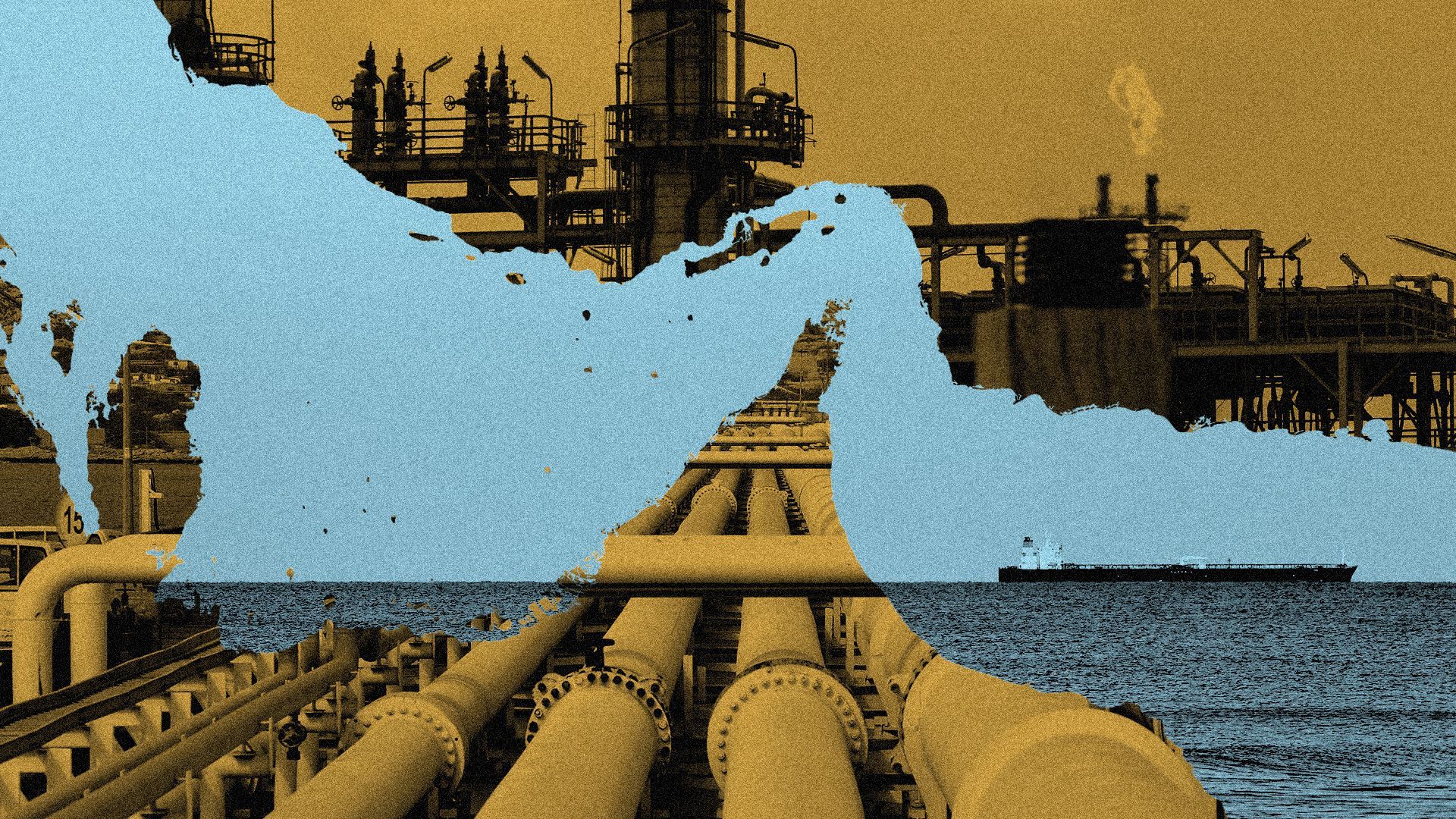
Photo illustration: Brendan Lynch. Photos: Getty Images
Untangling the largest disruption in oil market history won't happen quickly or easily — and that means continued high prices and scarcity in major importing countries.
Why it matters: A big thing to watch following the U.S.-Iran ceasefire deal is whether it gives tanker owners enough certainty to begin resumption of large-scale traffic of oil, petroleum products and other commodities through the Strait of Hormuz.
The big picture: "Confidence-building measures in coming days are going to be key to restoring shipments," Joe Brusuelas, chief economist at the financial services and consulting firm RSM US, said in an interview.
- He notes that insurance for the tankers will need to be reestablished, and that means figuring out the specific conditions Iran may impose, which remain murky right now.
- Iranian Foreign Minister Abbas Araghchi said in a statement that safe passage over the next two weeks "will be possible via coordination with Iran's Armed Forces and with due consideration of technical limitations."
Between the lines: Even setting aside what those "technical limitations" might be, this isn't going to be a simple restart of the supplies that existed before the war.
- "[R]estarting shuttered facilities and shut-in fields could take weeks to months," ClearView Energy Partners said in a note.
- So don't get too excited when you see gas pump prices edge down — it doesn't mean everything's back to normal.
What they're saying: "I expect individual ship owner and operator companies, in some cases in conjunction with government representatives, to seek explicit permission from Tehran to resume operations," said Clayton Seigle, an oil analyst with the Center for Strategic and International Studies.
- "We'll know from tracking platforms and anecdotal reporting of tanker movements whether they get it," he said via email.
"The ceasefire may create transit opportunities, but it does not yet provide full maritime certainty and we need to understand all potential conditions attached," shipping giant A.P. Moller-Maersk said in a statement.
Zoom out: Another challenge is that Persian Gulf oil producers, lacking export routes, cut output by millions of barrels per day during the conflict.
- "Restarting production is a minor engineering feat and of itself," Brusuelas said.
- And multiple oil and refining sites in producing countries were damaged during the war. Brusuelas predicts it will take three to six months to fully reach pre-war levels of regional production and refining.
- On the natural gas side, damage to liquefied natural gas exporting infrastructure in Qatar may take years to fully repair.
Catch up quick: Crude oil prices plunged roughly 13% following the ceasefire announcement and after President Trump backed off his threat of massive strikes.
- But they remain well above pre-war levels.
Threat level: All eyes will be on the trajectory of U.S.-Iran negotiations to reach a peace deal during the two-week ceasefire.
- Analysts at the investment banking and wealth management firm Jefferies, in a note Tuesday night, caution that while re-escalation that brings more energy disruption and price surges is possible, "uncertainty has likely peaked."
- It sees "oil prices likely remaining above pre‑war levels for months but with limited upside risk from here."
Reality check: Multiple Asian nations that are especially reliant on the Strait of Hormuz for oil and gas have been forced to take emergency fuel conservation measures.
- It would take anywhere from days to weeks for new supplies to reach them even if shipping resumes.
What we're watching: U.S. regular gasoline prices, which are currently average $4.14 per gallon, per AAA — the highest level since 2022.
- The average price could fall below below $4 gallon within one or two weeks, GasBuddy head of petroleum analysis Patrick De Haan said on X Tuesday evening after the ceasefire was announced.
Editor's note: This story has been updated with A.P. Moller-Maersk's statement.
