Ukraine energy CEO offers lessons learned from wartime

Add Axios as your preferred source to
see more of our stories on Google.
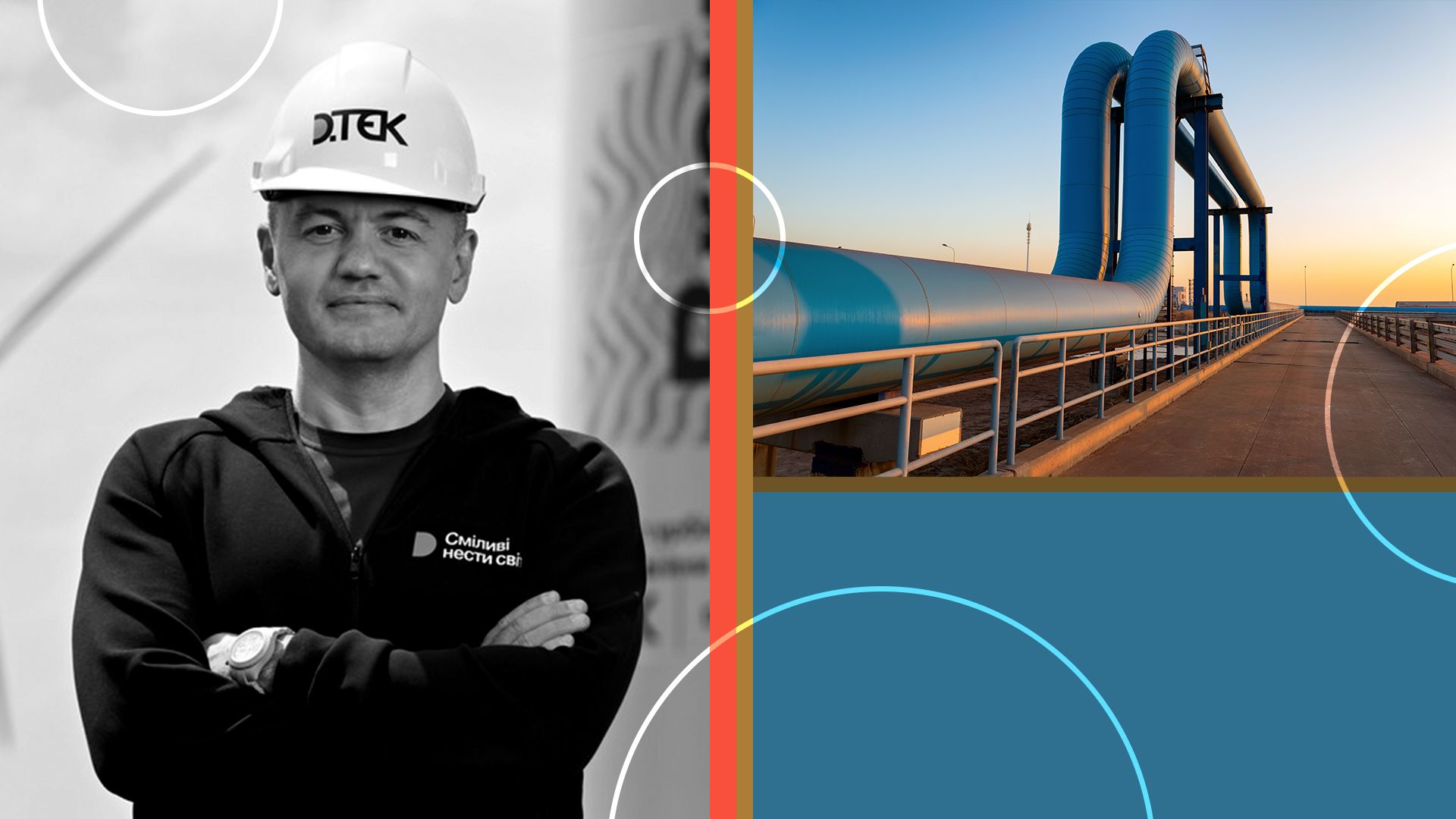
Photo illustration: Axios Visuals. Photo: Courtesy of DTEK.
HOUSTON — The head of Ukraine's largest private energy company said Wednesday he has plenty of lessons to share with energy companies operating in the Middle East that are scrambling to harden themselves against attacks.
Why it matters: Maxim Timchenko, CEO of DTEK, said making detailed security plans must become the new reality for companies working in dangerous places.
Driving the news: The stepped-up Russian onslaught was the main reason this past winter was "the hardest winter since the independence of Ukraine," Timchenko told Axios.
- "We've learned a lot on how to protect our equipment, how to manage the situation, how to make to make sure that people are in safe places under attack, how to react and recover in a very short period of time," he said.
- "So we have the whole story, what to do under the conditions that we observe now in the Middle East. And of course, we are happy to share all this knowledge with our allies."
- One U.S. energy executive, who spoke with Axios on condition of anonymity, said his Middle East customers have been addressing their cybersecurity needs but now are increasingly turning to the costly, time-consuming task of hardening physical assets.
Zoom in: Timchenko listed several areas where companies need to focus their attention.
- They should start by developing a priority list of energy facilities that need protection from air defenses. That, he said, requires "very, very active coordination of air-defense forces with energy companies."
- Companies also need to develop protocols for ensuring workers' and others' safety, such as guaranteeing they have enough bomb shelters.
- Finally, he said, stockpiling supplies ahead of time is always essential. In DTEK's case, that has meant ensuring it has had enough transformers and natural-gas compressors.
Threat level: For the war's first two years, Russia targeted Ukraine's electricity system with a focus on transmission and distribution assets.
- But last year, Russia also attacked gas production sites, destroying around 60 per cent of Ukraine's capacity in a single set of strikes last October.
Zoom out: Timchenko came to Houston determined to correct any notions that his country isn't open for more energy-related business. He said he's meeting with companies about making potential deals.
- "We need to change this perception of Ukraine, and not see it as a risk zone, worries with a war zone with all of the associated risk, but be a bit more pragmatic and practical," he said.
- "Come and see and do business with the local companies who decided to stay during the war time — not only stay, but invest."
