Trump, tech giants say AI pledge will contain power costs

Add Axios as your preferred source to
see more of our stories on Google.
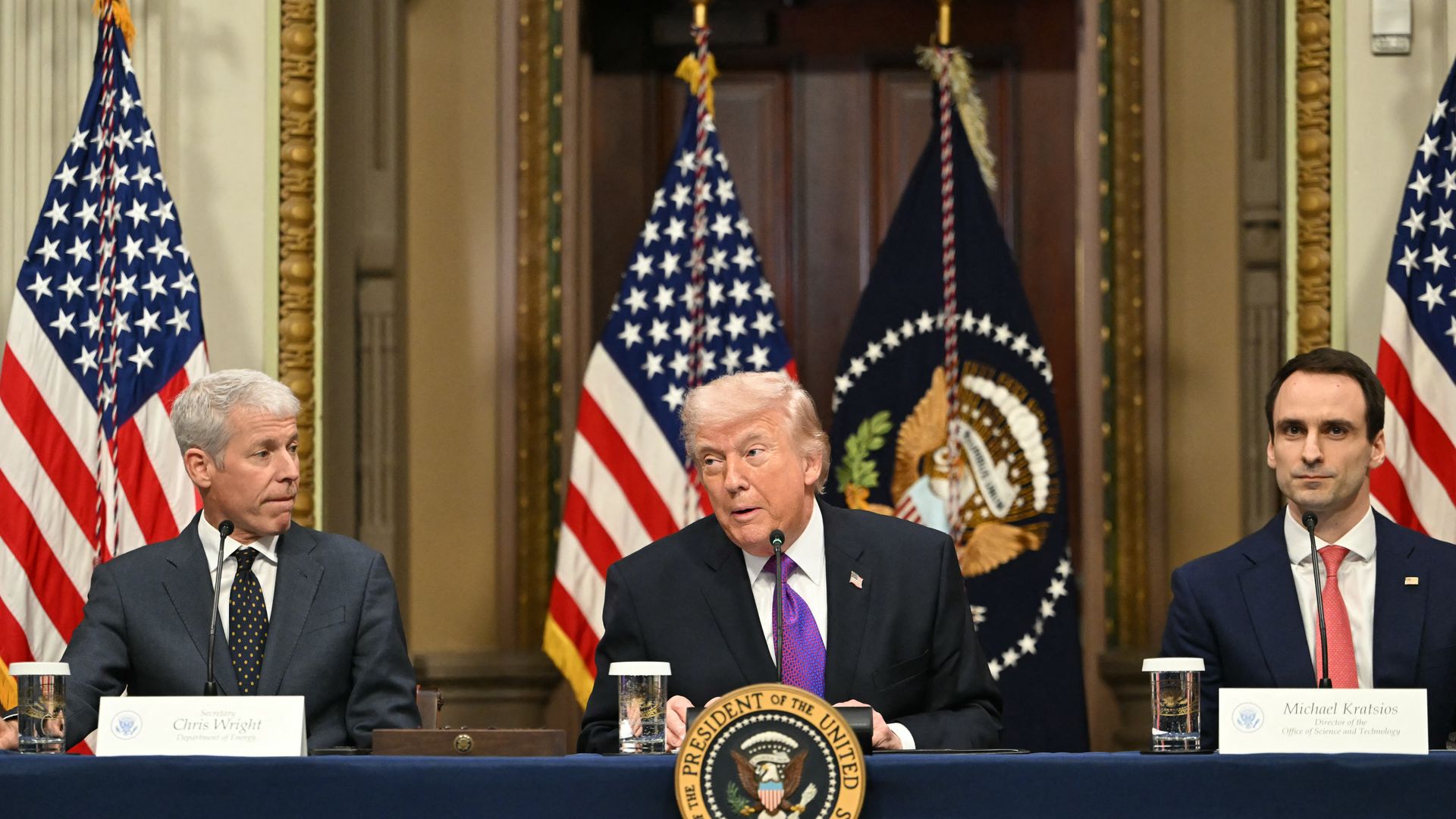
Trump appears with Energy Secretary Chris Wright and science adviser Michael Kratsios at Wednesday's event. Photo: Andrew Caballero-Reynolds/AFP via Getty Images
President Trump and tech CEOs expressed confidence Wednesday that they can contain soaring electricity rates with a new data center pledge that formalizes and expands on what companies already are doing.
Why it matters: With rising power bills turning AI and data centers into an election-year issue, Trump — who campaigned on a promise to cut costs — is eager to show he's trying to protect consumers.
- Skeptical Democrats and some energy observers, however, say that far more than voluntary pledges are needed.
Driving the news: Microsoft, Amazon, Google, Meta, Oracle, xAI and OpenAI signed the pledge during an event with Trump, who mentioned the initiative during last week's State of the Union address.
- The agreement calls for the companies to negotiate separate electricity rate structures with utilities and states. They would commit to paying those rates for power as well as for any necessary infrastructure.
- Administration officials emphasized that those payments would be made regardless of whether companies use the electricity.
- The companies also commit to hiring and training workers from within communities hosting data centers. Some opposition has come from local officials citing the relatively few jobs the centers create once they're built.
The big picture: "They need some PR help," Trump said of the tech companies that have shouldered the blame for higher costs.
- Addressing the executives, he added: "You're going to have great energy sources, because you're going to build them yourself. And if they're not good, you'll make them a little bit bigger and better, right?"
- Amanda Peterson Corio, Google's global head of data center energy, said in a statement that the pledge will push her company to look at ways to avoid burdening ratepayers.
- She cited a new contract model developed last year requiring large energy users to guarantee funding for new power and infrastructure.
Reality check: Data centers are only one reason why electricity rates and power demand have gone up. Energy observers say the pressure being put on the electricity grid to handle more transmission is a big reason.
Others include:
- Higher prices for equipment to meet the extra demand.
- Bureaucratic delays and denials of permits for new projects.
- Weather-related threats requiring stronger towers, poles and other equipment.
"Trump's desire to manage energy costs for households via the Ratepayer Protection Plan will be challenging to effect as costs are layered throughout the energy system," said Ben Heininger, U.S. data center energy lead at consulting firm Baringa.
- Sierra Club principal adviser Jeremy Fisher called the agreement "a pinky promise, nothing more."
Zoom in: Electricity markets also are largely regulated at the state and regional levels, limiting how much impact Washington can have.
- Administration officials said the public nature of the pledge will give companies a strong incentive to hold up their end of the bargain as they negotiate with states and communities.
- "We're not worried about people going rogue or cowboy on it," one administration official who spoke on condition of anonymity told reporters.
The intrigue: Ahead of Wednesday's announcement, several tech giants had vowed to prevent consumers from getting stuck with the energy bills for the AI buildout.
- Among those companies was Microsoft, whose president, Brad Smith, said in January that the company will "pay our way" to ensure its data centers don't raise power prices
- The administration official who spoke with reporters said the pledge is "a little more comprehensive" than what companies had earlier promised.
What they're saying: The National Electrical Manufacturers Association (NEMA), the trade association of electrical equipment makers, issued a statement ahead of Wednesday's meeting urging Congress to act on several bills aimed at upgrading the grid.
- Many industry groups also have cited the need for Capitol Hill to pass comprehensive legislation that would speed the issuing of federal permits — an issue that's been stuck in partisan gridlock.
- Administration officials said its approach will move things along much faster.
- "Legislation is slow moving, and it's a very blunt tool, and of course, it doesn't foresee what's coming next and what's going to happen," the administration official said.
