Axios House: Protection efforts are "alive and well," The Conservation Fund CEO says

Add Axios as your preferred source to
see more of our stories on Google.
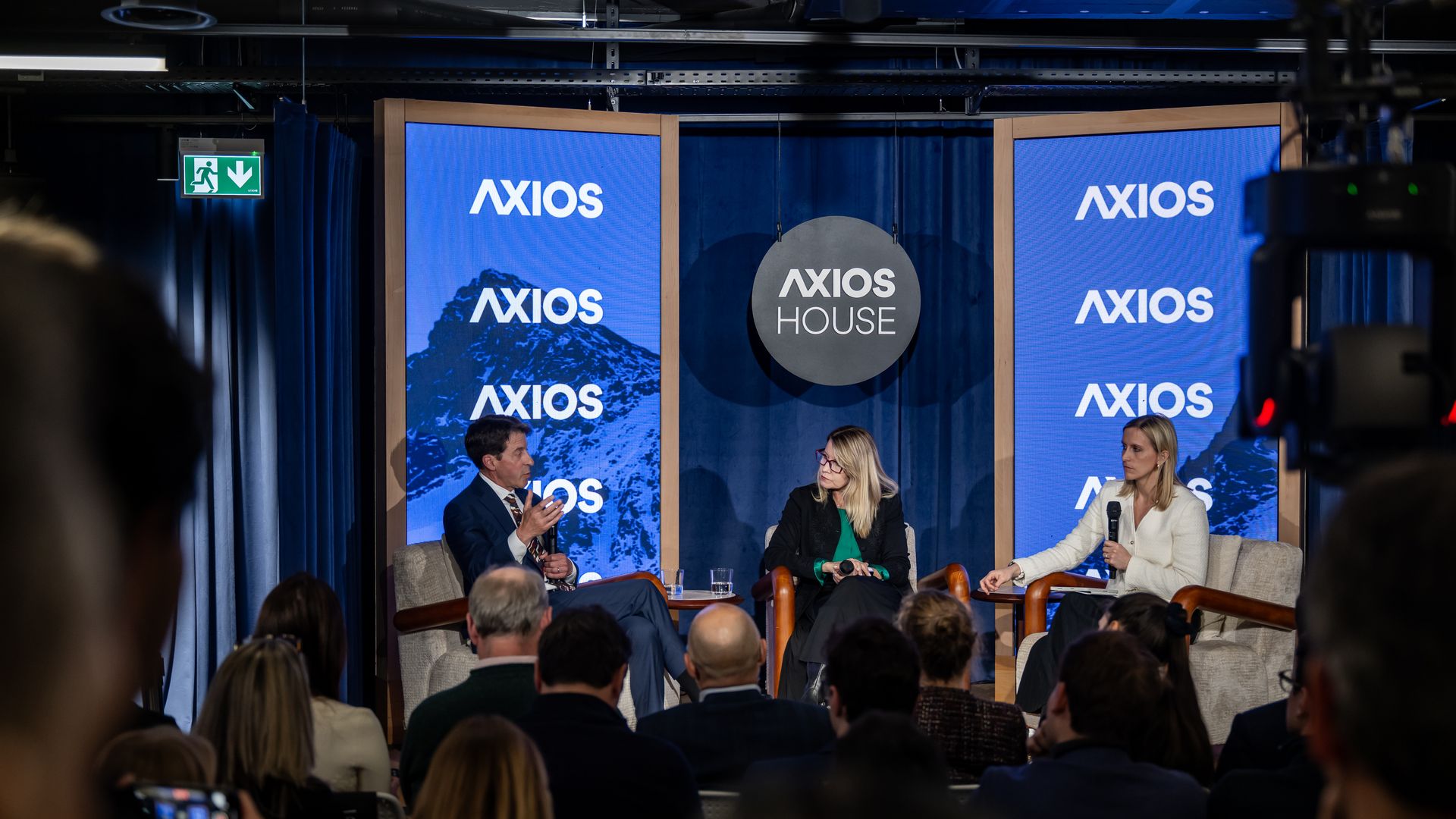
Larry Selzer, Jen Morris and Amy Harder in conversation on the Axios House stage. Photo: Dani Ammann Photography for Axios.
DAVOS, Switzerland — Companies are making a positive impact with investments in nature preservation efforts, speakers said at an event at Axios House this week.
Why it matters: One of the biggest challenges to environmental protection efforts has been the high price tag of clean energy and conservation projects.
Axios' Amy Harder spoke with Energy Impact Partners founder and managing partner Hans Kobler, Colossal Biosciences CEO and co-founder Ben Lamm, The Nature Conservancy CEO Jen Morris, and The Conservation Fund president and CEO Larry Selzer at the event, which was sponsored by Cox Enterprises.
What they're saying: The "unit economics" for many clean technologies today are better than ever before, Kobler said, which is "the best recipe to actually get to a clean future."
Follow the money: Selzer likened The Conservation Fund to "the investment bank for conservation in America."
- The nonprofit is backed by companies like IKEA, Cox Enterprises and Apple, which he said "see the power of private capital to drive conservation forward."
- "Conservation is alive and well, it's thriving. But it's this integration of business and the environment."
Between the lines: "Right now in the United States, obviously, climate change is not something that we talk about a lot anymore in most circles. But nature does have a pass," Morris said, adding that nature conservation is a nonpartisan issue.
- "As public money shrinks, I think private philanthropists realize they need to step into the breach," she said.
- The private sector is also stepping up, she said, as they see the value of conservation to their supply chains.
By the numbers: The U.S. has lost over 20 million acres of forests over the last 30 years, Selzer said. "The Conservation Fund is keenly focused on protecting what remains, and toward that end, we've deployed over $1 billion to acquire over 1 million acres of working forests."
The intrigue: Lamm's startup Colossal Biosciences is trying to bring back extinct species. In addition, the company has a nonprofit foundation arm that has raised $100 million for wildlife conservation and ecosystem restoration.
- "We actually have more conservation projects going on than de-extinction projects," Lamm said.
- "[T]he technologies on the path to de-extinction are being applied to conservation today – and we're going to lose half of biodiversity in the next 25 years, but nobody talks as much about that."
What we're watching: "I think what is on the agenda more than ever is that we need to create power that is affordable, and that is available to power this economy, to power AI," Kobler said.
- From a climate perspective, AI's urgent and immense power needs are a short-term downside. "In the mid-term to long-term, it will be a positive," because it will drive energy efficiency, he said.
Content from the sponsor's segment:
In a View From the Top conversation, Cox Enterprises chair and CEO Alex Taylor explained why he decided to devote much of his time and attention to conservation efforts. "It matters what you do with your money," he said. "This is just a topic that is important to me."
- "Everything is AI – AI this, AI that," he said. "And AI is important, and AI might help us make the planet OK – but in the meantime, it would be nice if 10, 20, 30 of these companies up and down the Promenade had a significant message about what they're trying to do to clean up the oceans, get the plastic out, what they're trying to do [for] regenerative agriculture, soil management, landscape protection."
Disclosure: Cox Enterprises is the owner of Axios Media, which has editorial independence.
