Utilities brace for outages, disruptions ahead of winter storm

Add Axios as your preferred source to
see more of our stories on Google.
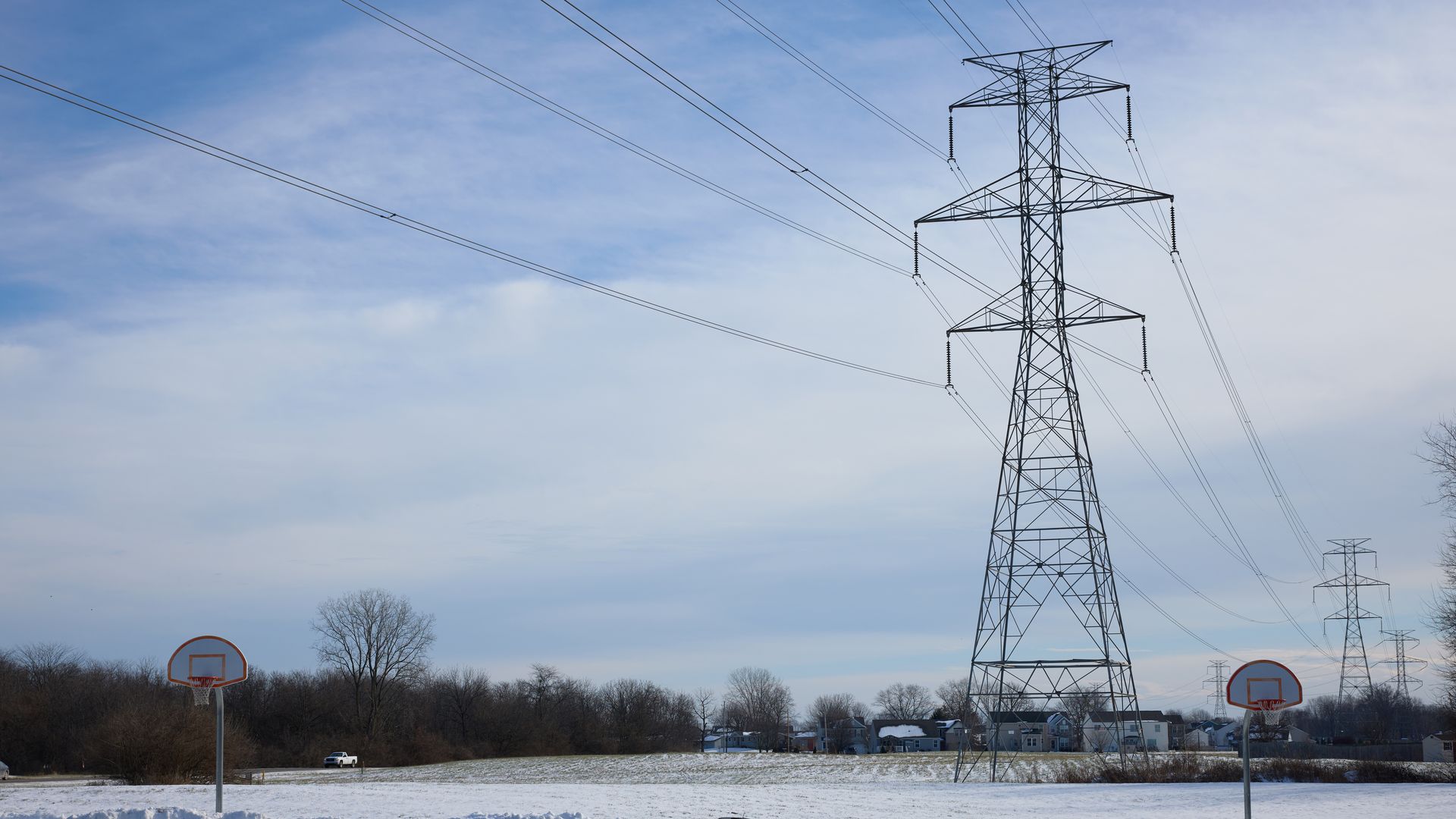
Transmission lines cut across a park in Groveport, Ohio, in December. Photo: Brian Kaiser/Bloomberg via Getty Images
Electric utilities across the U.S. are bracing for heavy demand — with at least one warning of potential for extended power outages — during this weekend's major storm.
Why it matters: Meteorologists are comparing the storm to Winter Storm Uri, which in February 2021 left millions without power in Texas and was responsible for at least 200 freezing deaths.
Threat level: Snow, freezing rain and/or sleet are possible during Winter Storm Fern from parts of New Mexico and Texas all the way east to Georgia and north to New England.
- Natural gas prices have soared ahead of the storm in anticipation of potential supply disruptions at power plants.
- Governors in multiple states — including North Carolina, South Carolina, Georgia and Virginia — have declared states of emergency, while Maryland Gov. Wes Moore declared a "state of preparedness."
- Energy Secretary Chris Wright on Thursday asked grid operators to be ready to make available backup generation at data centers and other major facilities. The department said more than 35 gigawatts of unused backup generation remains available.
Driving the news: Duke Energy said its 3.8 million customers in North Carolina and nearly 860,000 in South Carolina should prepare for "multi-day outages."
- Duke said it's mobilizing thousands of line workers, tree crews and support staff, staging equipment in key areas and setting up mobile command centers.
- CenterPoint Energy — Texas' only investor-owned electric and gas utility — also said it has secured over 600 additional front-line workers for an expanded workforce of 3,300 workers to address the approaching winter storm.
- Oklahoma's Corporation Commission, which regulates the state's utilities, said in an X post that "we are doing all we can to protect consumers from a repeat of the effects of Winter Storm Uri."
Zoom in: Texas' main grid operator, the Electric Reliability Council of Texas (ERCOT), issued a weather watch from Saturday through Tuesday with the possibility of higher electricity demand and the potential for lower reserves.
- The company, however, said it expects to have enough supply to get through the storm.
- ERCOT has seen substantial growth in solar and battery storage capacity and has fortified its grid since Uri.
PJM, the grid operator for 13 states and the District of Columbia, predicted in November that it would have enough resources to serve the 67 million people in its footprint this winter under expected conditions.
- It said, however, that high levels of generator outages such as those that occurred during 2022's Winter Storm Elliott "could leave the system vulnerable to power outages."
Zoom out: Energy analyst Jefferies said ERCOT was one of several operators most likely to see outages under higher demand and extreme conditions this winter.
- Others included the operator covering the Tennessee Valley and one covering Nevada, Utah and other Great Basin states.
- "High-profile power outages in data center markets like TX would lead to further stakeholder push-back on data center demand outpacing supply additions," Jefferies said.
How it works: Outages can occur in any of one of several ways during a winter storm:
- Distribution outages are the most common occurrence. Ice, snow, high winds, and saturated ground can snap lines, cause wooden poles to fall, and stress equipment.
- Transmission outages are less common but can have greater consequences. High-voltage lines moving power over long distances generally are stronger and more weather-resistant than distribution poles.
- Generation outages stem from power plant failures involving mechanical systems that rely on fuels, lubricants, or electronics that temperature spikes can disrupt. Few plants in the Texas-Louisiana region are designed to operate at temperatures below zero, noted Simon Mahan, executive director of the Southern Renewable Energy Association.
Editor's note: This story has been updated with information on Energy Secretary Wright's request and with additional states declaring emergencies.
