Axios House: Companies must embrace "end-to-end workflow transformation" for AI ROI, Writer CEO says

Add Axios as your preferred source to
see more of our stories on Google.
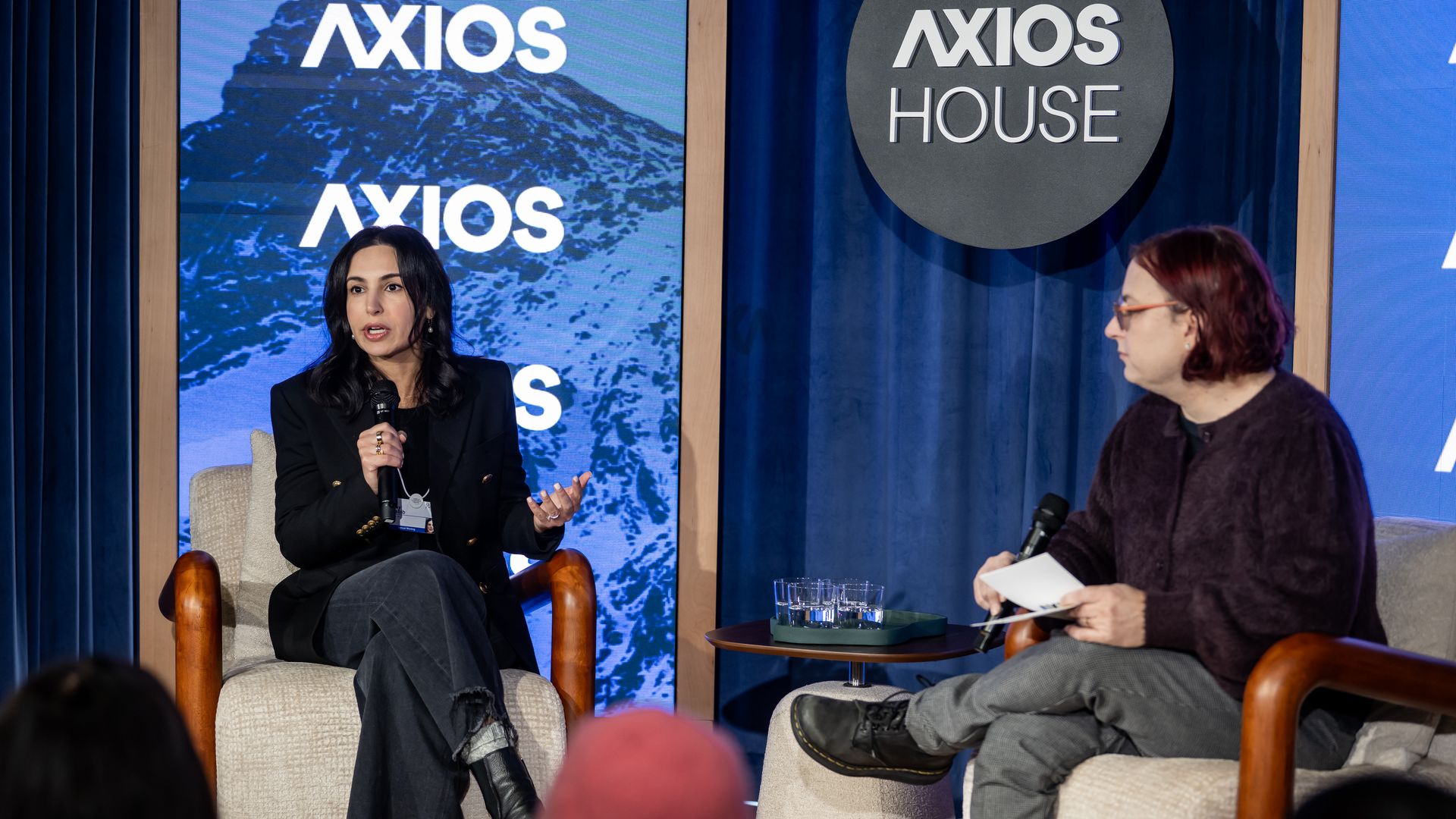
Writer co-founder and CEO May Habib on stage with Axios' Ina Fried. Photo: Dani Ammann Photography on behalf of Axios.
DAVOS, Switzerland — AI investments are paying off when businesses are inspired to go beyond simply implementing new tools to revamping the way they operate, speakers said at an event at Axios House this week.
Why it matters: Some organizations are struggling to get a return on their AI investments and get employees excited about using it at work.
Axios' Ina Fried spoke with May Habib, co-founder and CEO of enterprise AI platform Writer, and Sridhar Ramaswamy, CEO of data platform Snowflake, at the event, which was sponsored by Workday.
The big picture: "The fundamental physics of this is the executives are saying, 'Change stuff with AI,' and then they're giving people co-pilots and productivity tools, and you're not going to get the wholesale reinvention that actually drives impact," Habib said.
- To drive a return on investment, "the vast number of people are just not implementing AI, you're really bringing in the right tooling to be able to drive the wholesale, end-to-end workflow transformation," Habib said.
- "Where customers are seeing a lot of ROI is in reducing friction into how their teams are getting at this data," Ramaswamy said. "And then, as May was saying, if you can begin to then orchestrate actions around the data, magic happens."
- Companies still have to work through what the ROI is across several situations, Ramaswamy said.
What they're saying: "I think career ladders are dead," Habib said. "I don't think you can any longer progress in a career by further and further specialization, and gain authority by seniority and title."
- "Silos are getting flattened – it makes no sense for sales and marketing to be separate teams for most companies. And you are going to gain in authority and stature by the amount of impact you have, and that's going to mean adding adjacent functions to folks' scope versus kind of the narrow specialization."
- This is another reason why some people aren't seeing ROI, she said. "You've got to really kind of break those silos to change workflows end-to-end. I don't think we're talking about that enough."
The bottom line: The debate in the last few years about AI eliminating jobs is much more nuanced now, Habib said.
- "The organizations that are going to succeed are the ones who bring their employees along and tell them how they're going to be successful, and really forcibly flatten the hierarchy to get AI more prevalent in the org," Habib said.
- "I joke to people that every company at this point appears to have only two destinies: that they'll either become a trillion-dollar company or go to zero. It's just a time of lots of change," Ramaswamy said.
Content from the sponsor's segment:
In a View From the Top conversation, Aashna Kircher, Workday's group general manager in the office of the CHRO, shared some findings on AI's value from new research released by the company.
- "The biggest takeaway for us from the report is that while overall, organizations are absolutely seeing net value from AI — getting time savings and productivity back — roughly 40% of that time is actually going into rework and correcting low-quality AI output," Kircher said.
