Axios Live: Health care leaders discuss dealing with a skeptical public in the digital age

Add Axios as your preferred source to
see more of our stories on Google.
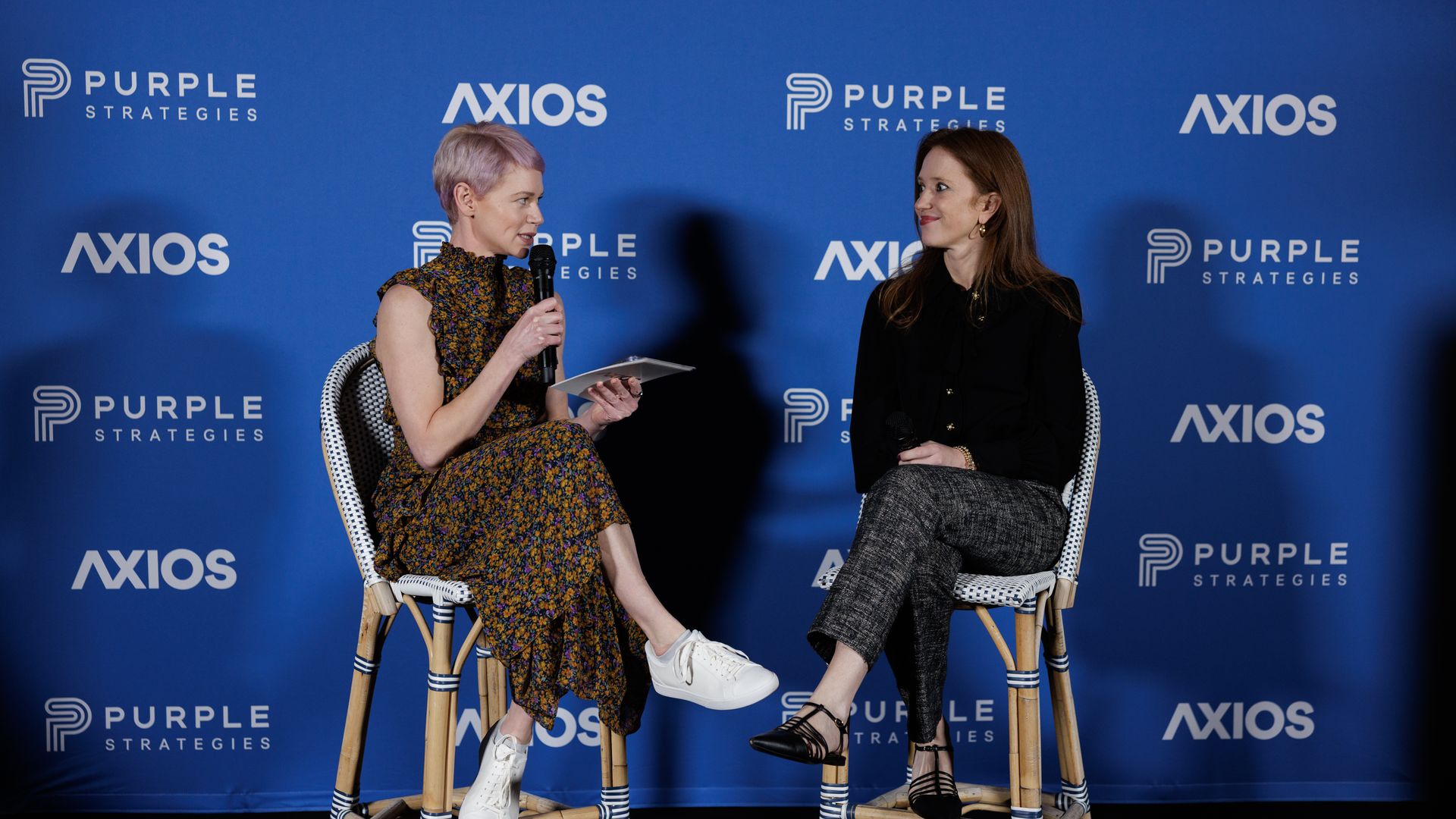
Erin Brodwin talks with Maven Clinic's Kate Ryder. Photo: Chris Constantine on behalf of Axios
SAN FRANCISCO — With so many players coming into health care, "trust is really the big question," Maven Clinic founder and CEO Kate Ryder said at a Jan. 12 Axios Live event.
Why it matters: Amid growing public skepticism toward health institutions and data privacy concerns, the ability to communicate effectively about medical breakthroughs and health care policies is becoming increasingly critical.
Axios' Erin Brodwin and Eleanor Hawkins spoke with Ryder and Vanessa Broadhurst, Johnson & Johnson's EVP of global corporate affairs, at the event, which was sponsored by Purple Strategies.
What they're saying: "I think for us, at least, it's really what you do with the data, and it's really what value you provide back to the patient," Ryder said.
- "We have always used all patient data to just make our care model better, and we've never sold data. That's never how we've monetized our business model."
- "And so I think when patients kind of understand that you're using the data to better personalize the care, to deliver better experiences … they naturally trust you, and so I think we'll continue to do that. I think we have great trust with our members today."
The intrigue: Last year, Maven Clinic launched Ask Maven, a large language model (LLM) that lets users ask questions about their benefits.
- "It was an area [in which] there was so much duplication across questions, that it was just an obvious place to put AI first," Ryder said.
- Even if AI has a 1% error rate, that can be really bad, Ryder said. "So we've been really careful about how we use it with patients."
State of play: "I think that in the health care industry, as a manufacturer, we hold a special place, because obviously we have our key stakeholders, but we are also in a highly regulated environment that we need to pay attention to," Broadhurst said.
- "So when we're communicating, we think about a few things, especially in today's environment. One is, on a given topic, do we have a point of view? Is it something that's important to us? Is it about our patients? Is it about our products? Is it about policies that we care about? And then, do we have something to say?"
- "And if those two things are true, then we lean in and we make sure that we figure out how to reach people where they're at, which has changed over time."
Content from the sponsor's segment:
In a View From the Top conversation, Jillayne Smyth Rogers, Purple Strategies partner and chief creative officer, explained that more people are using technologies such as AI chatbots and health wearables to manage or monitor their health.
- "They're sort of curating and cultivating a DIY kind of approach to their own health care, and the driving reason for that is control," Smyth Rogers said. "As long as I've been in this business for 25 years, we've been seeing that there is great mistrust of the health care system. … The big difference now is people have a tool set that they didn't have before."
