Rubio touts U.S. refineries' ability to process Venezuela's oil

Add Axios as your preferred source to
see more of our stories on Google.
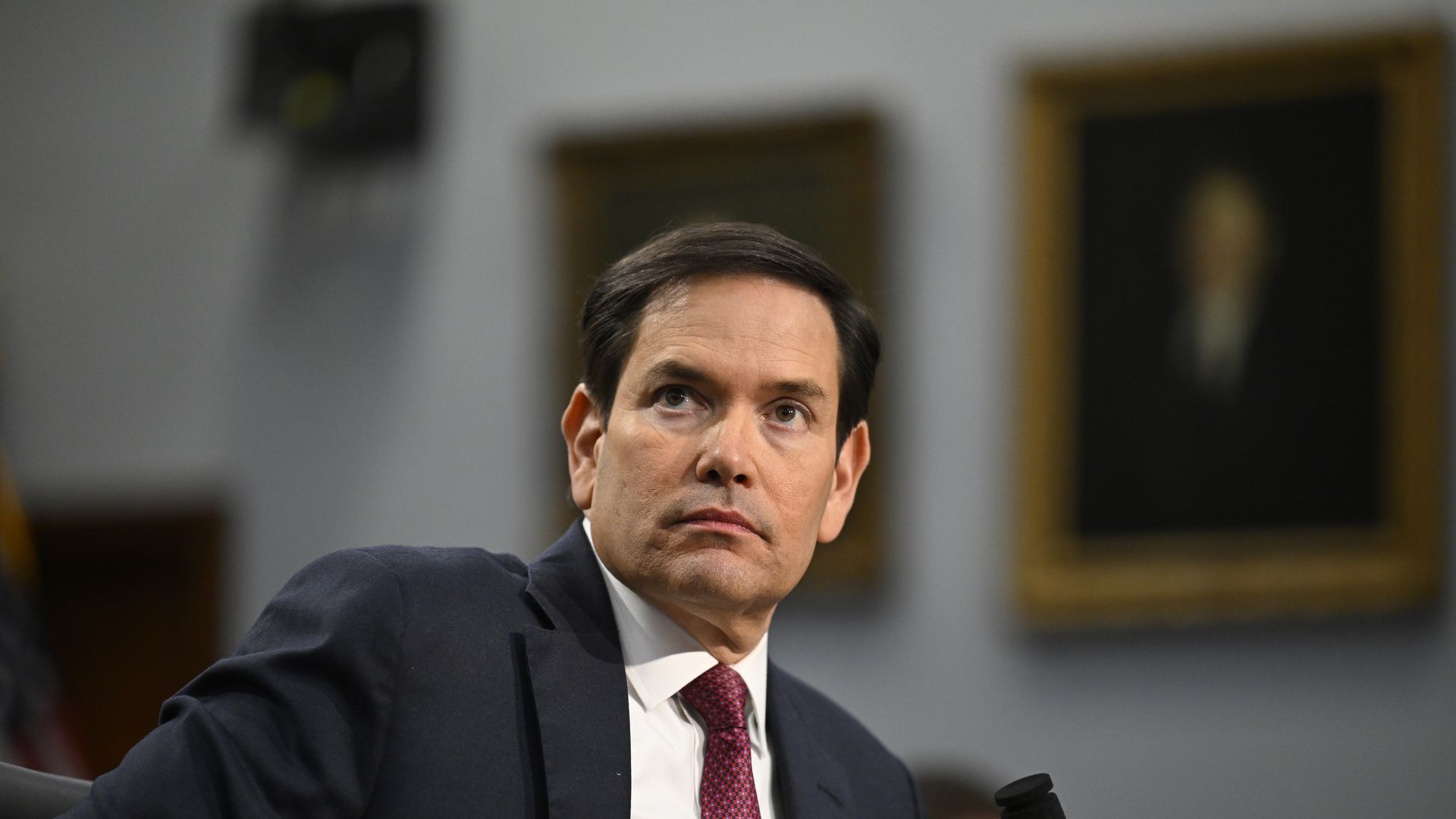
Secretary of State Marco Rubio in May. Photo: John McDonnell/Getty Images
Secretary of State Marco Rubio on Sunday touted what he called a unique U.S. capability to refine Venezuela's abundance of crude oil, a linchpin of the Trump administration's takeover strategy for the country.
The big picture: Refineries in the Gulf of America (renamed from Gulf of Mexico) are generally better designed to handle Venezuela's "heavy" crude than the lighter grades from shale produced from fracking.
- Heavy crude oil is a dense, tar-like petroleum that is harder to extract and refine than light crude, often requiring extensive processing.
- President Trump made clear Saturday that a core part of his plan for Venezuela is fixing the country's oil infrastructure and then dramatically increasing its production, generating revenue for the benefit of U.S. interests.
Driving the news: Rubio predicted "dramatic" interest from "non-Russian, non-Chinese" companies following the U.S.-engineered ouster of Venezuelan leader Nicolás Maduro.
- "Our refineries in the Gulf Coast of the United States are the best in terms of refining the heavy crude," Rubio said on ABC's "This Week With George Stephanopoulos."
- Rubio said the U.S. would use an oil "quarantine" to get Venezuela's new leaders to comply with the Trump administration's wishes. He said the quarantine provides the U.S. with "a tremendous amount of leverage."
In a subsequent appearance on NBC's "Meet The Press With Kristen Welker," Rubio said the U.S. doesn't need Venezuela's oil.
- "We have plenty of oil in the United States. What we're not going to allow is for the oil industry in Venezuela to be controlled by adversaries of the United States."
Zoom in: Patrick De Haan, head of petroleum analysis for the fuel savings platform GasBuddy, agreed that U.S. refineries "are some of the most complex, well-positioned refineries in the world" to process Venezuelan crude.
- "There's even a possibility that if things move very favorable, that you could see some interest in Gulf Coast refinery expansions should [Venezuela's] crude exports increase and become more reliable," De Haan said in an email.
- "That's also a very optimistic outlook. Either way, U.S. refineries could do more with additional [Venezuelan] crude oil."
- Senate Intelligence Committee chairman Tom Cotton (R-Ark.) said on Fox News that "many of our refineries were designed specifically" to handle Venezuela crude.
Context: Much of Venezuela's oil, especially from the Orinoco Belt — the world's largest accumulation of petroleum — is very heavy crude that is high in sulfur and metals.
- It often must be upgraded or blended with lighter oil or diluents before it can flow through pipelines or be processed in refineries.
- The U.S. is a major crude producer, but it still imports heavy crude from Mexico, Canada and other countries to supply refineries that are optimized for it. Much of that refined crude is exported.
Reality check: Some observers are cautious about the ability of U.S. companies to quickly jump-start Venezuela's oil industry, citing the potential for political instability, among other factors.
- Despite having the world's largest proven reserves, Venezuela's oil infrastructure has deteriorated after decades of underinvestment.
- State oil company PDVSA also has been plagued by mismanagement. U.S. sanctions have further reduced production.
What to watch: A recent Wood Mackenzie analysis said that operational improvements and "some modest investment" in the Orinoco Belt region could raise Venezuela's production back to the levels of the mid-2010s, at around 2 million barrels per day within one to two years, given favorable conditions.
- "Going beyond that would require significant investment, probably focused on the Orinoco Belt," the analysis said. "Most of the upgraders needed to process the region's oil went offline between 2019 and 2021, and the ones that remain in service need consistent expenditure to keep running."
Editor's note: This story has been updated with Rubio's comments on "Meet The Press."
