Exclusive: Nvidia backs new data center to reduce electricity spikes

Add Axios as your preferred source to
see more of our stories on Google.
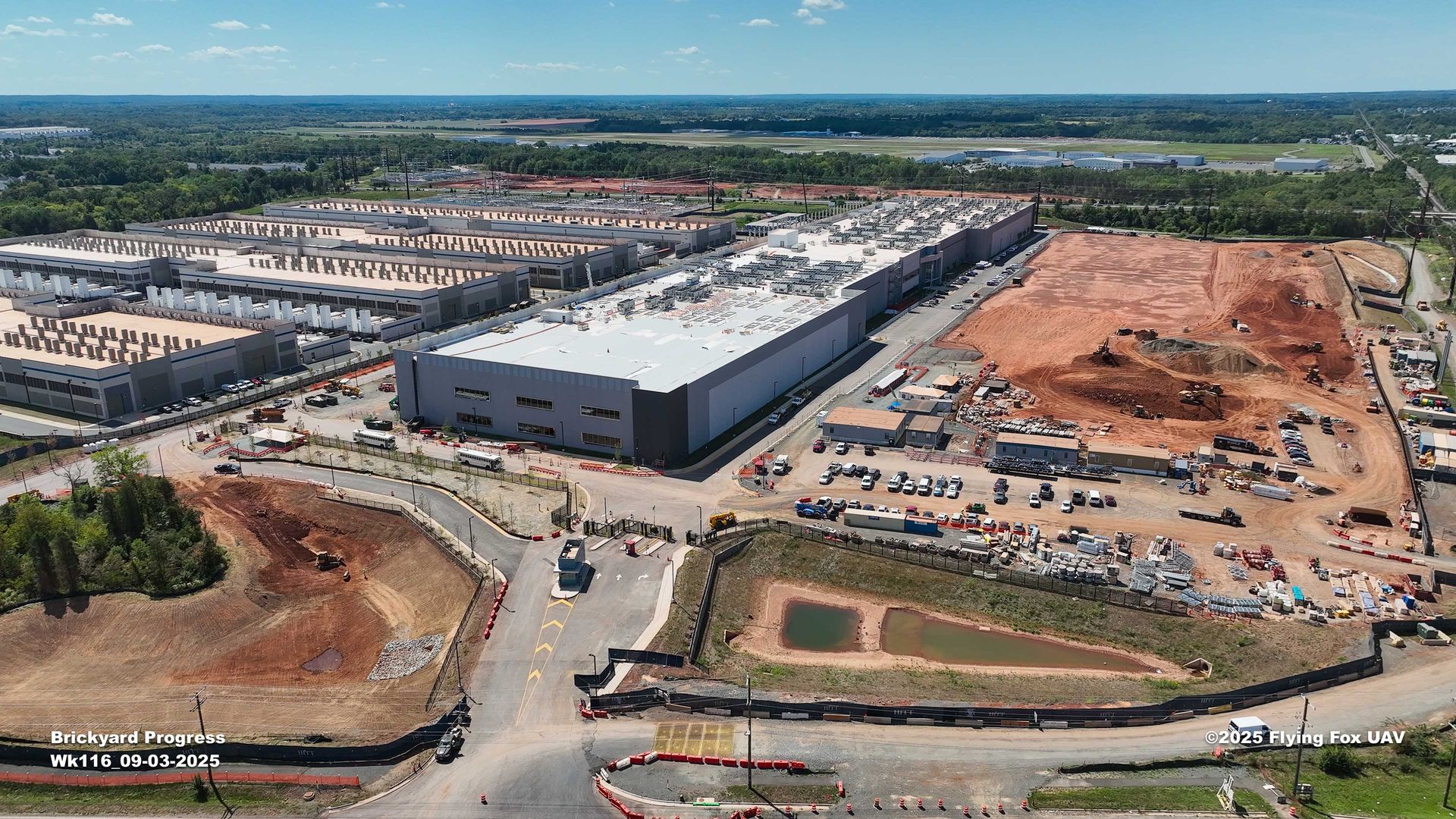
The Aurora data center under construction in Virginia is set to require 96 megawatts of power (similar to a small city) and take up roughly 815,000 square feet (14 football fields). Photo: Courtesy of Digital Realty
A new kind of data center built by a coalition including Nvidia aims to smooth out power use as AI demand surges.
Why it matters: Shared exclusively with Axios, the project is the first commercial rollout of software that adjusts energy draw in real time — a model the companies say can ease strain on the grid and curb electricity costs.
Driving the news: Nvidia is deploying software developed by startup Emerald AI at a facility under construction in Virginia by Digital Realty, one of the world's biggest developers of data centers.
- The facility, called Aurora, will be the first built to a new industry-wide certification on flexible power.
- Nvidia is leading the certification alongside Emerald AI, the nonprofit Electric Power Research Institute and regional grid operator PJM.
The big picture: A frenzy is underway to get more power to the booming AI sector.
- Energy Secretary Chris Wright just called on federal regulators to expedite reviews, and OpenAI sent a letter to the White House on Monday urging swift action on a similar front.
Where it stands: Like most industrial facilities, data centers have long been inflexible energy users. AI's explosion is forcing operators to find smarter ways to manage electricity since the power needs are so much greater.
How it works: Aurora will use Emerald AI software to shift compute-intensive AI jobs across time and geography — throttling workloads when grids are stressed and resuming when demand drops.
- It's like taking 18-wheelers off the road at rush hour, says David Porter, vice president at EPRI.
What they're saying: "Until now, most observers have assumed that, except for Google, the only way for AI data centers to provide grid flexibility was through on-site generation or storage," said Tyler Norris, a power analyst and advisor to Emerald AI, by email.
- "The Aurora project challenges that assumption, showing that software-based workload shifting can be a credible and measurable grid resource," added Norris, who knew about the project ahead of time but isn't involved.
- Virginia Gov. Glenn Youngkin (R) praised the news, saying it can help protect the "affordability and reliability of the power grid." His state is considered ground zero for the data center boom.
By the numbers: Company officials aren't yet sharing the Aurora facility's specific reduction goals, but a smaller demonstration test of the tech gives an indication.
- It showed Emerald AI can reduce AI workload's power consumption by 25% over three hours during a "grid stress event," while ensuring acceptable performance, Emerald AI and Nvidia said earlier this year.
Follow the money: Nvidia, an investor in Emerald AI, says the tech will help satiate near-term energy demands and smooth out variable renewable energy.
- "It helps rebalance the market dynamics of variable energy by making it more useful in the concept of data centers," said Josh Parker, head of sustainability at Nvidia, in an interview with Axios.
What we're watching: Norris' recent modeling shows nearly 100 gigawatts — about one-fifth of total U.S. grid capacity — of new energy loads could be integrated if demand is flexibly managed.
What's next: This tech won't eliminate the need for new power sources like nuclear or geothermal, Parker and Emerald CEO Varun Sivaram tell Axios — but it could ease the path to deploying them.
- "We should prudently expand our energy supply," Sivaram said in an interview with Axios.
- But in the meantime: "We've got a real shot at unlocking fast capacity of power immediately to power AI data centers without exorbitantly raising community prices, and we could even lower them."
